


Some error occured while loading the Quick View. Please close the Quick View and try reloading the page.
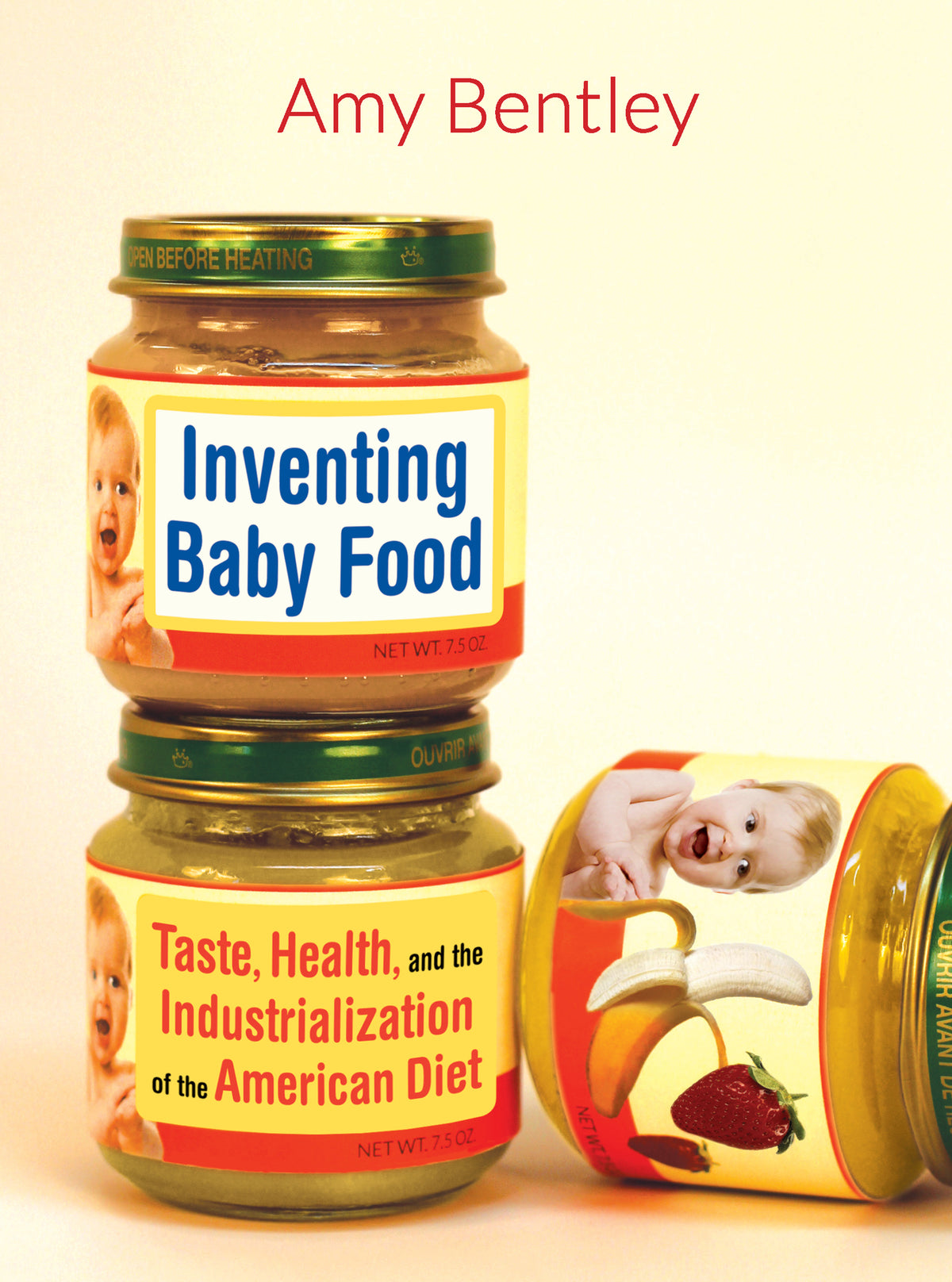
Food consumption is a significant and complex social activity—and what a society chooses to feed its children reveals much about its tastes and ideas regarding health. In this groundbreaking historical work, Amy Bentley explores how the invention of commercial baby food shaped American notions of infancy and influenced the evolution of parental and pediatric care.
Until the late nineteenth century, infants were almost exclusively fed breast milk. But over the course of a few short decades, Americans began feeding their babies formula and solid foods, frequently as early as a few weeks after birth.
By the 1950s, commercial baby food had become emblematic of all things modern in postwar America. Little jars of baby food were thought to resolve a multitude of problems in the domestic sphere: they reduced parental anxieties about nutrition and health; they made caretakers feel empowered; and they offered women entering the workforce an irresistible convenience. But these baby food products laden with sugar, salt, and starch also became a gateway to the industrialized diet that blossomed during this period.
Today, baby food continues to be shaped by medical, commercial, and parenting trends. Baby food producers now contend with health and nutrition problems as well as the rise of alternative food movements. All of this matters because, as the author suggests, it’s during infancy that American palates become acclimated to tastes and textures, including those of highly processed, minimally nutritious, and calorie-dense industrial food products.
Until the late nineteenth century, infants were almost exclusively fed breast milk. But over the course of a few short decades, Americans began feeding their babies formula and solid foods, frequently as early as a few weeks after birth.
By the 1950s, commercial baby food had become emblematic of all things modern in postwar America. Little jars of baby food were thought to resolve a multitude of problems in the domestic sphere: they reduced parental anxieties about nutrition and health; they made caretakers feel empowered; and they offered women entering the workforce an irresistible convenience. But these baby food products laden with sugar, salt, and starch also became a gateway to the industrialized diet that blossomed during this period.
Today, baby food continues to be shaped by medical, commercial, and parenting trends. Baby food producers now contend with health and nutrition problems as well as the rise of alternative food movements. All of this matters because, as the author suggests, it’s during infancy that American palates become acclimated to tastes and textures, including those of highly processed, minimally nutritious, and calorie-dense industrial food products.

Price: $29.95
Pages: 256
Publisher: University of California Press
Imprint: University of California Press
Series: California Studies in Food and Culture
Publication Date:
19 September 2014
Trim Size: 9.00 X 6.00 in
ISBN: 9780520283459
Format: Paperback
BISACs:
"Bentley, author of Eating for Victory, has meticulously scoured the literature on infant nutrition and presented a very fluid, flowing, and engrossing account of the history of baby food over the past century."
— R. A. Hoots
Amy Bentley is Professor in the Department of Nutrition, Food Studies, and Public Health at New York University. She is the author of Eating for Victory: Food Rationing and the Politics of Domesticity and the editor of A Cultural History of Food in the Modern Era.
List of Illustrations
Introduction
1. Industrial Food, Industrial Baby Food: The 1890s to the 1930s
2. Shifting Child-Rearing Philosophies and Early Solids: The Golden Age of Baby Food at Midcentury
3. Industrialization, Taste, and Their Discontents: The 1960s to the 1970s
4. Natural Food, Natural Motherhood, and the Turn toward Homemade: The 1970s to the 1990s
5. Reinventing Baby Food in the Twenty-First Century
Acknowledgments
Notes
Bibliography
Index
Introduction
1. Industrial Food, Industrial Baby Food: The 1890s to the 1930s
2. Shifting Child-Rearing Philosophies and Early Solids: The Golden Age of Baby Food at Midcentury
3. Industrialization, Taste, and Their Discontents: The 1960s to the 1970s
4. Natural Food, Natural Motherhood, and the Turn toward Homemade: The 1970s to the 1990s
5. Reinventing Baby Food in the Twenty-First Century
Acknowledgments
Notes
Bibliography
Index