


Some error occured while loading the Quick View. Please close the Quick View and try reloading the page.
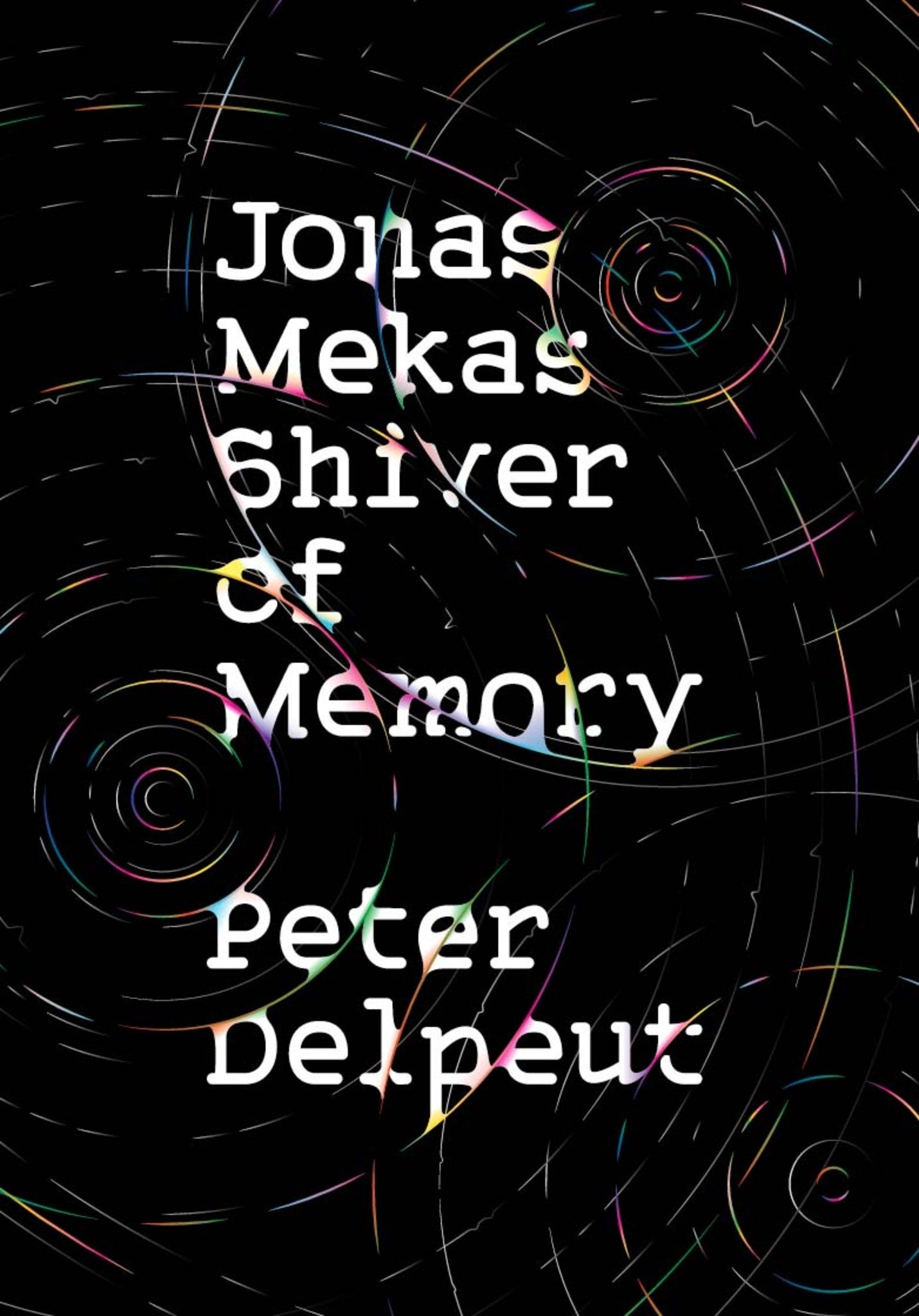
The texture of memory and the ability of art and film to bear witness to traumatic events are delicately approached in this book-length essay by a Mekas cinephile.
For years, filmmaker Peter Delpeut has had Jonas Mekas's Movie Journal within easy reach of his desk. Since his student days, he has been a great admirer of the Lithuanian-American ‘Godfather of avant-garde cinema’. Until he was startled in June 2018 by an article in The New York Review of Books. Historian Michael Casper claimed that Mekas had deliberately forgotten or misrepresented certain events during World War II. Seeded by this controversy over Mekas’s memories of his Lithuanian youth and Mekas’s pain over his subsequent exile, Delpeut’s essayistic and self-reflective book flowers into an inquiry about memory and forgetting; the moral compass of the future that cannot find its bearing in the past; the abilities of art to witness; and the roles we all must play in writing the adequate history of events too traumatic for a just accounting.
Although there is little doubt that Mekas himself never participated in the horrors of the Holocaust in Lithuania, his silence about the fate of his Jewish countrymen and neighbors could be said to enable a rewriting of history, at the sacrifice of witness testimonies. As Delpeut follows Mekas through films, diaries, his public performances, his speeches, and finally his testimony given to the United States Holocaust Memorial Museum (USHMM), he encounters an impasse for which he was not prepared.

Delpeut examines how distorting memory can be, tests the [accusatory] claims against the work of Mekas in his films, diaries, poetry, and testimonies. His book is a fascinating case of historical criticism.
—Art Magazine Flanders
Whatever track Delpeut follows, whatever line of reasoning he tries, he will not arrive at a complete understanding, let alone an unequivocal judgement. His thoughtful, vulnerable, meandering attempts fascinated me. The failure of Jonas Mekas's rehabilitation ensured that this book about him was successful.
—De Groene Amsterdammer
Radical subjectivity is the basis of Mekas's work. Delpeut struggles with his admiration for Mekas. “My hero must not be a liar,” says Delpeut. How is he to judge Mekas' past? A man writes about a man who has written about a man who made movies about his memories. Such a topic is difficult to describe. The book contains many, all equally interesting aspects.
—Trouw Zeitgeist
"Not another study of Mekas’s work, but a reflection on Mekas’s past and his media image, the role of the historian, the way collective and individual memories work, and certain events that happened in Lithuania during the Second World War. ... This book is absolutely timely and essential, raising key questions about memories and the way to record, collect, or relate them. It is also about silence and trauma, about not being able to remember or revisit past experiences, about history and subjectivity, and about individual responsibility too. And it certainly invites us to reconsider the life and work of one of the twentieth century’s major film artists."
—Muriel Tinel-Temple, Alphaville: Journal of Film and Screen Media
Praise for Past Works:
Delpeut is an acclaimed Dutch author frequently reviewed in the most highly circulated periodicals and magazines, including Esquire, Literary Netherlands, De Groene Amsterdammer, and other international publications. His work has been called "exceptionally mature," "mysteriously beautiful," and himself a "careful and visual writer," "skilled" in observation of the minutest detail.
Delpeut writes in a meandering, micro-detailed way, but also with fascinating mindfulness; he forces you to look far from our present hectic existence…. Delpeut does not impose anything. He leads the way. And the road is fascinating all the way to the end.
—Esquire, Netherlands
Peter Delpeut (b.1956) is a Dutch author and filmmaker currently living in Amsterdam. He has written four novels, several essay books on art and film, and two lyrical books about long distance cycling. For his debut novel in 2007 he was nominated for the Gerard Walschap Prize and awarded the Halewijn Prize. He has made critically acclaimed and prizewinning films in many genres: found footage, documentary and features. He studied philosophy and film theory, graduating from the Dutch Film Academy in 1984 before serving as editorfor film magazines Skrien and Versus. From 1988 to 1995 he worked as curator and deputy-director for the Netherlands Filmmuseum (now Eye), famous at the time for its revolutionary color preservations of films from the silent era. In 2005 a retrospective of his film work was presented in Washington, New York and Berkeley.
memories
Michael Casper
Mekas revisited
charisma
diary
oral history
magazine
the forest of Astravas
trauma
trust
documentary
settle the scores
Bibliography
Acknowledgments