


Some error occured while loading the Quick View. Please close the Quick View and try reloading the page.
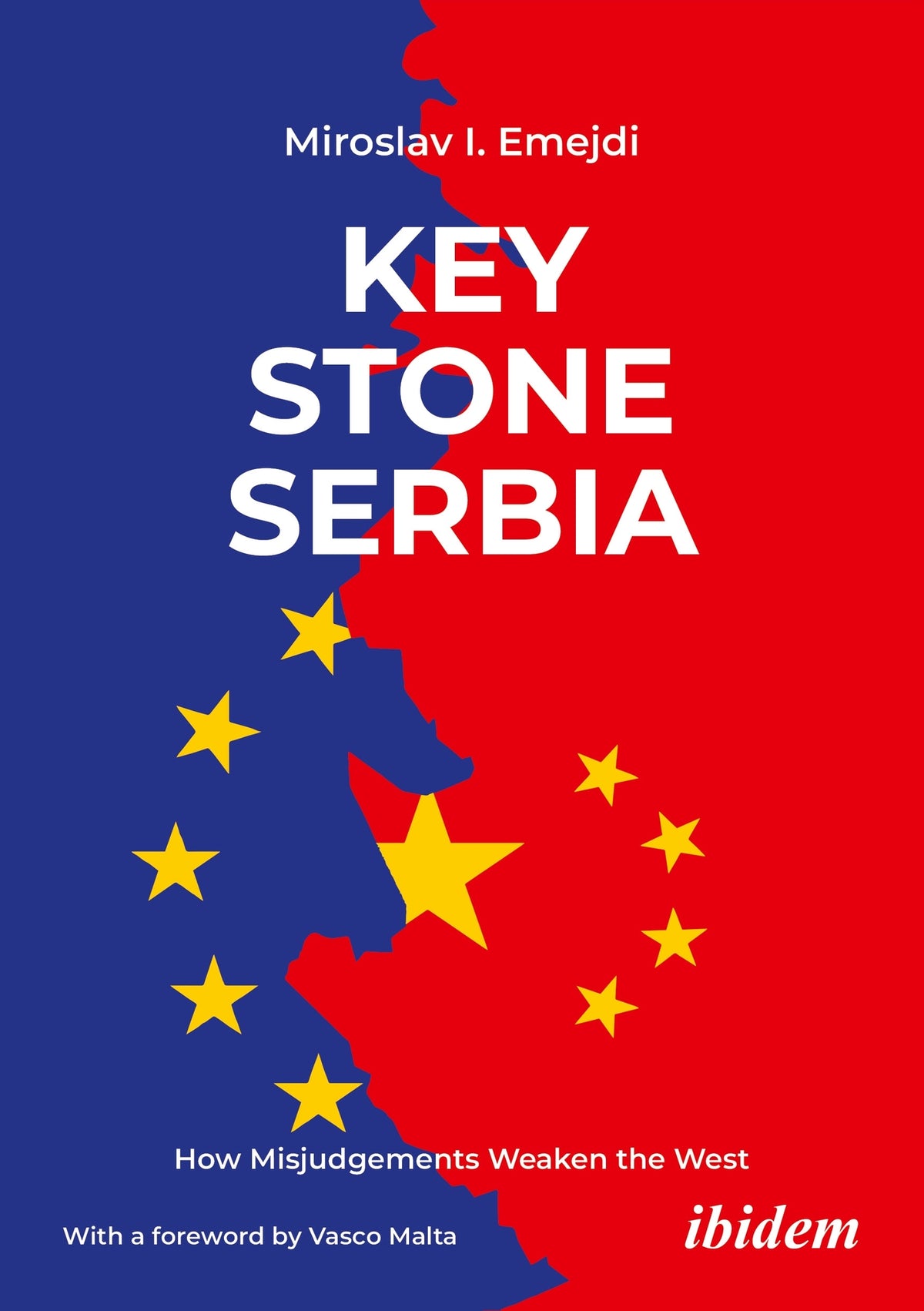
Serbia is no peripheral small state. It is Europe’s geopolitical linchpin. For centuries, Serbia’s significance has vastly exceeded its size. Yet the West has repeatedly misjudged Serbia—with grave consequences for European stability and transatlantic security. In this unflinching analysis, Miroslav I. Emejdi exposes how
• the unresolved Kosovo question,
• China’s aggressive strategic advance across the Balkans,
• Russia’s enduring leverage, and
• successive Western miscalculations have entrenched deep mistrust in Belgrade and turned Serbia into a critical vulnerability for the West.
Drawing on the rapid shifts in the global balance of power, the author makes a compelling case: half-hearted Balkan policies are no longer sustainable. They directly undermine Western security at a time of intensifying great-power competition. Emejdi’s bold conclusion: Only the swift and comprehensive EU accession of Serbia and the entire Western Balkans can deliver lasting continental stability, relieve pressure on NATO and the transatlantic alliance, and better prepare the West for the defining challenges of the 21st century. A clear-eyed, provocative read that cuts through illusions and reveals why the Balkans could once again become Europe’s powder keg—and what must be done to prevent it. Essential for anyone who wants to understand the real fault lines shaping Europe’s future.

Miroslav I. Emejdi (Author)
Miroslav I. Emejdi, born in 1983, is a Chief Commissioner of Law enforcement in Germany and a recognized expert on geopolitics and security. After graduating from the Hessian University of Applied Police Sciences, he served as an operational criminal investigator targeting illegal prostitution and street-level narcotics trafficking, gaining in-depth insight into the structures of criminal networks and their broader socio-economic impact. Following his transfer to the Department for Counterterrorism and Political Extremism, he spent several years focusing on Islamism and politically motivated crime with international dimensions. He was also a lecturer at the Hessian University of Applied Police Sciences. Today, Emejdi works as on-demand expert speaker for national and international security agencies. He has delivered lectures, among others, to members of the U.S. Department of Homeland Security (DHS), the German domestic and foreign intelligence services, the FBI, the U.S. Army, and the German Armed Forces. In 2023, he traveled across the United States at the invitation of the U.S. Department of State as a German delegate to the renowned International Visitor Leadership Program. He has received numerous honors, including special recognition from former U.S. Air Force Chief of Staff, General Mark Anthony Welsh III.
Bernd Paul (Foreword by)
Bernd Paul, born in 1958, is a senior German law enforcement official and former Chief of Police. Over the course of nearly five decades in service, he held leadership roles in criminal investigations, state security, intelligence, and police administration. After joining the Hesse State Police in 1974, Paul moved to the Hessian State Bureau of Criminal Investigation, where he worked in specialized divisions and later directed units for robbery, property, and economic crime in Frankfurt, Germany. He coordinated major investigations, including the recovery of stolen masterpieces from the Tate Gallery in London, the high-profile sixfold homicide on Frankfurt’s “Kettenhofweg”, and the nationwide crackdown on the so-called “toxic-waste mafia,” one of the largest police raids in postwar Germany. From 2001 on, Paul served as Department Head and Lecturer at the University of Applied Administrative Sciences in Giessen, Germany. In 2007, he moved to the Hessian Ministry of the Interior, working as a senior advisor on criminal police matters and serving as deputy to the State Police Inspector - the highest-ranking operational police officer in the state. In 2011, he was appointed Deputy Police Chief of the North Hesse Police Headquarters. In 2014, he served as Deputy Director of the Hessian domestic intelligence service—Germany’s state-level agency for counterintelligence and extremism—, where he directed counter-Islamism operations. Two years later, he returned to uniformed policing as Chief of Police for Central Hesse, a post he held until his retirement in 2023.
Vasco Malta (Foreword by)
Vasco Malta is an international lawyer and senior policy leader with two decades of experience at the intersection of law, human rights, and migration governance. He holds a Law degree and an LL.M. in European Law in a Global Context from the Católica School of Law and completed the program Strategic Thinking and Management at Harvard Business Publishing School. Since 2005, Malta has combined legal expertise with high-level government and international service. He began his career at the Portuguese High Commission for Migration and later served as Legal Officer for the Commission for Equality and Against Racial Discrimination. Appointed by the Portuguese Government as National Liaison Officer to the EU Agency for Fundamental Rights, he went on to work at the Agency in Vienna, Austria (2014–2018), where he coordinated European networks on hate crime, justice cooperation, and parliamentary relations. From 2019, he directed International Relations and Migration Policy at the High Commission for Migration and served as Assistant to the Minister of Internal Affairs, advising on migration, refugees, human trafficking, and domestic violence. In 2020, following a competitive international selection process, he was appointed Head of Mission of the International Organization for Migration (IOM)—the United Nations Migration Agency—in Portugal. Malta is a frequent speaker at international conferences and a recognized voice on global migration, human rights, and equality.