


Some error occured while loading the Quick View. Please close the Quick View and try reloading the page.
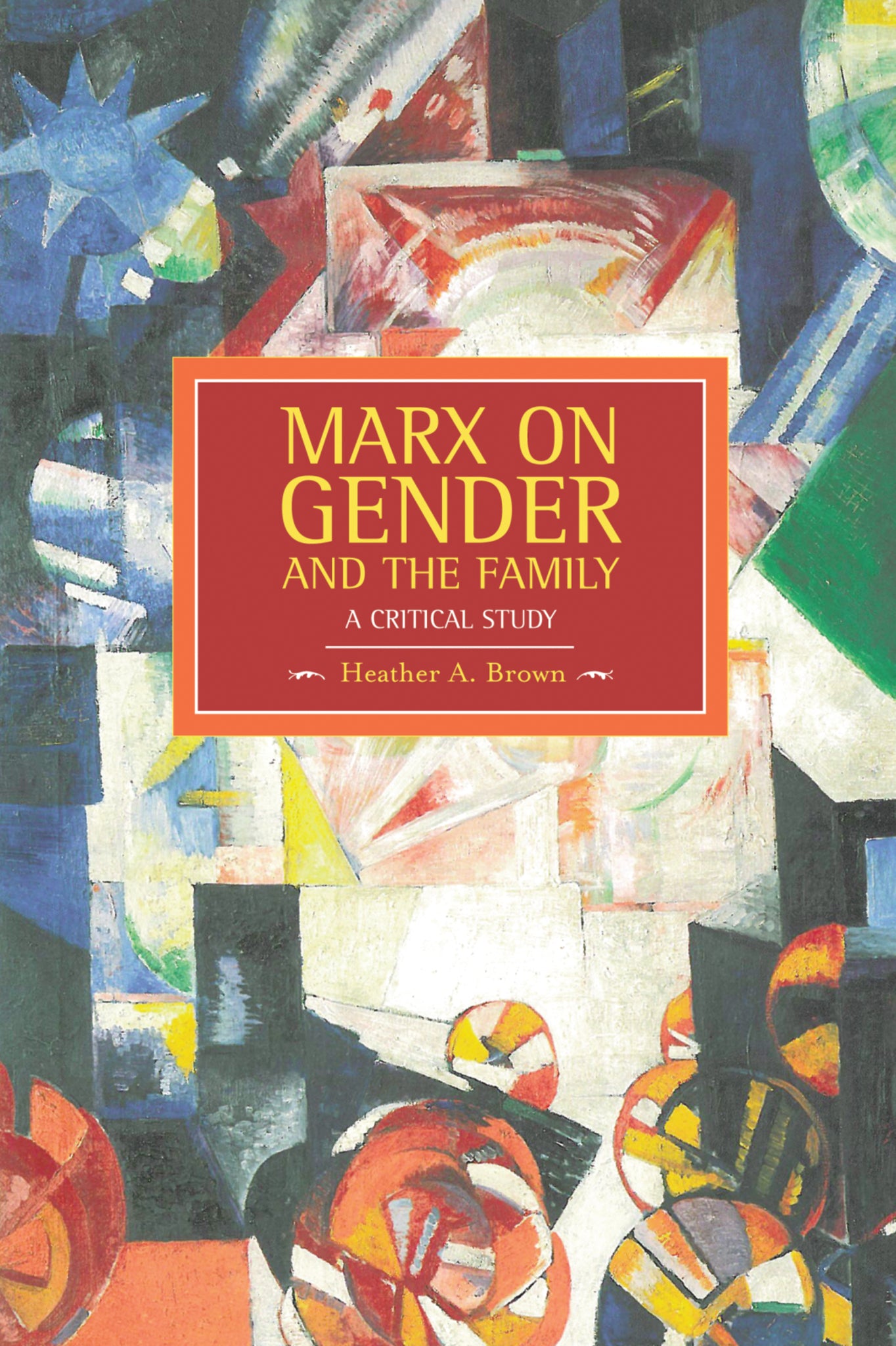
This, the first book-length study devoted exclusively to Marx’s perspectives on gender and the family, offers a fresh look at this topic in light of twenty-first century concerns. Although Marx’s writings sometimes exhibit sexism his work often transcends these phrases. Brown studies his writings on gender, as well as his 1879-1882 notebooks on precapitalist societies and gender.

Price: $30.00
Pages: 246
Publisher: Haymarket Books
Imprint: Haymarket Books
Series: Historical Materialism
Publication Date:
05 November 2013
Trim Size: 9.00 X 6.02 in
ISBN: 9781608462780
Format: Paperback
"This short, comprehensive handbook will no doubt provide the basis for a new wave of feminist engagement with Marxism and is a clarion call for all those who regard themselves as Marxists to re-evaluate their ideological conceptions."
— Barry Healy, Links: International Journal of Socialist Renewal
Overall, from Marx on Gender and the Family emerges a dialectical Marxism, one that points to the beginnings of a unitary theory of gender and class. Noted throughout is that Marx did not systematically examine gender as a category and the aim of the book is not to try and construct one. Brown is not scared to highlight some of Marx’s failings, in particular when he falls back on prejudice or moralism when discussing the oppression of women … The most important aspect of the work is that in providing a systematic overview of the totality of Marx’s work on the topic, Brown is able to indicate openings for analysis that can construct the base for the redevelopment of a Marxist-feminist theory.
—Jenny Morrison, International Socialist Group
— Barry Healy, Links: International Journal of Socialist Renewal
Overall, from Marx on Gender and the Family emerges a dialectical Marxism, one that points to the beginnings of a unitary theory of gender and class. Noted throughout is that Marx did not systematically examine gender as a category and the aim of the book is not to try and construct one. Brown is not scared to highlight some of Marx’s failings, in particular when he falls back on prejudice or moralism when discussing the oppression of women … The most important aspect of the work is that in providing a systematic overview of the totality of Marx’s work on the topic, Brown is able to indicate openings for analysis that can construct the base for the redevelopment of a Marxist-feminist theory.
—Jenny Morrison, International Socialist Group
Heather Brown Ph.D. (2009), Purdue University, is an Assistant Professor of Political Science at Westfield State University. Her research interests are in modern and contemporary political thought especially involving the intersections of gender, race and class.
Acknowledgements
1. Introduction
Reevaluating and developing Marx for feminist theory today
Overview of the book
2. The Early Writings on Gender and the Family
The 1844 Manuscripts
Labour and alienation
Gender in the 1844 Manuscripts
Women’s alienation in capitalist society
Modes of production and the course of history
Alienation, bourgeois morality and suicide
Revisiting the nature/culture and man/woman dualisms
Conclusion
3. Political Economy, Gender, and the ‘Transformation’ of the Family
Engels’s ‘Principles of Communism’ in relation to gender and the family
The Communist Manifesto
Nature and society in Capital
The political economy of Capital, Volume I
Gender and the family in Capital
Conclusion
4. Marx’s Journalism and Political Activities
The Preston strikes and women’s labour
The Bulwer-Lytton scandal
Women and the First International
Marx and the Kugelmanns
Women and the Paris Commune
After the Commune
Conclusion
5. Patriarchy, Women’s Oppression and Resistance: Comparing Marx and Engels on Gender and the Family in Precapitalist Societies
Marx’s notebooks and the history of The Origin of the Family
Separating Marx from Engels
Marx’s notebooks in historical context
Morgan’s Ancient Society
Marx’s notes on Morgan
Engels’s Origin of the Family, Private Property and the State
Engels’s uncritical acceptance of Morgan and Bachofen on women’s position in clan-societies
Comparing Marx and Engels on gender
6. The Family, the State and Property-Rights: The Dialectics of Gender and the Family in Precapitalist Societies
Maine’s Lectures on the Early History of Institutions
Marx’s notes on Maine
Marx’s notebooks on Ludwig Lange’s Römische Alterthümer
Conclusion
7. Conclusion
Evaluating Marx’s work on gender and the family for today
References
Index
1. Introduction
Reevaluating and developing Marx for feminist theory today
Overview of the book
2. The Early Writings on Gender and the Family
The 1844 Manuscripts
Labour and alienation
Gender in the 1844 Manuscripts
Women’s alienation in capitalist society
Modes of production and the course of history
Alienation, bourgeois morality and suicide
Revisiting the nature/culture and man/woman dualisms
Conclusion
3. Political Economy, Gender, and the ‘Transformation’ of the Family
Engels’s ‘Principles of Communism’ in relation to gender and the family
The Communist Manifesto
Nature and society in Capital
The political economy of Capital, Volume I
Gender and the family in Capital
Conclusion
4. Marx’s Journalism and Political Activities
The Preston strikes and women’s labour
The Bulwer-Lytton scandal
Women and the First International
Marx and the Kugelmanns
Women and the Paris Commune
After the Commune
Conclusion
5. Patriarchy, Women’s Oppression and Resistance: Comparing Marx and Engels on Gender and the Family in Precapitalist Societies
Marx’s notebooks and the history of The Origin of the Family
Separating Marx from Engels
Marx’s notebooks in historical context
Morgan’s Ancient Society
Marx’s notes on Morgan
Engels’s Origin of the Family, Private Property and the State
Engels’s uncritical acceptance of Morgan and Bachofen on women’s position in clan-societies
Comparing Marx and Engels on gender
6. The Family, the State and Property-Rights: The Dialectics of Gender and the Family in Precapitalist Societies
Maine’s Lectures on the Early History of Institutions
Marx’s notes on Maine
Marx’s notebooks on Ludwig Lange’s Römische Alterthümer
Conclusion
7. Conclusion
Evaluating Marx’s work on gender and the family for today
References
Index