


Some error occured while loading the Quick View. Please close the Quick View and try reloading the page.
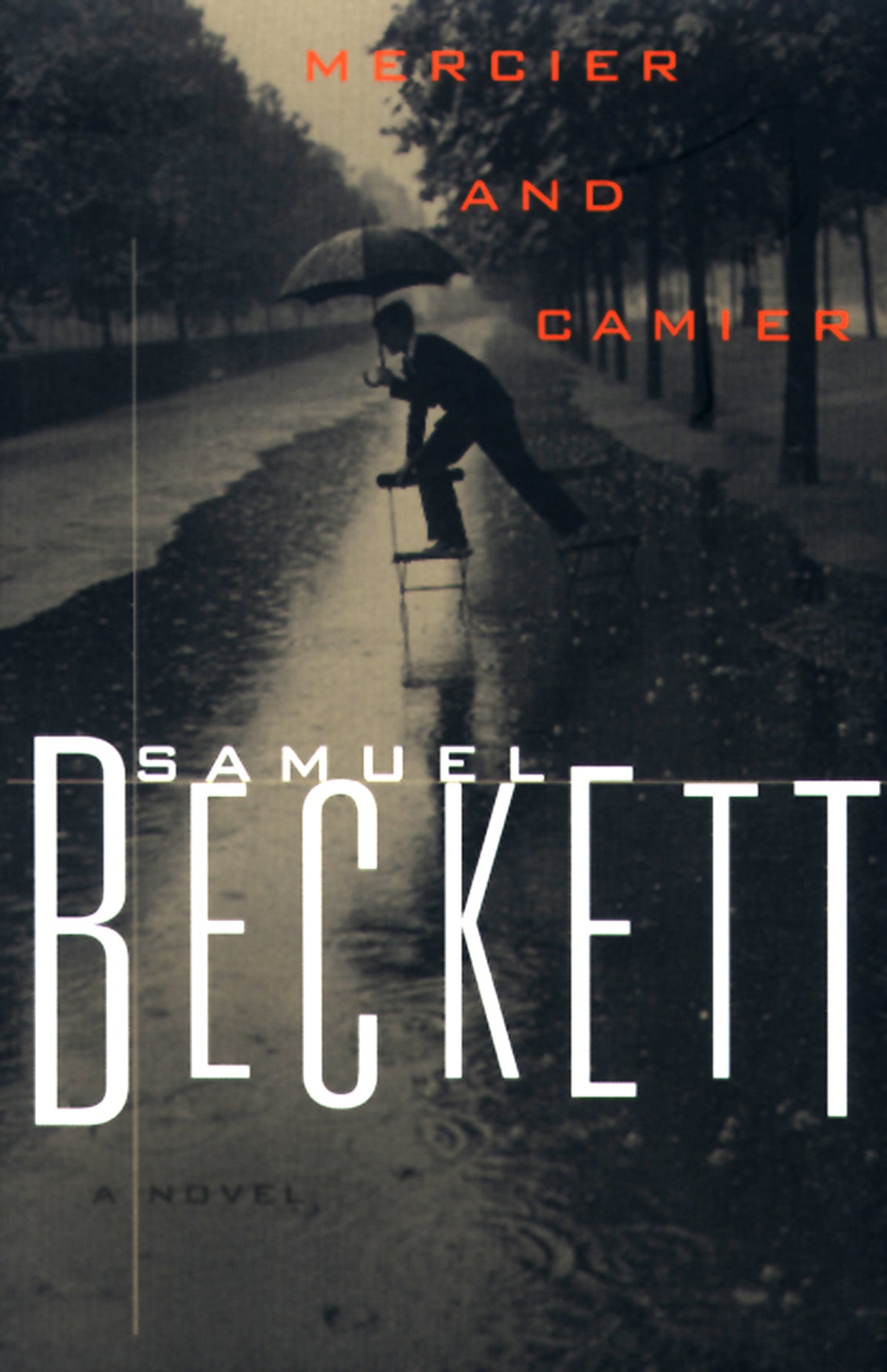
Mercier and Camier, Beckett’s first postwar novel and his first in French, has been described as a forerunner of his most famous work, Waiting for Godot. Like the play, Mercier and Camier revolves around two wandering vagabonds. Their journey is described as relatively easy going, with no frontiers or seas to be crossed. The reader never knows where the journey starts or where it ends and the novel is less about the characters’ physical progress than their exchanges regarding the meaning of their journey, their goals, and life in general. One of Beckett’s more accessible works, Mercier and Camier is one of his early endeavors to experiment with structure and reimagine the novel as it had been known.

Price: $18.00
Pages: 112
Publisher: Grove Atlantic
Imprint: Grove Press
Publication Date:
11 January 2011
Trim Size: 8.25 X 5.50 in
ISBN: 9780802144447
Format: Paperback
Samuel Beckett:
Samuel Beckett (1906-1989), one of the leading literary and dramatic figures of the twentieth century, was born in Foxrock, Ireland and attended Trinity University in Dublin. In 1928, he visited Paris for the first time and fell in with a number of avant-garde writers and artists, including James Joyce. In 1937, he settled in Paris permanently. Beckett wrote in both English and French, though his best-known works are mostly in the latter language. A prolific writer of novels, short stories, and poetry, he is remembered principally for his works for the theater, which belong to the tradition of the Theater of the Absurd and are characterized by their minimalist approach, stripping drama to its barest elements. In 1969, Beckett was awarded the Nobel Prize in Literature and commended for having "transformed the destitution of man into his exaltation." Beckett died in Paris in 1989.
At the age of seventy-six he said: "With diminished concentration, loss of memory, obscured intelligence... the more chance there is for saying something closest to what one really is. Even though everything seems inexpressible, there remains the need to express. A child need to make a sand castle even though it makes no sense. In old age, with only a few grains of sand, one has the greatest possibility." (from Playwrights at Work, ed. by George Plimpton, 2000)
Samuel Beckett (1906-1989), one of the leading literary and dramatic figures of the twentieth century, was born in Foxrock, Ireland and attended Trinity University in Dublin. In 1928, he visited Paris for the first time and fell in with a number of avant-garde writers and artists, including James Joyce. In 1937, he settled in Paris permanently. Beckett wrote in both English and French, though his best-known works are mostly in the latter language. A prolific writer of novels, short stories, and poetry, he is remembered principally for his works for the theater, which belong to the tradition of the Theater of the Absurd and are characterized by their minimalist approach, stripping drama to its barest elements. In 1969, Beckett was awarded the Nobel Prize in Literature and commended for having "transformed the destitution of man into his exaltation." Beckett died in Paris in 1989.
At the age of seventy-six he said: "With diminished concentration, loss of memory, obscured intelligence... the more chance there is for saying something closest to what one really is. Even though everything seems inexpressible, there remains the need to express. A child need to make a sand castle even though it makes no sense. In old age, with only a few grains of sand, one has the greatest possibility." (from Playwrights at Work, ed. by George Plimpton, 2000)