


Some error occured while loading the Quick View. Please close the Quick View and try reloading the page.
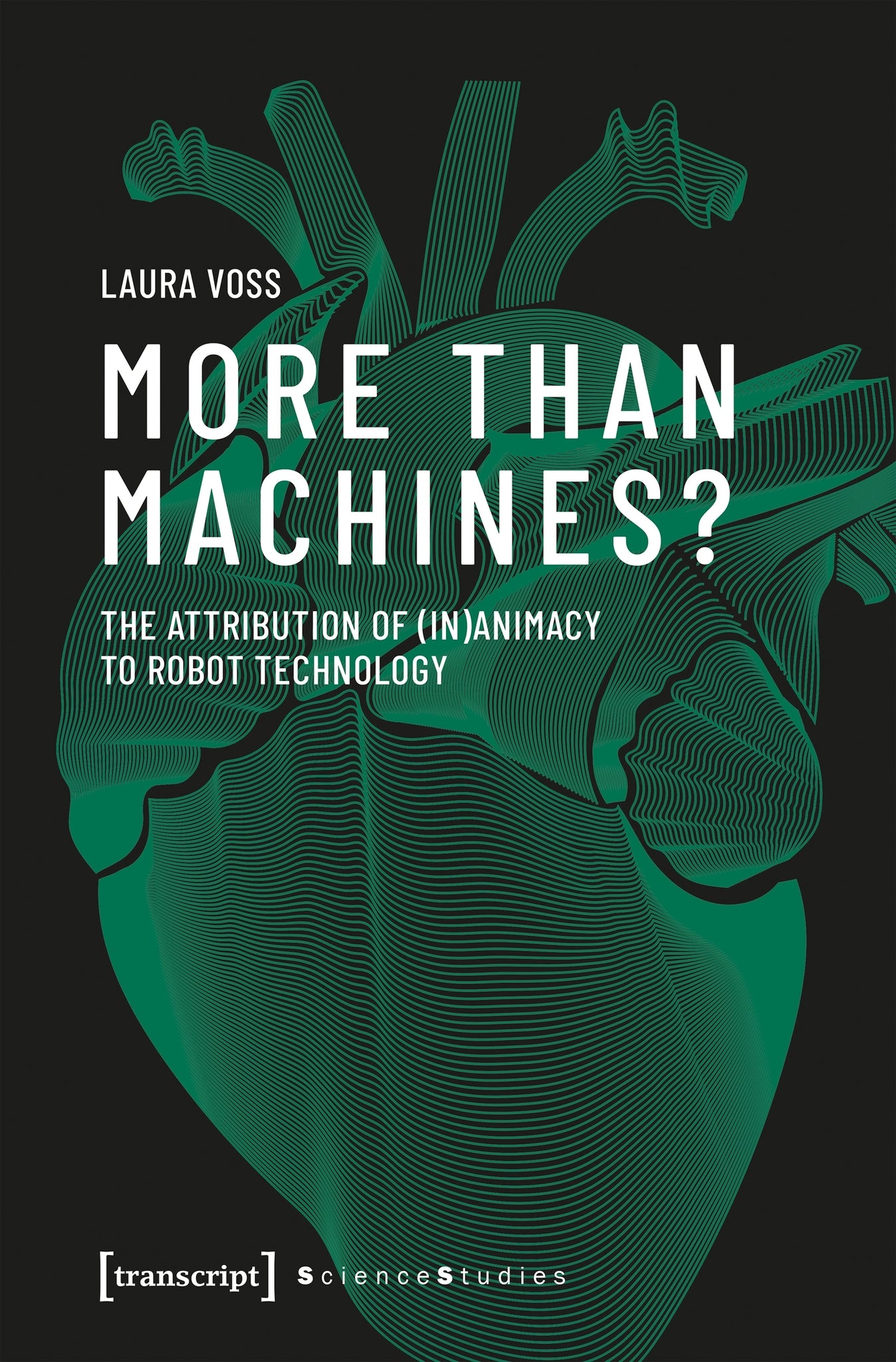
We know that robots are just machines. Why then do we often talk about them as if they were alive? Laura Voss explores this fascinating phenomenon, providing a rich insight into practices of animacy (and inanimacy) attribution to robot technology: from science-fiction to robotics R&D, from science communication to media discourse, and from the theoretical perspectives of STS to the cognitive sciences. Taking an interdisciplinary perspective, and backed by a wealth of empirical material, Voss shows how scientists, engineers, journalists – and everyone else – can face the challenge of robot technology appearing »a little bit alive« with a reflexive and yet pragmatic stance.

Price: $50.00
Pages: 216
Publisher: transcript publishing
Imprint: transcript publishing
Series: Science Studies
Publication Date:
30 April 2021
Trim Size: 8.86 X 5.83 in
ISBN: 9783837655605
Format: Paperback
»The full book is an accessible and quick read that I would recommend for anyone involved in journalism or media studies.«
Laura Voss is a science manager in the Research Strategy Unit of Ludwig-Maximilians-Universität München. With a background in neuro-cognitive, organizational, and occupational psychology, she previously worked as a science and technology studies researcher and as a science manager at the Munich Center for Technology in Society (MCTS) and for international robotics R&D consortiums at the Technische Universität München.
Frontmatter 1
Contents 5
Acknowledgements 7
Preface 9
1. Robots Wanted - Dead And/Or Alive 11
2. Disciplinary Context and Terminology 31
3. Making Robots: In/Animacy Attributions in Robotics Research and Development 53
4. Showing Off Robots: In/Animacy Attributions in Robotics Demonstrations, Science Communication, and Marketing 75
5. Reporting on Robots: In/Animacy Attributions in Media Discourse 105
6. Conclusions and Openings 129
References 155
List of Figures 205
List of Abbreviations 207
Appendix 209