


Some error occured while loading the Quick View. Please close the Quick View and try reloading the page.
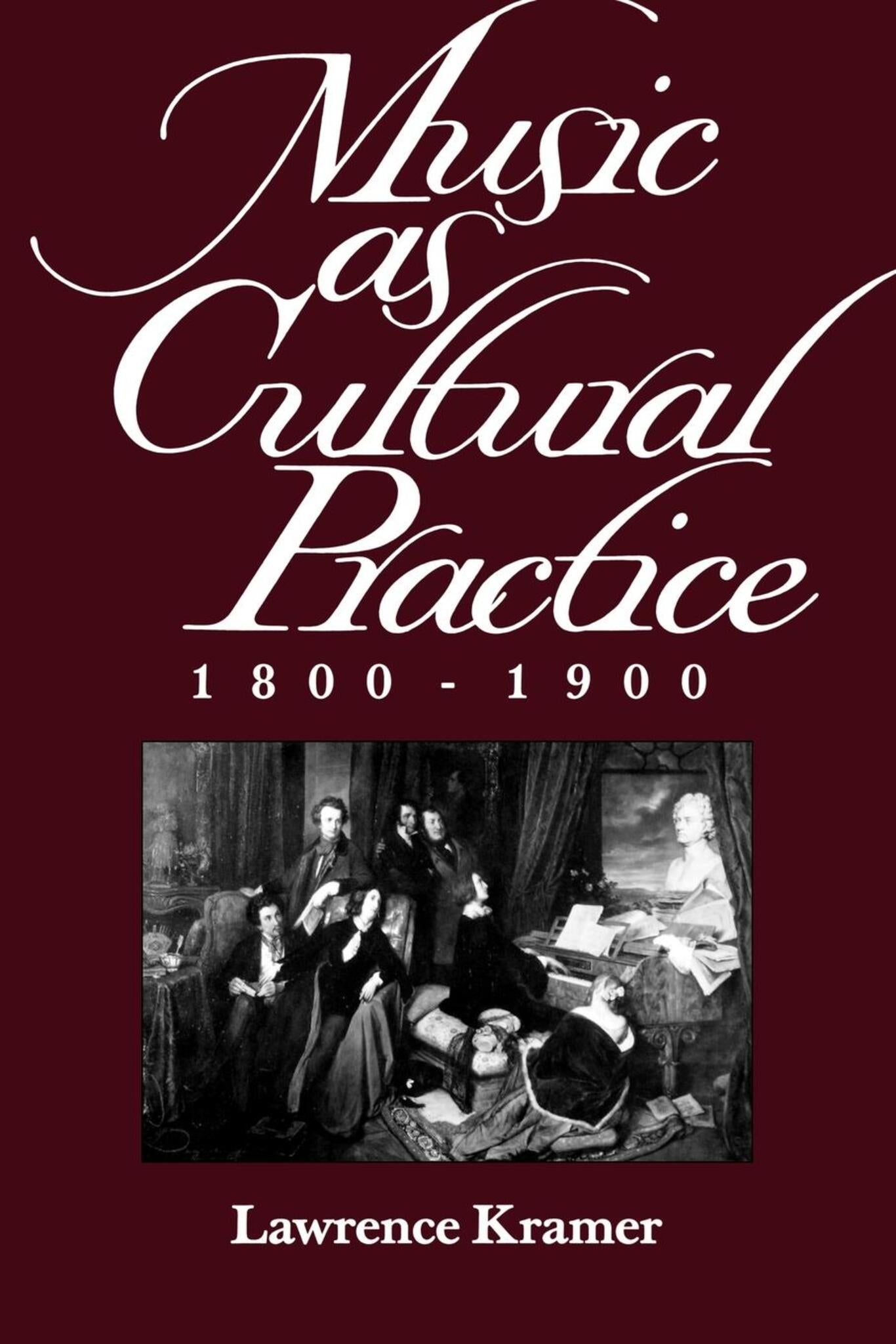
In Music as Cultural Practice, Lawrence Kramer adapts the resources of contemporary literary theory to forge a genuinely new discourse about music. Rethinking fundamental questions of meaning and expression, he demonstrates how European music of the nineteenth century collaborates on equal terms with textual and sociocultural practices in the constitution of self and society.
In Kramer's analysis, compositional processes usually understood in formal or emotive terms reappear as active forces in the work of cultural formation. Thus Beethoven's last piano sonata, Op. 111, forms both a realization and a critique of Romantic utopianism; Liszt's Faust Symphony takes bourgeois gender ideology into a troubled embrace; Wagner's Tristan und Isolde articulates a basic change in the cultural construction of sexuality. Through such readings, Kramer works toward the larger conclusion that nineteenth-century European music is concerned as much to challenge as to exemplify an ideology of organic unity and subjective wholeness. Anyone interested in music, literary criticism, or nineteenth-century culture will find this book pertinent and provocative.
In Kramer's analysis, compositional processes usually understood in formal or emotive terms reappear as active forces in the work of cultural formation. Thus Beethoven's last piano sonata, Op. 111, forms both a realization and a critique of Romantic utopianism; Liszt's Faust Symphony takes bourgeois gender ideology into a troubled embrace; Wagner's Tristan und Isolde articulates a basic change in the cultural construction of sexuality. Through such readings, Kramer works toward the larger conclusion that nineteenth-century European music is concerned as much to challenge as to exemplify an ideology of organic unity and subjective wholeness. Anyone interested in music, literary criticism, or nineteenth-century culture will find this book pertinent and provocative.

Price: $31.95
Pages: 241
Publisher: University of California Press
Imprint: University of California Press
Series: California Studies in 19th-Century Music
Publication Date:
24 November 1993
ISBN: 9780520084438
Format: Paperback
BISACs:
Lawrence Kramer is Professor of English and Comparative Literature at Fordham University and a composer. His Music and Poetry: The Nineteenth Century and After (1984), is available from California in paperback.
List of Figures
List of Musical Examples
Preface
Acknowledgments
1. Tropes and Windows: An Outline of Musical Hermeneutics
2. Beethoven's Two,Movement Piano Sonatas and the Utopia of Romantic Esthetics
3. Impossible Objects: Apparitions, Reclining Nudes, and Chopin's Prelude in A Minor
4. Liszt, Goethe, and the Discourse of Gender
5. Musical Form and Fin-de-Siecle Sexuality
6. "As If a Voice Were in Them": Music, Narrative, and Deconstruction
Appendix: Texts and Translations
Textual Sources
Index
List of Musical Examples
Preface
Acknowledgments
1. Tropes and Windows: An Outline of Musical Hermeneutics
2. Beethoven's Two,Movement Piano Sonatas and the Utopia of Romantic Esthetics
3. Impossible Objects: Apparitions, Reclining Nudes, and Chopin's Prelude in A Minor
4. Liszt, Goethe, and the Discourse of Gender
5. Musical Form and Fin-de-Siecle Sexuality
6. "As If a Voice Were in Them": Music, Narrative, and Deconstruction
Appendix: Texts and Translations
Textual Sources
Index