


Some error occured while loading the Quick View. Please close the Quick View and try reloading the page.
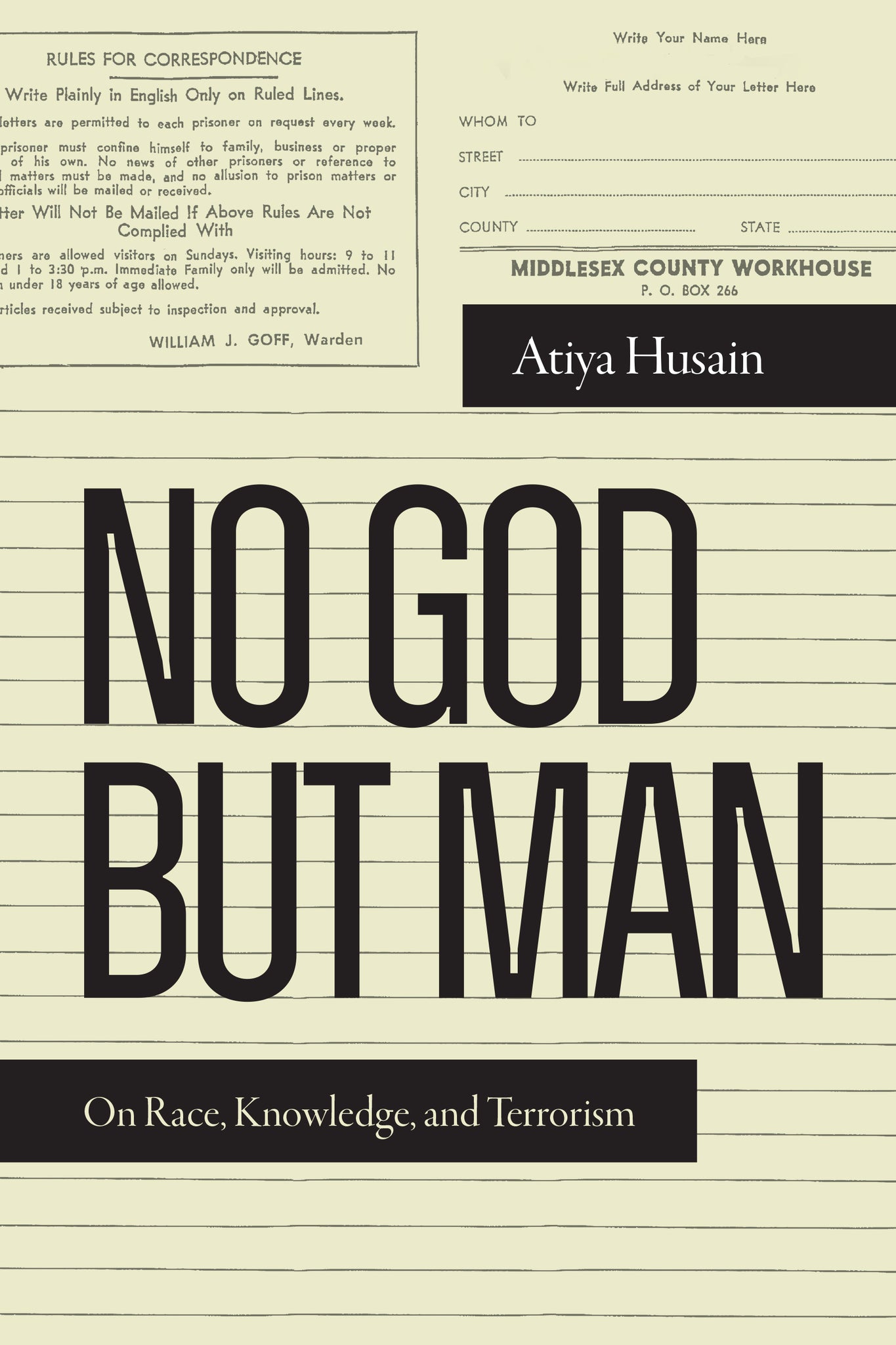
Reconceptualizing the relationship between race and Islam in the United States, No God but Man theorizes race as an epistemology using the FBI’s post-9/11 Most Wanted Terrorist list and its posters as its starting point. Atiya Husain traces the origins of the FBI wanted poster form to the work of nineteenth-century social scientist Adolphe Quetelet, specifically his overvalued type of human called “average man.” Husain argues that this notion of the human continues to structure wanted posters, as well as much contemporary social scientific thinking about race. Focusing on the curious representations on the Most Wanted Terrorist list that range from Muslims who lack a race category on their posters to the 2013 addition of Black revolutionary Assata Shakur, Husain demonstrates the ongoing influence of the average man and its relevance even today, proposing a counterweight to the category by engaging Shakur’s turn to Islam in the 1970s in the legal context. In doing so, Husain shows the limitations of race as an analytical category altogether.

Price: $26.95
Pages: 208
Publisher: Duke University Press
Imprint: Duke University Press
Series: Global Insecurities
Publication Date:
28 January 2025
Trim Size: 9.00 X 6.00 in
ISBN: 9781478031369
Format: Paperback
BISACs:
“Atiya Husain makes an exciting and original intervention in well-worn debates around Islam, race, and security to illuminate the blind spots on racialization in literature on secularism and Islam and the gaps around secularism and Islam in literature on racialization and Blackness. Analyzing state repression and logics of securitization in profound ways, Husain offers a striking account of genealogies of radicalism, race, and religion.”—Darryl Li, author of, The Universal Enemy: Jihad, Empire, and the Challenge of Solidarity
“Atiya Husain’s No God but Man analyzes the FBI’s Most Wanted Terrorist list to reveal the ways that race—as a social construction—is both galvanizing and confounding. Husain makes a provocative addition to the study of race.”—Roderick A. Ferguson, William Robertson Coe Professor of Women’s, Gender, and Sexuality Studies and American Studies, Yale University
"...[R]eading this work will reward readers with new insights into race, knowledge, and terrorism. Recommended. Graduate students and faculty."—Choice
“Atiya Husain’s No God but Man analyzes the FBI’s Most Wanted Terrorist list to reveal the ways that race—as a social construction—is both galvanizing and confounding. Husain makes a provocative addition to the study of race.”—Roderick A. Ferguson, William Robertson Coe Professor of Women’s, Gender, and Sexuality Studies and American Studies, Yale University
"What emerges from No God but Man is an analysis that compels us to think about how race and religion may operate differently in constructing the 'average man.'"
—Kambiz GhaneaBassiri, Social Forces"...[R]eading this work will reward readers with new insights into race, knowledge, and terrorism. Recommended. Graduate students and faculty."—Choice
Atiya Husain is Associate Professor of Africana Studies at Williams College.
Acknowledgments ix
Introduction 1
1. L’Homme Moyen and American Anthropometry 23
2. Assata, The Muslim 51
3. The Rule of Racelessness 83
4. Assata, Black Madonna 107
Conclusion. Race: Theirs and Ours 131
Notes 139
Bibliography 169
Index 185
Introduction 1
1. L’Homme Moyen and American Anthropometry 23
2. Assata, The Muslim 51
3. The Rule of Racelessness 83
4. Assata, Black Madonna 107
Conclusion. Race: Theirs and Ours 131
Notes 139
Bibliography 169
Index 185