


Some error occured while loading the Quick View. Please close the Quick View and try reloading the page.
Winner of the 2026 Lambda Literary Award in Gay Fiction
Shortlisted for the 2025 Goldsmiths Prize
Named a 2025 Best Book of the Year by The Washington Post and The Guardian
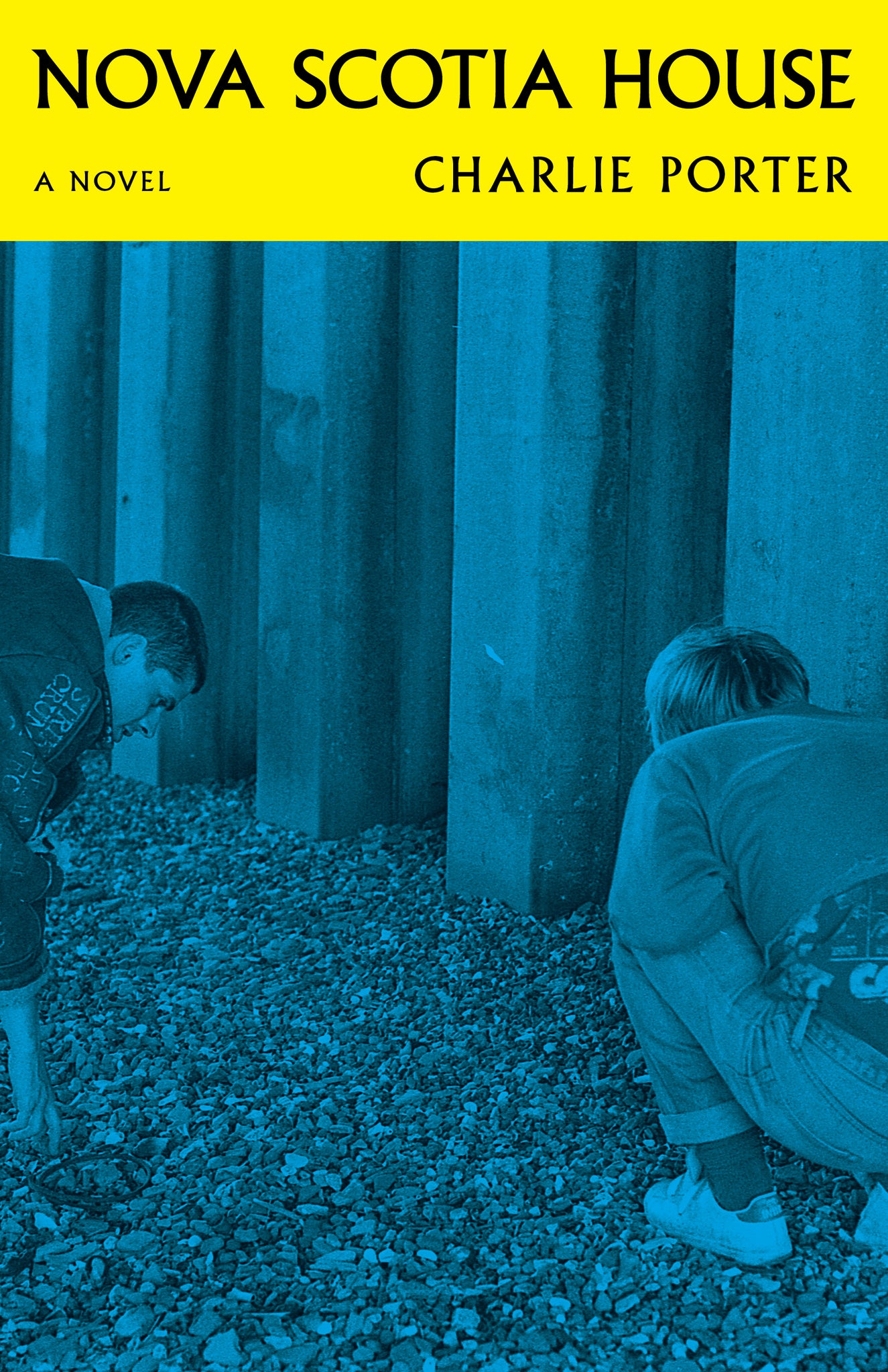
Nova Scotia House takes us to the heart of a relationship, a community and an era, both a love story and a lament.
In this profound meditation on grief, Johnny looks back at his relationship with his life partner, Jerry, after his AIDS-related death. When they met, nearly thirty years ago, Johnny was 19, Jerry was 45. They made a life on their own terms in Jerry’s flat: 1, Nova Scotia House. Johnny is still there today—but Jerry is gone, and so is the world they knew.
Intimate, visionary, and profoundly original—as well as raw, hot, and hilarious—Nova Scotia House marks the debut of a vibrant new voice in contemporary fiction.
Shortlisted for the 2025 Goldsmiths Prize
Named a 2025 Best Book of the Year by The Washington Post and The Guardian
Nova Scotia House takes us to the heart of a relationship, a community and an era, both a love story and a lament.
In this profound meditation on grief, Johnny looks back at his relationship with his life partner, Jerry, after his AIDS-related death. When they met, nearly thirty years ago, Johnny was 19, Jerry was 45. They made a life on their own terms in Jerry’s flat: 1, Nova Scotia House. Johnny is still there today—but Jerry is gone, and so is the world they knew.
Intimate, visionary, and profoundly original—as well as raw, hot, and hilarious—Nova Scotia House marks the debut of a vibrant new voice in contemporary fiction.

Price: $17.95
Pages: 240
Publisher: Nightboat Books
Imprint: Nightboat Books
Publication Date:
21 October 2025
Trim Size: 8.50 X 5.25 in
ISBN: 9781643622002
Format: Paperback
"One of the best things I’ve read in many, many years; it is an extraordinary work of the imagination, and there is so much heart and longing in it that it filled my soul.”—Hilton Als
“I truly think Charlie Porter is doing something new: forging a radically direct language for describing a whole new way of inhabiting the world.”—Olivia Laing
“The fiction of Nova Scotia House asks both its reader and its author: How can we connect again with radical queerness and countercultural ideas of living? How can we live life as fully, optimistically, and queerly as possible?”—Anna Cafolla, Vogue
“[A]n actual masterpiece.”—Andrea Lawlor
"The novel vividly recounts London at the height of the AIDS crisis in the late 1980s and early '90s and is written in an urgent, careening style."—The Washington Post
"Charlie Porter’s fashion journalism has been on my radar for a while. And I was most intrigued by his last book, which analyzed the style inherent to the Bloomsbury group. Porter’s debut novel takes that interest in playful forms to bold new places. Unfolding at the height of the AIDS crisis in 90s London, this diaristic reflection thrusts us right into our narrator’s skull, so we seek, remember, and mourn right along with Johnny Grant."—Brittany Allen, Lit Hub
“A book made out of conversation, internal and external, dropping punctuation as if you are slowly rushing to a train, incantatory . . . A softly inspiring book about lived history and time and, always, love.”—Eileen Myles
"Set in the London gay world of the late ’80s and early ’90s, the book is painful and poetic. It’s about the impossibility of love while trying to make it whole in a cruel world. It’s an amazing piece of work, and evidence of Charlie’s continued growth as an artist."—Interview Magazine
“Profoundly, bracingly human . . . an incantation to all that we can lose in life, even as we are still busy living it: youth, hope, optimism, alongside the helpless yearning for a better tomorrow.”—Nick Duerden, The Observer
“A tender tale of gay love and loss — set now and in the 1990s — it’s got hookups of every persuasion.”—Evan Moffitt, BUTT
“Just extraordinary. To read it is life-changing.”—Chantal Joffe
“I didn’t want to let this book go. The way it reveals its narrator, and its secrets—the pockets of emotion and memory that we half-hide from ourselves—is astonishing.”—Nate Lippens
“Memories of love and heartbreak during the AIDS epidemic are brought vividly to life in this exhilarating, risk-taking debut.”—Neil Bartlett, The Guardian
“This book occupies the spaces, the lives in between, the connections we make, the memories still happening in our heads, our bodies’ responsibility to the state we put them in, growing, lusting, dying, reviving, sold on, the ruins of our lives, the communities of our past, another kind of economy, of sex and loss and weeds and words, this work of genius.”—Philip Hoare
“This is going to blow readers' minds. Intense, physical, true.”—Paul Flynn
"Surely the tenderest of AIDS novels . . . It makes the always radical argument that play is more important than work. At heart, it's a queer manifesto, proclaiming the value of queer experience and soul."—Robert Glück
"Nova Scotia House recalls an era when gay liberation was an open, expansive, radical field of possibilities."—McKenzie Wark
“An enveloping work of genius that does what great literature does: frankly faces the impossible to make everything, anything possible.”—Eliot Duncan
“[A] moving testament to unconventional lives that itself refuses to be conventional, a melancholy love story suffused with sensuality and grace, and a chronicle of grief and stubborn survival grounded in a rigorous aesthetic and moral vision.”—Daniel Lefferts
“Beautifully provocative, Nova Scotia House is the most compelling exploration of life, death, love and resistance that I've read for a very long time.”—Eimear McBride
“I truly think Charlie Porter is doing something new: forging a radically direct language for describing a whole new way of inhabiting the world.”—Olivia Laing
“The fiction of Nova Scotia House asks both its reader and its author: How can we connect again with radical queerness and countercultural ideas of living? How can we live life as fully, optimistically, and queerly as possible?”—Anna Cafolla, Vogue
“[A]n actual masterpiece.”—Andrea Lawlor
"The novel vividly recounts London at the height of the AIDS crisis in the late 1980s and early '90s and is written in an urgent, careening style."—The Washington Post
"Charlie Porter’s fashion journalism has been on my radar for a while. And I was most intrigued by his last book, which analyzed the style inherent to the Bloomsbury group. Porter’s debut novel takes that interest in playful forms to bold new places. Unfolding at the height of the AIDS crisis in 90s London, this diaristic reflection thrusts us right into our narrator’s skull, so we seek, remember, and mourn right along with Johnny Grant."—Brittany Allen, Lit Hub
“A book made out of conversation, internal and external, dropping punctuation as if you are slowly rushing to a train, incantatory . . . A softly inspiring book about lived history and time and, always, love.”—Eileen Myles
"Set in the London gay world of the late ’80s and early ’90s, the book is painful and poetic. It’s about the impossibility of love while trying to make it whole in a cruel world. It’s an amazing piece of work, and evidence of Charlie’s continued growth as an artist."—Interview Magazine
“Profoundly, bracingly human . . . an incantation to all that we can lose in life, even as we are still busy living it: youth, hope, optimism, alongside the helpless yearning for a better tomorrow.”—Nick Duerden, The Observer
“A tender tale of gay love and loss — set now and in the 1990s — it’s got hookups of every persuasion.”—Evan Moffitt, BUTT
“Just extraordinary. To read it is life-changing.”—Chantal Joffe
“I didn’t want to let this book go. The way it reveals its narrator, and its secrets—the pockets of emotion and memory that we half-hide from ourselves—is astonishing.”—Nate Lippens
“Memories of love and heartbreak during the AIDS epidemic are brought vividly to life in this exhilarating, risk-taking debut.”—Neil Bartlett, The Guardian
“This book occupies the spaces, the lives in between, the connections we make, the memories still happening in our heads, our bodies’ responsibility to the state we put them in, growing, lusting, dying, reviving, sold on, the ruins of our lives, the communities of our past, another kind of economy, of sex and loss and weeds and words, this work of genius.”—Philip Hoare
“This is going to blow readers' minds. Intense, physical, true.”—Paul Flynn
"Surely the tenderest of AIDS novels . . . It makes the always radical argument that play is more important than work. At heart, it's a queer manifesto, proclaiming the value of queer experience and soul."—Robert Glück
"Nova Scotia House recalls an era when gay liberation was an open, expansive, radical field of possibilities."—McKenzie Wark
“An enveloping work of genius that does what great literature does: frankly faces the impossible to make everything, anything possible.”—Eliot Duncan
“[A] moving testament to unconventional lives that itself refuses to be conventional, a melancholy love story suffused with sensuality and grace, and a chronicle of grief and stubborn survival grounded in a rigorous aesthetic and moral vision.”—Daniel Lefferts
“Beautifully provocative, Nova Scotia House is the most compelling exploration of life, death, love and resistance that I've read for a very long time.”—Eimear McBride
Charlie Porter is a writer, fashion critic and curator. He has written for the Financial Times, the Guardian, The New York Times, GQ, Luncheon, i-D, and Fantastic Man, and has been described as one of the most influential fashion journalists of his time. Porter co-runs the London queer rave Chapter 10, and is a trustee of the Friends of Arnold Circus, where he is also a volunteer gardener. He lives in London.