


Some error occured while loading the Quick View. Please close the Quick View and try reloading the page.
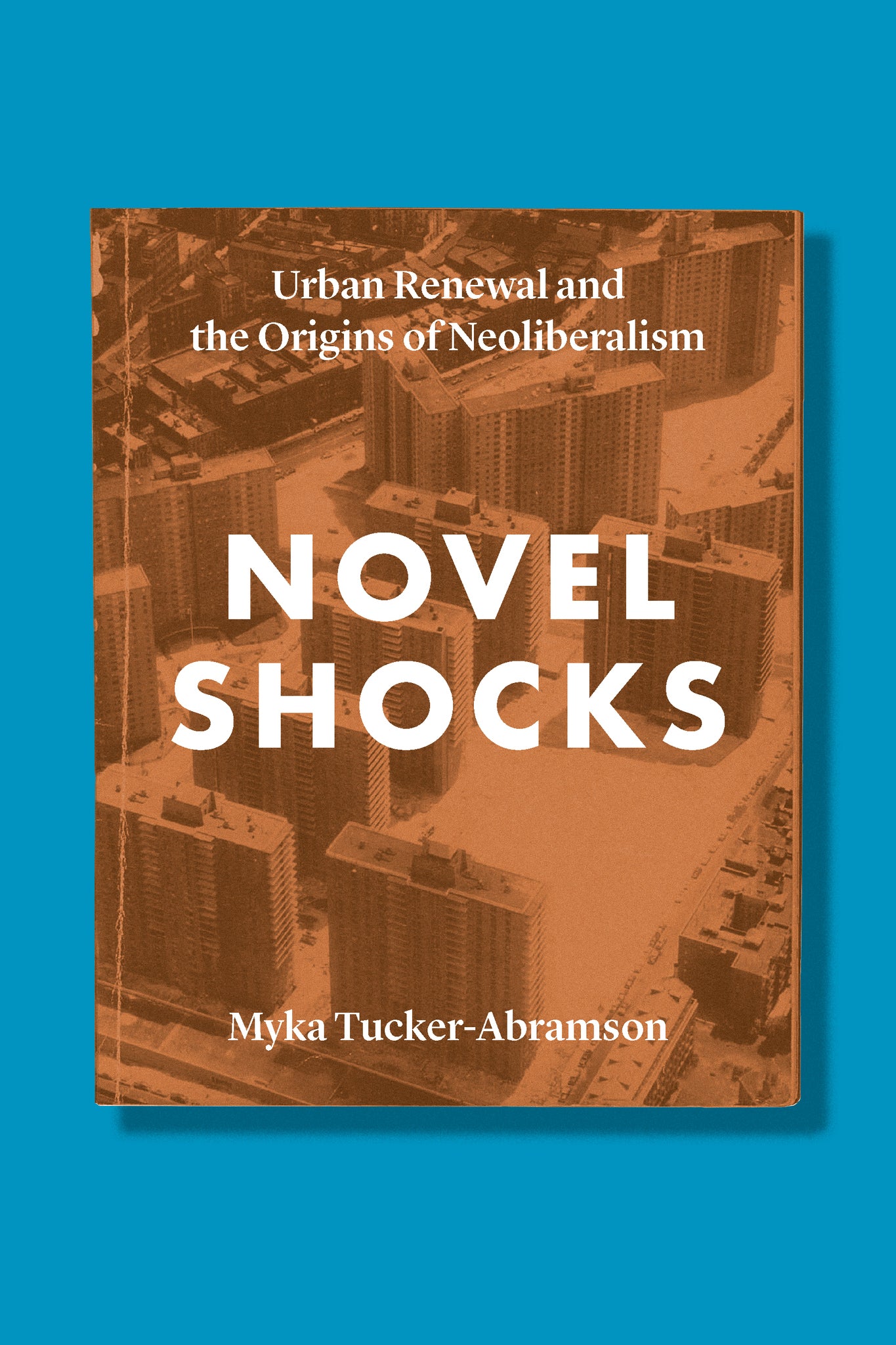
Throughout the 1950s, a coalition of developers, politicians, and planners bulldozed vast areas of land deemed “slums” or “blighted” to make way for freeways, public and private housing projects, cultural centers, and skyscrapers. While the program was national, New York was ground zero, and the demolition and monumental reconstruction of the city created a distinctive urban sensorium, rooted in the new segregated landscapes of prosperous white private space and poor black public space.
Novel Shocks situates these landscapes at the center of the midcentury novel, arguing that James Baldwin, Ralph Ellison, Patricia Highsmith, Ayn Rand, William Burroughs, Sylvia Plath, and Warren Miller all registered these new urban spaces as traumatic “shocks” that required new aesthetic forms. Rejecting older shock-based modernisms, these novelists forged a new modernism, which reimagined shock as a therapeutic force that would create a more flexible, self-reliant, and resilient subject that would nourish neoliberalism’s roots. In offering a cultural prehistory of neoliberalism, Novel Shocks resituates the Cold War novel as a key archive for understanding neoliberalism’s emergence and offers a more materialist and historically grounded account of neoliberalism’s subjective, affective, and ideological structures.

Introduction 1
1. Blueprints: Invisible Man and the Great Migration to White Flight 25
2. The Price of Salt Is the City: Patricia Highsmith and the Queer Frontiers of Neoliberalism 46
3. Naked Lunch, Or, the Last Snapshot of the Surrealists 63
4. Shock Therapy: Atlas Shrugged, Urban Renewal, and the Making of the Entrepreneurial Subject 84
5. Fallen Corpses and Rising Cities: The Bell Jar and the Making of the New Woman 104
Conclusion: The Siege of Harlem and Its Commune 125
Acknowledgments 139
Notes 143
Works Cited 163
Index 185