


Some error occured while loading the Quick View. Please close the Quick View and try reloading the page.
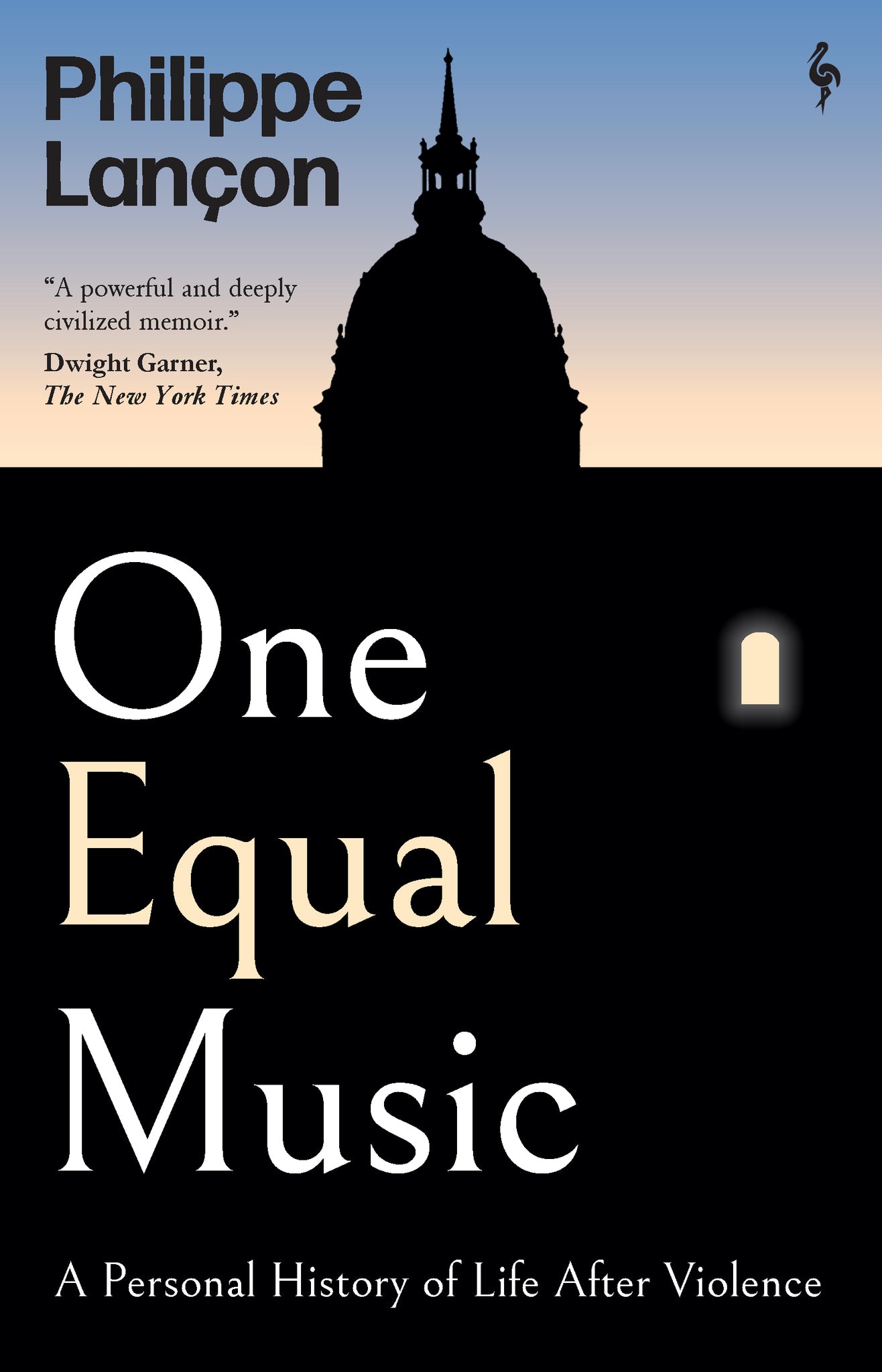
“My favorite nonfiction book of the past 25 years... humane and angry and subtle and heartbreaking. I give it to people all the time.”—Dwight Garner, The New York Times
“Unrelenting, mesmerizing, and beautifully written… Transformative.” Foreword Reviews
Published in hardcover as Disturbance (2020), Philippe Lançon’s One Equal Music is a portrait of a man’s shifting relationship to time, to his caretakers, to writing, music, and journalism, and to his own changed body.
On January 7, 2015, two men force their way into the Paris offices of the satirical weekly Charlie Hebdo and open fire. The attack leaves 12 dead, 11 injured, and sends shockwaves radiating across the world. A global solidarity movement unites instantly under the banner Je suis Charlie, and a fierce debate ignites over the freedom of the press.
Journalist Philippe Lançon is among the gravely wounded. His world is upended. He will spend months in hospitals under police protection, undergoing multiple reconstructive surgeries, with a whiteboard and marker as his only means of communication.
During the course of his convalescence, he finds surprising solace and meaning in music and literature. In this astonishing, poignant memoir, with honesty, erudition, and humor, Lançon reckons with his past, an uncertain future, and the hard journey back to life and love.

“A powerful and deeply civilized memoir...I was moved and provoked by it, and I always looked forward to picking it up again... Lançon’s life had been flattened. To witness him try to put it back together is like watching a farmer picking up still-warm nails after both his house and barn have been burned to the ground.”—Dwight Garner, The New York Times (A Critics’ Top Book of 2020)
“My favorite nonfiction book of the past 25 years..to me, it belongs in the top five [of the century]... humane and angry and subtle and heartbreaking. I give it to people all the time.”—Dwight Garner, interviewed for The New York Times
★ “A frank, relentless, gripping memoir that illustrates both man’s inhumanity to man and how quiet resolution can reclaim and restore.”—Kirkus Reviews (Starred Review)
★ “Clear-eyed, endlessly curious, and never sentimental.”—Publishers Weekly (Starred Review)
“Unrelenting, mesmerizing, and beautifully written...transformative.”—ForeWord Reviews
Not mere reportage or political journalism but a real work of literature: a journey into individual suffering.” —Literary Review
“An undeniable, absolute masterpiece.”—Le Figaro Magazine
★ “Highly recommended for all audiences.”—Library Journal (Starred Review)
A fascinating and often sobering read, one that offers insight into human fragility as well as resilience.”—World Literature Today
An intimate odyssey steeped in collective history, a major work sure to leave a lasting impression on anyone who reads it.”—France-Amérique
“Brilliantly conceived and adeptly executed...There isn’t a single misstep in the book.”—Ron Slate, On The Seawall
“A magnificent tribute.”—The Spectator
“An argument in favour of the intellectual life, of ideas as beautiful abstractions, weaponised only as satire, never as terror.”—The Guardian
“It is a remarkable account of recovery, the nature of reconstruction, and, in a way, the philosophy of return from the edge of death.”—The Lancet
“A great work of literature.”—Le Journal du Dimanche
“An extraordinary book.”—ELLE Magazine
“An intense account.”—Les Inrockuptiles
“Incredible sensitivity and humanity.”—Lepoint.fr
“Remarkable.”—Le Monde des Livres