


Some error occured while loading the Quick View. Please close the Quick View and try reloading the page.
This book contains two Open Access chapters.
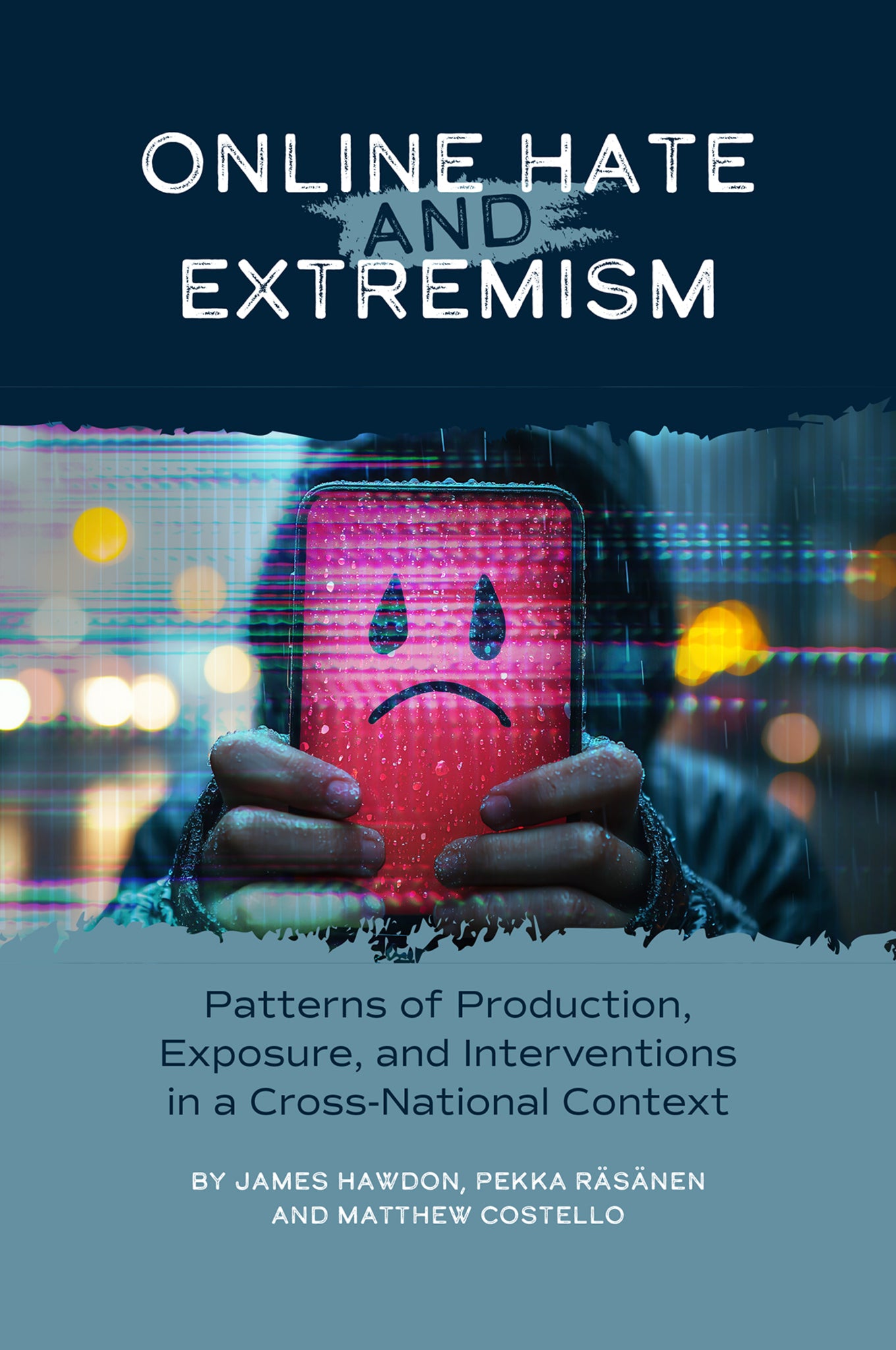
In an era where the digital landscape is increasingly marred by online hate, this groundbreaking book delves into this multifaceted world, offering an in-depth exploration of the origins, evolution, and impact of online hate material over the past decade.
Supported by a robust series of quantitative analyses, Online Hate and Extremism draws on unique datasets collected from large, random samples of Internet users in the U.S. and Europe from a period of over a decade. Offering a comparative analysis across different countries, the chapters provide a broader understanding of cyberhate in various cultural contexts. Analysing both perpetrators and victims, the authors investigate who produces online hate material and why, as well as who is likely to be victimized and the consequences of such victimization. Offering practical insights, this insightful study also considers ways to reduce the spread of online hate and provides strategies to avoid being targeted.
With timely data collection surrounding the 2024 U.S. presidential election, Online Hate and Extremism provides a snapshot of how current electoral politics influence the flow of online hate. By examining cyberhate cross-nationally and over time, this book offers a unique and essential perspective on one of the most pressing issues in the digital age.

This book is a much-needed contribution to contemporary cyberhate research. It offers a clear and comprehensive overview of cyberhate exposure, victimization, and online hate production over the past decade and a half. The focus is on international trends, with an insightful comparison between the United States and Finland in the context of the 2025 U.S. presidential election. It also places these developments in a broader global perspective, drawing on data on hate crimes across 30 countries. A must-read for every empirically oriented sociologist and criminologist.
— Dr. Markus Kaakinen, Associate Professor of Criminal Policy, Institute of Criminology and Legal Policy, University of Helsinki
James Hawdon is Director of the Center for Peace Studies and Violence Prevention at Virginia Tech, USA. His research investigates how communities promote, deter, or react to crime, violence, and tragedies.
Pekka Räsänen is Professor of Economic Sociology at the University of Turku, Finland. His current research interests include the sociology of consumption, wellbeing and inequality, the use of information and communication technologies, and research methodologies.
Matthew Costello is Associate Professor of Sociology and Criminal Justice at Clemson University, USA. His research focuses on online hate and extremism and domestic and cross-national political violence and rebellion.
Chapter 1. Online Hate and Extremism
Chapter 2. Exposure, Victimization, and Targeting: Theoretical Considerations
Chapter 3. Online Hate Production and Perpetration and the Theory of Recursive Cyber Grooming OPEN ACCESS
Chapter 4. Strategies for Controlling Online Hate
Chapter 5. New Empirical Tests
Chapter 6. The 2024 U.S. Presidential Election and Online Hate OPEN ACCESS
Chapter 7. Cross-National Patters of Online Hate and Hate Crimes
Chapter 8. Some Final Thoughts on Online Hate: Where We’ve Been and Where We’re Going