


Some error occured while loading the Quick View. Please close the Quick View and try reloading the page.
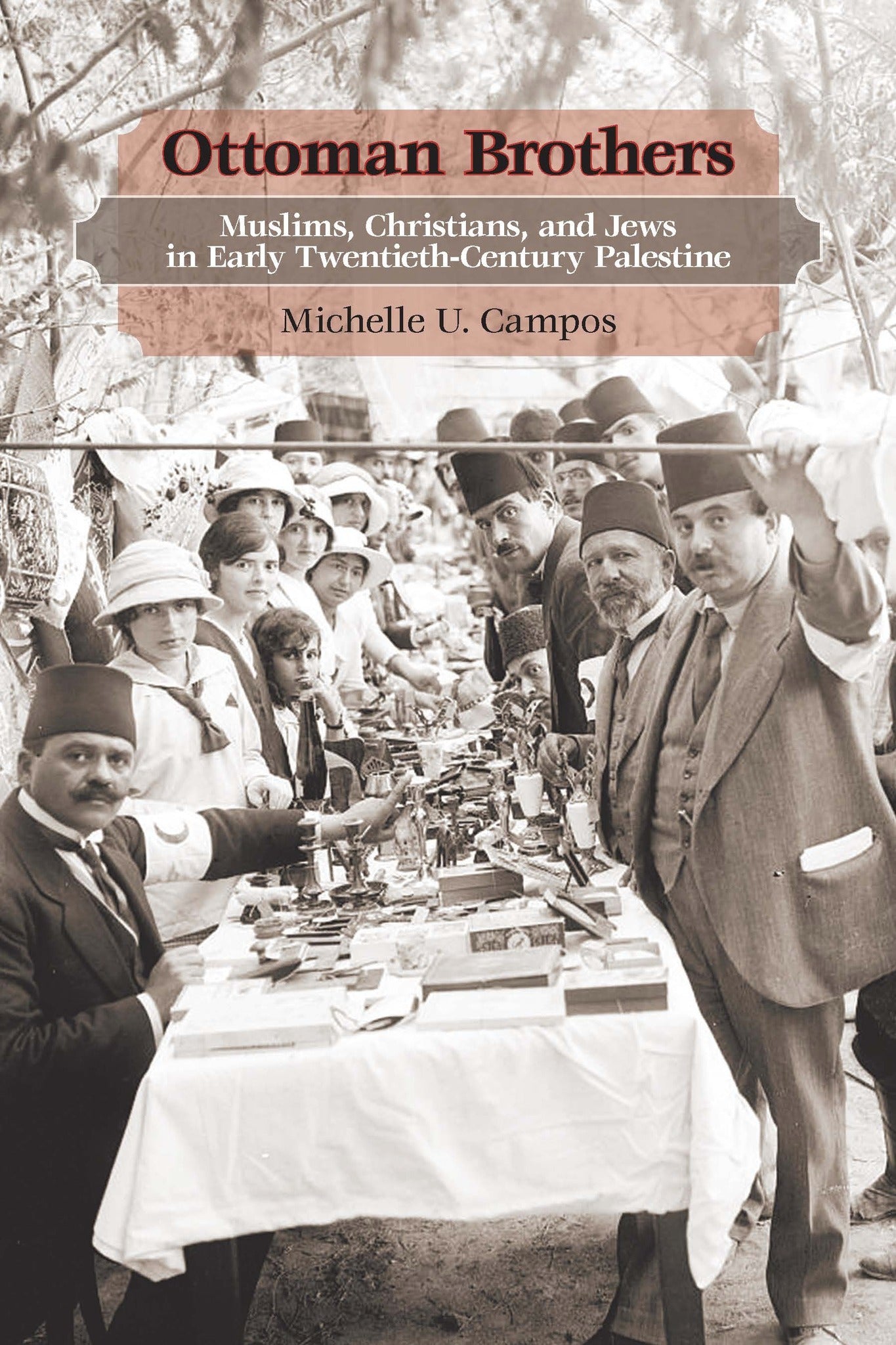
In its last decade, the Ottoman Empire underwent a period of dynamic reform, and the 1908 revolution transformed the empire's 20 million subjects into citizens overnight. Questions quickly emerged about what it meant to be Ottoman, what bound the empire together, what role religion and ethnicity would play in politics, and what liberty, reform, and enfranchisement would look like.
Ottoman Brothers explores the development of Ottoman collective identity, tracing how Muslims, Christians, and Jews became imperial citizens together. In Palestine, even against the backdrop of the emergence of the Zionist movement and Arab nationalism, Jews and Arabs cooperated in local development and local institutions as they embraced imperial citizenship. As Michelle Campos reveals, the Arab-Jewish conflict in Palestine was not immanent, but rather it erupted in tension with the promises and shortcomings of "civic Ottomanism."

Price: $28.00
Pages: 357
Publisher: Stanford University Press
Imprint: Stanford University Press
Publication Date:
04 November 2010
Trim Size: 9.00 X 6.00 in
ISBN: 9780804770682
Format: Paperback
BISACs:
"Furthermore, reconsidering the inter-communal relations in the context of Palestine, Campos challenges the presumption about the existence of Arab-Jewish conflict in the early twentieth century . . . Campos has a positive view of the process in the immediate aftermath of the 1908 Revolution as a relatively successful civic experiment based on the notions of Ottomanism and shared homeland . . . [Ottoman Brothers has a] valuable contribution to the literature of Second Constitutional Period as they shed light on the very first constitutional experience of the Middle Eastern communities."
— Fikriye Karaman
— Fikriye Karaman
Michelle U. Campos is Assistant Professor of the History of the Modern Middle East at the University of Florida.