


Some error occured while loading the Quick View. Please close the Quick View and try reloading the page.
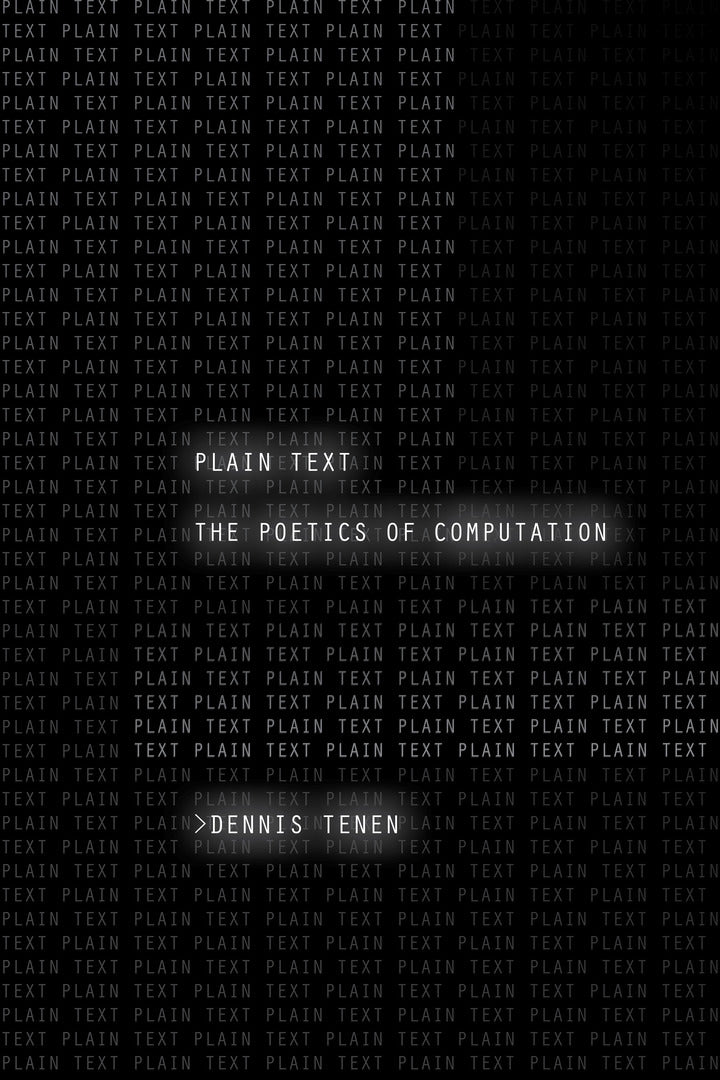
This book challenges the ways we read, write, store, and retrieve information in the digital age. Computers—from electronic books to smart phones—play an active role in our social lives. Our technological choices thus entail theoretical and political commitments. Dennis Tenen takes up today's strange enmeshing of humans, texts, and machines to argue that our most ingrained intuitions about texts are profoundly alienated from the physical contexts of their intellectual production. Drawing on a range of primary sources from both literary theory and software engineering, he makes a case for a more transparent practice of human–computer interaction. Plain Text is thus a rallying call, a frame of mind as much as a file format. It reminds us, ultimately, that our devices also encode specific modes of governance and control that must remain available to interpretation.

1. Metaphor Machines
2. Laying Bare the Device: The Modernist Roots of Computation
3. Form, Formula, Format
4. Recondite Surfaces
5. Literature Down to a Pixel
6. Conclusion: Human Grounds for Computation