


Some error occured while loading the Quick View. Please close the Quick View and try reloading the page.
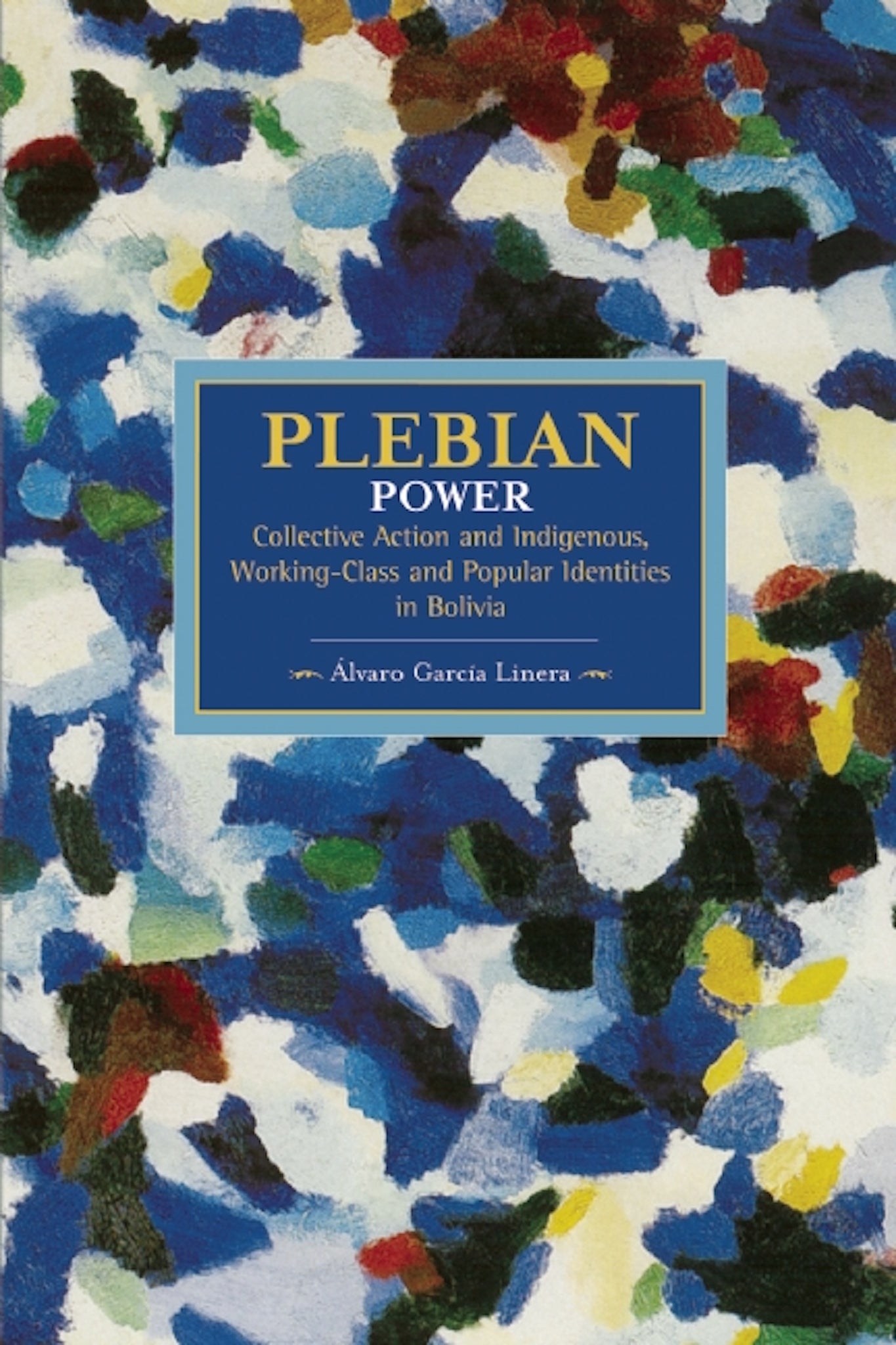
Best known for his role as Evo Morales’s vice-president, Álvaro García Linera is also known across Latin America as one of Bolivia’s foremost intellectuals. With a theoretical trajectory beginning in efforts to combine Marxism and Indianism, then developed in reaction to the neoliberal turn of the 1980s and in contact with the mass social movements of recent years, García Linera's magisterial Plebeian Power can be read as both an evolving analysis of Bolivian reality through periods of great social change, and as an intellectual biography of the author himself. Informed by such thinkers as Marx, Bourdieu and René Zavaleta, García Linera reflects on the nature of the state, class and indigenous identity and their relevance to social struggles in Bolivia.

Price: $30.00
Pages: 352
Publisher: Haymarket Books
Imprint: Haymarket Books
Series: Historical Materialism
Publication Date:
10 March 2015
Trim Size: 9.00 X 6.02 in
ISBN: 9781608464098
Format: Paperback
BISACs:
HISTORY / Latin America / South America
,
SOCIAL SCIENCE / Social Classes & Economic Disparity
,
POLITICAL SCIENCE / Political Economy
,
POLITICAL SCIENCE / Political Ideologies / Communism
,
Post-Communism & Socialism
,
Social classes
,
Political economy
,
Political ideologies and movements
Álvaro García Linera has been vice-president of Bolivia since 2006, and is a prominent intellectual force in the Evo Morales government. He has written extensively on the indigenous question and class and communal politics in Bolivia, including Horizontes y límites del estado y el power (2005) and Forma Valor y Forma Comunidad (1995, 2010).
Álvaro García Linera: Reflections on Two Centuries of Bolivia, Pablo Stefanoni
I. The Communist Manifesto and our Present
The Communist Manifesto and our Present: Four Theses on Its Historical Actuality
II. Citizenship and Democracy
Citizenship and Democracy in Bolivia (1900–98)
III. Labour-Movement
Historical Cycles in the Formation of the Condition of the Mining Working Class in Bolivia (1825–1999)
The Death of the Twentieth-Century Working-Class Condition
IV. The Indigenous Movement
Colonial Narrative and Communal Narrative
Indigenous Autonomies and the Multinational State
V. Social-Movement Structures
Union, Multitude and Community: Social Movements and Forms of Political Autonomy in Bolivia
VI. The Crisis of the State and the Period of Revolution
The Crisis of the State and Indigenous-Plebeian Uprisings in Bolivia
The Struggle for Power in Bolivia
Indianism and Marxism: the Disparity between Two Revolutionary Rationales
Bibliography of Álvaro García Linera
References
Index
I. The Communist Manifesto and our Present
The Communist Manifesto and our Present: Four Theses on Its Historical Actuality
II. Citizenship and Democracy
Citizenship and Democracy in Bolivia (1900–98)
III. Labour-Movement
Historical Cycles in the Formation of the Condition of the Mining Working Class in Bolivia (1825–1999)
The Death of the Twentieth-Century Working-Class Condition
IV. The Indigenous Movement
Colonial Narrative and Communal Narrative
Indigenous Autonomies and the Multinational State
V. Social-Movement Structures
Union, Multitude and Community: Social Movements and Forms of Political Autonomy in Bolivia
VI. The Crisis of the State and the Period of Revolution
The Crisis of the State and Indigenous-Plebeian Uprisings in Bolivia
The Struggle for Power in Bolivia
Indianism and Marxism: the Disparity between Two Revolutionary Rationales
Bibliography of Álvaro García Linera
References
Index