Skip to product information
1 of 1

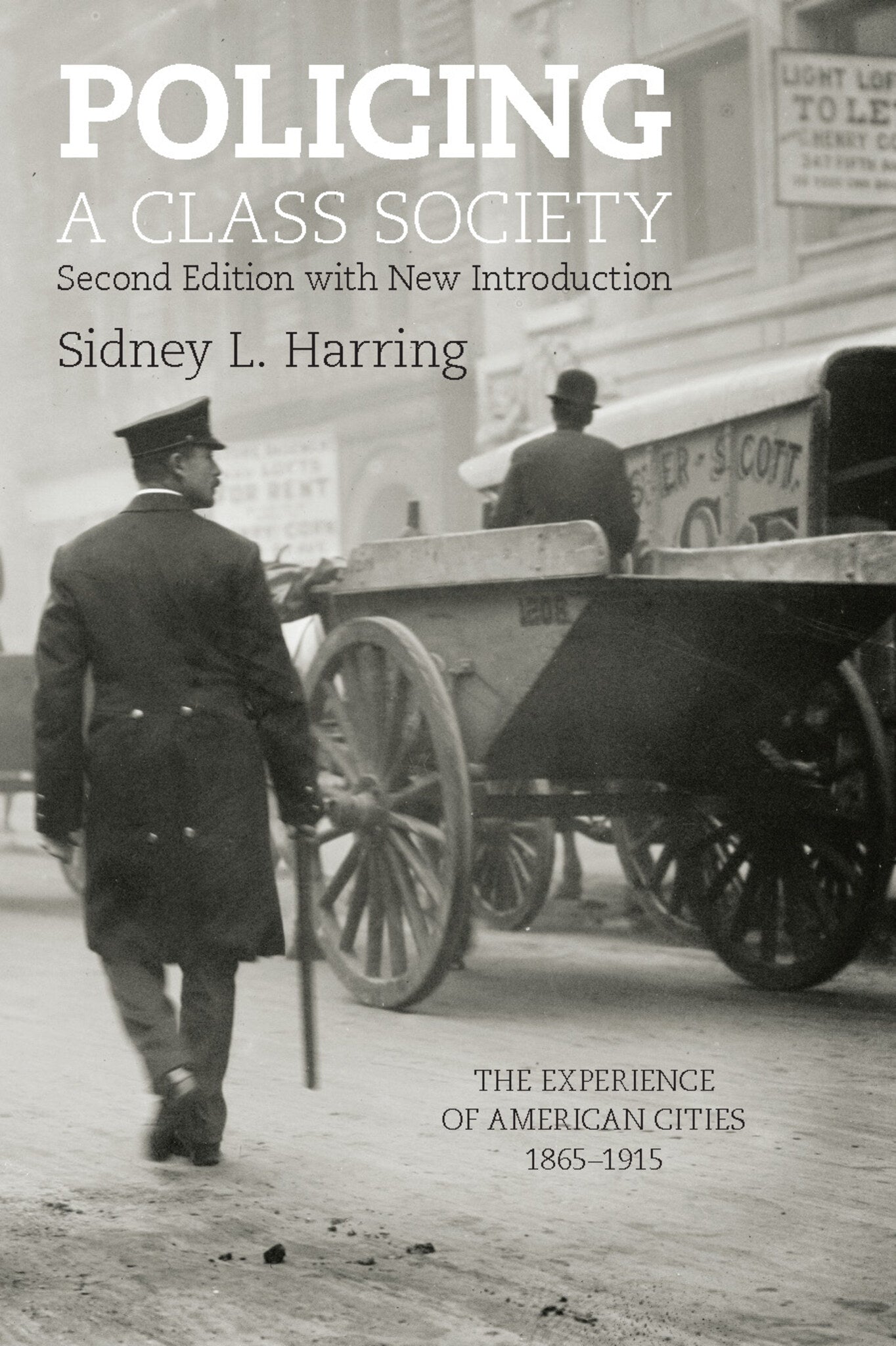
Policing A Class Society

Regular price $19.95
Sale price $19.95 Regular price $19.95
Sale Sold out
An in-depth critical analysis of how ruling elites use the police institution in order to control communities.
  • Format:
  • 31 October 2017
View Product Details

Police are popularly understood as the “thin blue line” that “serves and protects” us from violence and crime in the pursuit of justice.

In Policing a Class Society, Sidney L. Harring provides an essential corrective to the ideas that police have always been around, that they are a force for deterring crime, or that theyhave an interest in the pursuit of justice.

Looking at the growth of the urban police force around the turn of the 20th century, Harring argues that the police protected the interestsof manufacturers, working almost as hired guns. Rather than fighting crime, the historical role of police was to control the leisure activity of the devloping working-class and maintainthe existing order of capitalist relationships.

files/i.png Icon
Price: $19.95
Pages: 316
Publisher: Haymarket Books
Imprint: Haymarket Books
Publication Date: 31 October 2017
Trim Size: 9.00 X 6.00 in
ISBN: 9781608468546
Format: Paperback
BISACs:

POLITICAL SCIENCE / Law Enforcement, Police and security services, POLITICAL SCIENCE / Public Policy / Social Policy, SOCIAL SCIENCE / Criminology, Central / national / federal government policies, Society and culture: general, Crime and criminology

Policing a Class Society is a significant contribution to the literature on criminal justice history.”—Alexander W. Pisciotta, Journal of Criminal Law and Criminology


"Sidney L. Harring’s Policing a Class Society from 1983 should be considered a classic. A rare avowedly Marxist history of policing in the United States, it offers something many readers crave." Legal Form

Sidney L. Harring, Professor Emeritus at CUNY School of Law, the author of more than 80 articles, chapters, and book reviews on such subjects as American and British colonial history, Native American law, indigenous rights, and criminal law, he has written four books, the third of which, White Man's Law: Native People in Nineteenth Century Canadian Jurisprudence, was a finalist for the Donner Prize as the best book on Canadian public policy published in 1998. During the course of his career, he has received three Fellowships in Legal History from the National Endowment for the Humanities, a Fulbright Fellowship, and was a Rockefeller Fellow at the McNickle Center for the History of the American Indian.