


Some error occured while loading the Quick View. Please close the Quick View and try reloading the page.
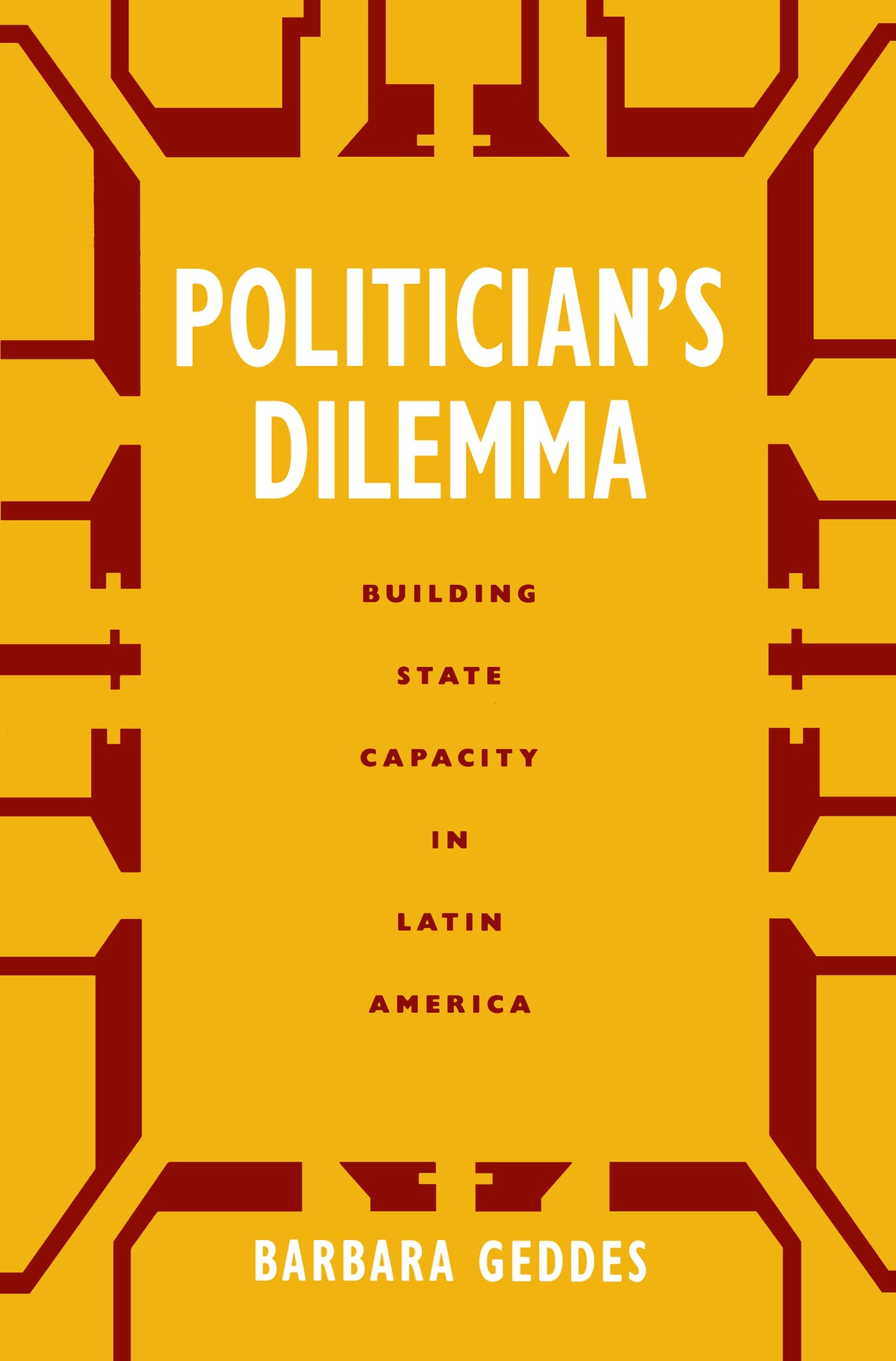
In Latin America as elsewhere, politicians routinely face a painful dilemma: whether to use state resources for national purposes, especially those that foster economic development, or to channel resources to people and projects that will help insure political survival and reelection. While politicians may believe that a competent state bureaucracy is intrinsic to the national good, political realities invariably tempt leaders to reward powerful clients and constituents, undermining long-term competence. Politician's Dilemma explores the ways in which political actors deal with these contradictory pressures and asks the question: when will leaders support reforms that increase state capacity and that establish a more meritocratic and technically competent bureaucracy?
Barbara Geddes brings rational choice theory to her study of Brazil between 1930 and 1964 and shows how state agencies are made more effective when they are protected from partisan pressures and operate through merit-based recruitment and promotion strategies. Looking at administrative reform movements in other Latin American democracies, she traces the incentives offered politicians to either help or hinder the process.
In its balanced insight, wealth of detail, and analytical rigor, Politician's Dilemma provides a powerful key to understanding the conflicts inherent in Latin American politics, and to unlocking possibilities for real political change.
Barbara Geddes brings rational choice theory to her study of Brazil between 1930 and 1964 and shows how state agencies are made more effective when they are protected from partisan pressures and operate through merit-based recruitment and promotion strategies. Looking at administrative reform movements in other Latin American democracies, she traces the incentives offered politicians to either help or hinder the process.
In its balanced insight, wealth of detail, and analytical rigor, Politician's Dilemma provides a powerful key to understanding the conflicts inherent in Latin American politics, and to unlocking possibilities for real political change.

Price: $31.95
Pages: 256
Publisher: University of California Press
Imprint: University of California Press
Series: California Series on Social Choice and Political Economy
Publication Date:
26 September 1996
Trim Size: 9.00 X 6.00 in
ISBN: 9780520207622
Format: Paperback
BISACs:
Barbara Geddes is Assistant Professor of Political Science at the University of California, Los Angeles.
Figures and Tables
Acknowledgments
1. The State
2. Reform as a Collective Good: Political Entrepreneurs and Democratic Politics
3. Insulation and the Struggle for Reform in Brazil, 1930-1964
4. Legislators and the Supply of Public Goods:
A Brazilian Example and a Model
5. A Test of the Game Theoretic Model:When Legislators Initiate Reforms
6. The Political Uses of Bureaucracy: Presidential Survival versus Administrative Competence
7. The Effects of Institutions
Appendix A: Assessment of Achievement for the Various Targets in the Target Plan
Appendix B: Creation of Appointment and Survival Strategy Indices
Appendix C: Variable Construction
Bibliography
Index
Acknowledgments
1. The State
2. Reform as a Collective Good: Political Entrepreneurs and Democratic Politics
3. Insulation and the Struggle for Reform in Brazil, 1930-1964
4. Legislators and the Supply of Public Goods:
A Brazilian Example and a Model
5. A Test of the Game Theoretic Model:When Legislators Initiate Reforms
6. The Political Uses of Bureaucracy: Presidential Survival versus Administrative Competence
7. The Effects of Institutions
Appendix A: Assessment of Achievement for the Various Targets in the Target Plan
Appendix B: Creation of Appointment and Survival Strategy Indices
Appendix C: Variable Construction
Bibliography
Index