


Some error occured while loading the Quick View. Please close the Quick View and try reloading the page.
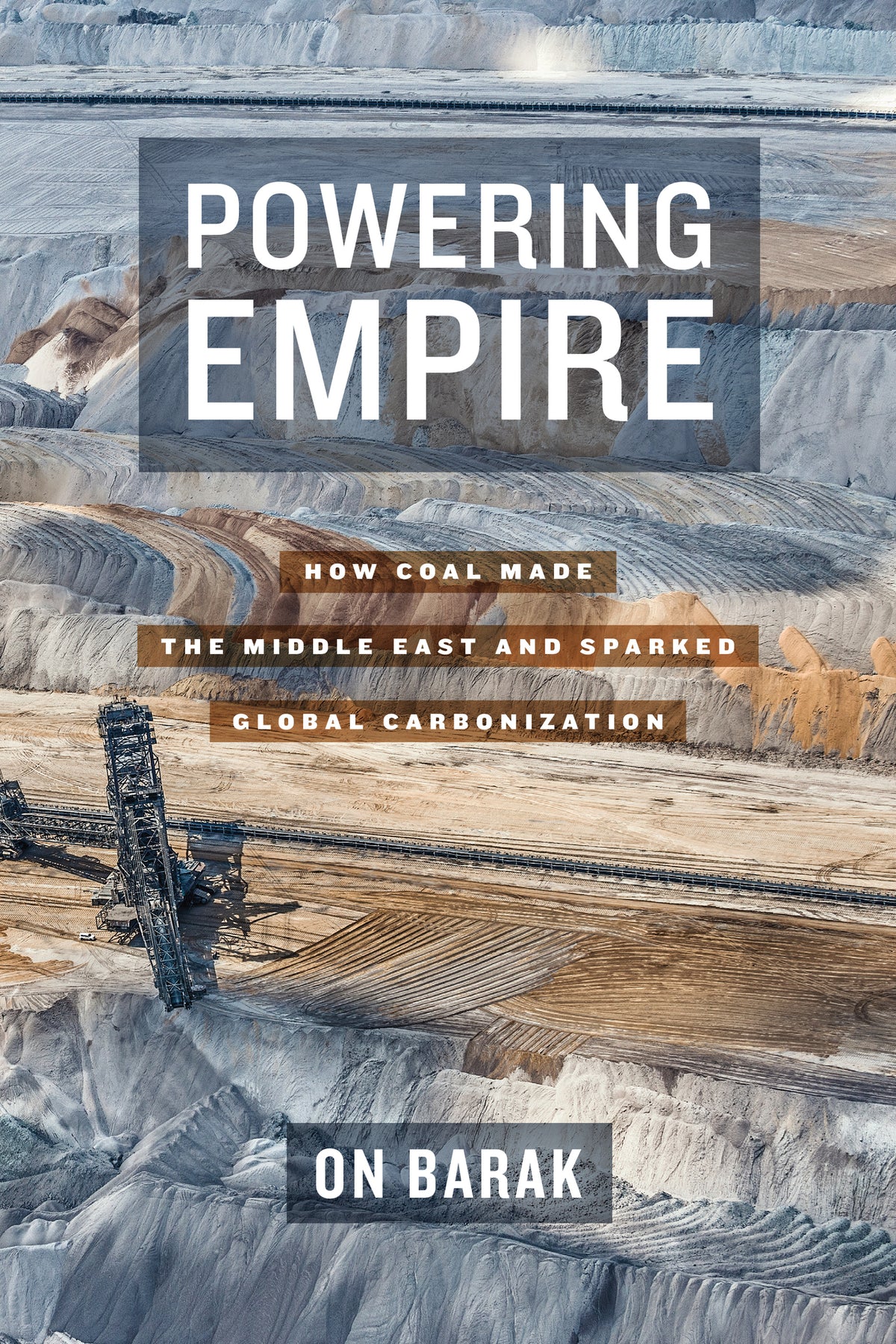
The Age of Empire was driven by coal, and the Middle East—as an idea—was made by coal. Coal’s imperial infrastructure presaged the geopolitics of oil that wreaks carnage today, as carbonization threatens our very climate. Powering Empire argues that we cannot promote worldwide decarbonization without first understanding the history of the globalization of carbon energy. How did this black rock come to have such long-lasting power over the world economy?
Focusing on the flow of British carbon energy to the Middle East, On Barak excavates the historic nexus between coal and empire to reveal the political and military motives behind what is conventionally seen as a technological innovation. He provocatively recounts the carbon-intensive entanglements of Western and non-Western powers and reveals unfamiliar resources—such as Islamic risk-aversion and Gandhian vegetarianism—for a climate justice that relies on more diverse and ethical solutions worldwide.

"Powering Empire is a valuable and ground-breaking work and should be of interest to any scholar working in the fields of the history and culture of the modern Middle East and British Empire."
Note on Transliteration
Acknowledgments
Introduction
1 Water
2 Animals
3 Humans
4 Environment
5 Risk
6 Fossil
Conclusion
Notes
Bibliography
Index