


Some error occured while loading the Quick View. Please close the Quick View and try reloading the page.
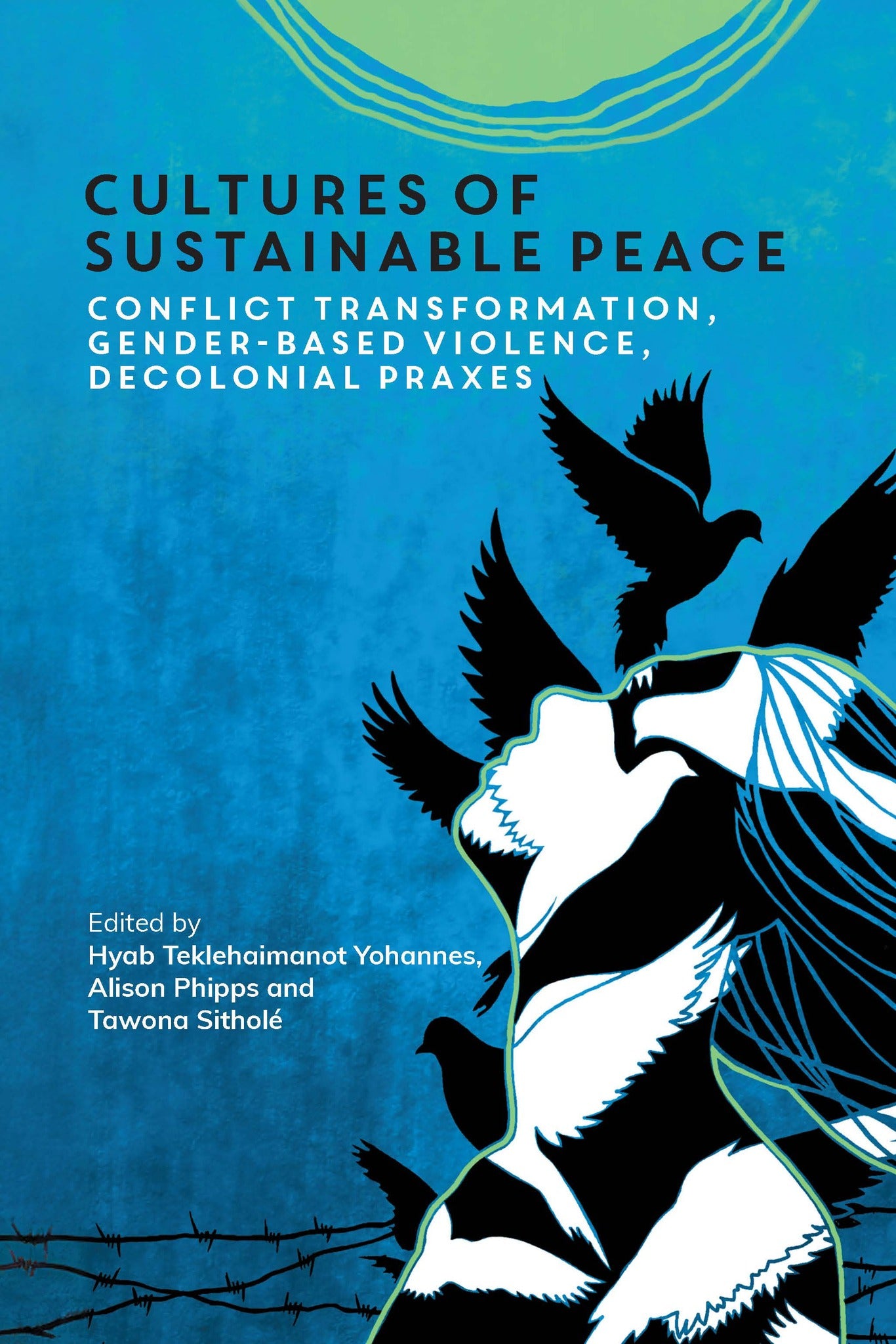
This book shifts the focus of peacebuilding away from nation-states and international organisations to make a powerful argument that sustainable peacebuilding is the work of ordinary people. It brings together work done in Gaza, Ghana, Mexico, Morocco and Zimbabwe, alongside work with refugees in Scotland, to argue for a place for successful intercultural relations as a central aim of peacebuilding, moving beyond the more usual focus on economic development. With a particular emphasis on addressing gender-based violence and the role of women in peacebuilding, together with a central role for arts and culture as a means of resistance and social change, the chapters represent the fruit of collaborative work across geographical and cultural borders, between artists, activists and academics, bringing a wide range of disciplinary perspectives to bear on situations of violence and precarity. In a world where peace work can feel increasingly futile, this book makes a powerful case for the crucial role of local action and cultural work and play in the creation of a better future.
The book will be open access under a CC BY ND licence.

Hyab Teklehaimanot Yohannes is a Lecturer in Forced Migration and Decolonial Education with the UNESCO Chair for Refugee Integration through Education, Languages, and Arts at the University of Glasgow, Scotland.
Alison Phipps holds the UNESCO Chair in Refugee Integration through Education, Languages and Arts at the University of Glasgow, where she is also Professor of Languages and Intercultural Studies and Co-convener of Glasgow Refugee, Asylum and Migration Network (GRAMNET).
Tawona Sitholé is a Lecturer in Creative Practice Education with the UNESCO Chair for Refugee Integration through Education, Languages, and Arts at the University of Glasgow, Scotland.
Figures and Tables
Contributors
Acknowledgements
I Am You
Un-Foreword
Hyab Teklehaimanot Yohannes, Alison Phipps, Tawona Sitholé: Introduction
Part 1: Towards Cultures of Conflict Transformation
Chapter 1. Rajaa Essaghyry and Aadel Essaadani: Three Moroccan Women’s Liberation Journeys
Chapter 2. Angelica Lucia Damian Bernal, Maria Veronica Ibarra Garcia, Eva Citlali Jiménez Rodríguez, Violeta Torres Carroll, Paola Cueto Jimenez: High School Women in the Face of Violence During the COVID-19 Pandemic: Towards the Production of Spaces of Prevention and Sisterhood
Chapter 3. Taghreed El Masry, Fatma Abubaker, Hana El-Badri and Eman Alzaanin: Narratives of Change: Young Palestinian Women’s Engagement with Short Stories to Promote Dialogue for Peacebuilding
Chapter 4. Chipo Basopo, Simbarashe Mudhokweni and Rashiwe Chipurunyenye: Creative Corridors: Peace, Inclusivity and Engagement with Persons with Disabilities
Chapter 5. Evelyn Arizpe, Sinéad Gormally, Nohora Niño Vega, Jeronimo Castillo Muñoz, Manuela Suárez Rueda, Javiera Donoso Jiménez, Alejandro Bahena Rivera and Sergio Hernández Mendoza: A Tale of Two Cities: Recovering Community Spaces for Peacebuilding in Medellín and Acapulco
Part 2: Popular Arts and Everyday Culture Meet Gender-Based Violence
Chapter 6. Adwoa Sikayena Amankwah, Hasiyatu Abubakari, Abigail Opoku Mensah: Popular Arts as Communication Tools for the Eradication of Gender-Based Violence and Child Marriage in Ghana
Chapter 7. Mahmoud O. Jalambo, Nazmi Al-Masri, Somaya M. Saym and Azza Al-Sahhar: Resilient Palestinian Women Facing Gender-Based Conflict in the Gaza Strip
Chapter 8. Manase Kudzai Chiweshe, Sandra Bhatasara and Gareth James: Popular Culture and Gender-Based Violence in an Evolving COVID-19 Context in Zimbabwe
Chapter 9. Hasiyatu Abubakari, Adwoa Sikayena Amankwah and Abigail Opoku Mensah: Promoting Women’s Participation in Social Transformation Through Popular Arts in Kusaal-Speaking Communities in Ghana
Part 3: Reflexivity, Dilemmas and Safeguarding with Grassroots Organisations
Chapter 10. Rocío Elizabeth Muñoz Santamaría and Carlos Eduardo Arias Galindo: Decolonial Praxes: Metaphors, Mediation and Writing in Motion
Chapter 11. Maria Grazia Imperiale, Giovanna Fassetta and Fatma Abubaker: Contextualising Safeguarding in International Development Research: Requirements and Challenges
Chapter 12. Julie E. McAdam, Cristina Amescua and Evelyn Arizpe: Between Success and Failure: Researching with Grassroots Organisations Involved in Conflict Transformation
Chapter 13. Alison Phipps: The Many Twists and Turns in the Pathways to Peace: Reflections on the Bright Sadness of Decolonising and Structuring Cultural Work
Index