


Some error occured while loading the Quick View. Please close the Quick View and try reloading the page.
A free ebook version of this title is available through Luminos, University of California Press’s Open Access publishing program. Visit www.luminosoa.org to learn more.
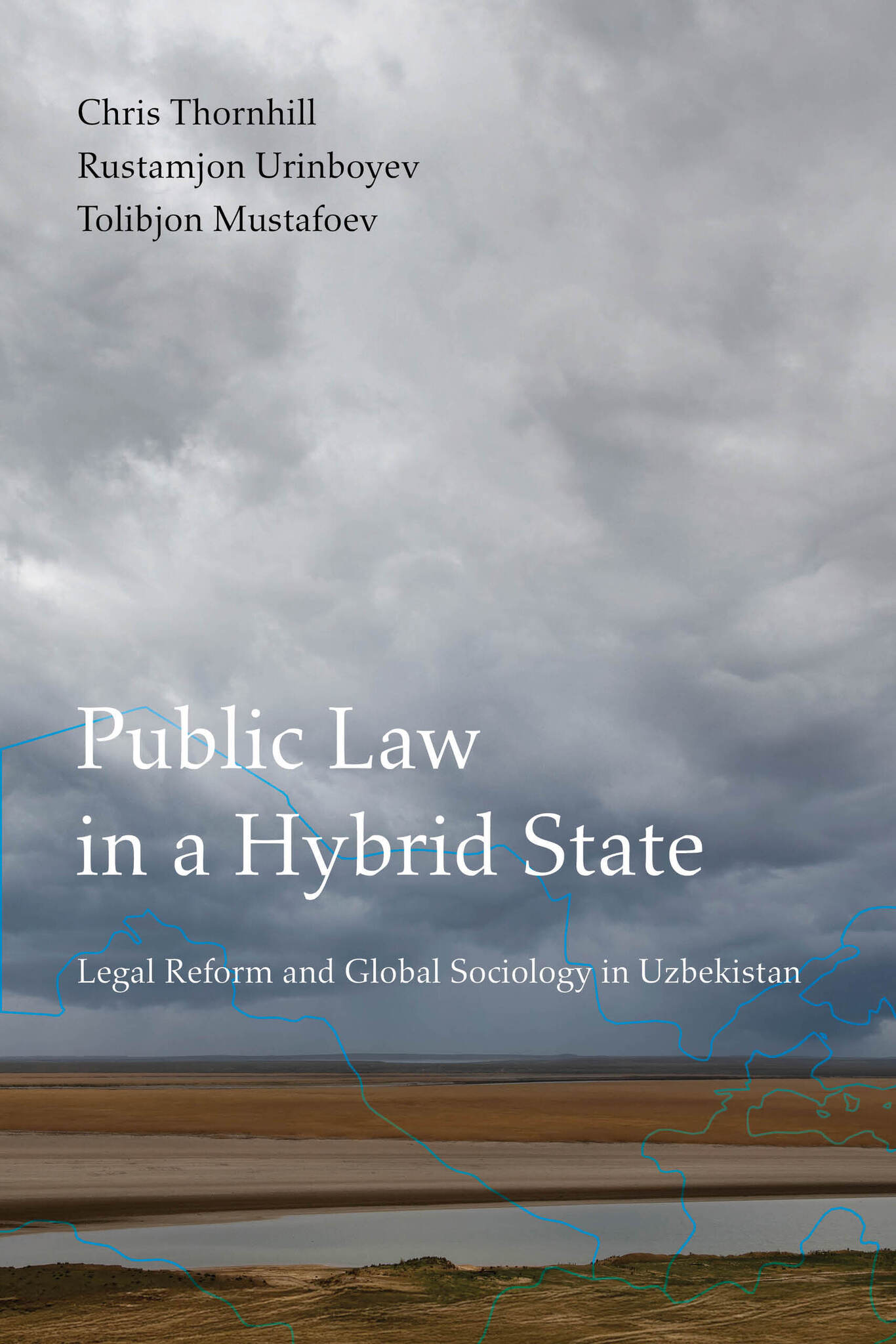
Public Law in a Hybrid State presents a broad sociological analysis of legal developments in contemporary Uzbekistan, using this example to assess why states with some authoritarian features may promote legal reforms and why the modernization of legal institutions may generate benefits for governments. It examines how, alongside constitutional changes, reforms in administrative law play an important role in polities with hybrid constitutions, shaping the architecture of government and constructing procedures to manage exchanges between government and citizens. Placing these reform processes in the longer-term context of postimperial history, it also shows how changes to legal systems acquire distinctive importance in societies with recent experiences of decolonization, uncertain sovereignty, and unstable patterns of citizenship.

Chris Thornhill is Professor of Law at the University of Birmingham.
Rustamjon Urinboyev is Associate Professor in the Department of Sociology of Law at Lund University.
Tolibjon Mustafoev is a PhD Candidate in Sociology of Law at Lund University.
Contents
Acknowledgments
Introduction: Uzbekistan in Context
1. Security and Determinants of Legal Reform in Uzbekistan
2. Legal Nationhood and Legal Education
3. Legal Pluralism and Path Dependencies
4. Law and Religion in Uzbekistan
Conclusion
Notes
Bibliography
Index