


Some error occured while loading the Quick View. Please close the Quick View and try reloading the page.
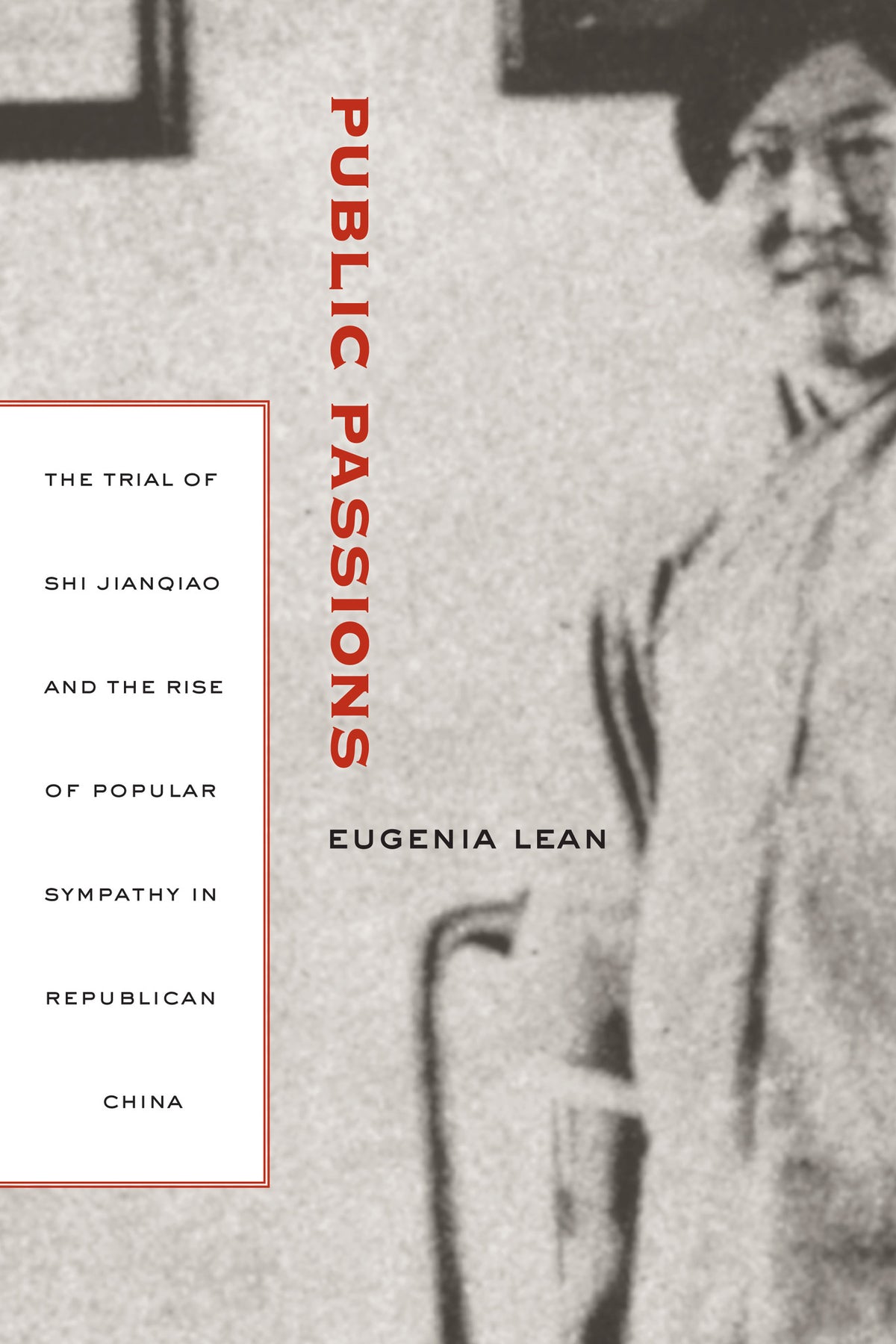
In 1935, a Chinese woman by the name of Shi Jianqiao murdered the notorious warlord Sun Chuanfang as he prayed in a Buddhist temple. This riveting work of history examines this well-publicized crime and the highly sensationalized trial of the killer. In a fascinating investigation of the media, political, and judicial records surrounding this cause célèbre, Eugenia Lean shows how Shi Jianqiao planned not only to avenge the death of her father, but also to attract media attention and galvanize public support. Lean traces the rise of a new sentiment—"public sympathy"—in early twentieth-century China, a sentiment that ultimately served to exonerate the assassin. The book sheds new light on the political significance of emotions, the powerful influence of sensational media, modern law in China, and the gendered nature of modernity.

Price: $85.00
Pages: 304
Publisher: University of California Press
Imprint: University of California Press
Publication Date:
24 April 2007
Trim Size: 9.00 X 6.00 in
ISBN: 9780520247185
Format: Hardcover
BISACs:
“Even more compelling than this thrilling story is what Lean does with it.”
Eugenia Lean is Assistant Professor of History at Columbia University.
List of Illustrations
Acknowledgmets
Introduction
1. The Assassin and Her Revenge: A Tale of Moral Heroism and Female Self-Fashioning in an Age of Mass Communication
2. Media Sensation: Public Justice and the Sympathy of an Urban Audience
3. Highbrow Ambivalence: Fear of the Masses and Feminized Sentiment
4. The Trial: Courtroom Spectacle and Ethical Sentiment in the Rule of Law
5. A State Pardon: Sanctioned Violence under Nationalist Rule
6. Beyond the 1930s: From Wartime Patriotism to Counter-Revolutionary Sentiment
Conclusion
Acknowledgmets
Introduction
1. The Assassin and Her Revenge: A Tale of Moral Heroism and Female Self-Fashioning in an Age of Mass Communication
2. Media Sensation: Public Justice and the Sympathy of an Urban Audience
3. Highbrow Ambivalence: Fear of the Masses and Feminized Sentiment
4. The Trial: Courtroom Spectacle and Ethical Sentiment in the Rule of Law
5. A State Pardon: Sanctioned Violence under Nationalist Rule
6. Beyond the 1930s: From Wartime Patriotism to Counter-Revolutionary Sentiment
Conclusion