


Some error occured while loading the Quick View. Please close the Quick View and try reloading the page.
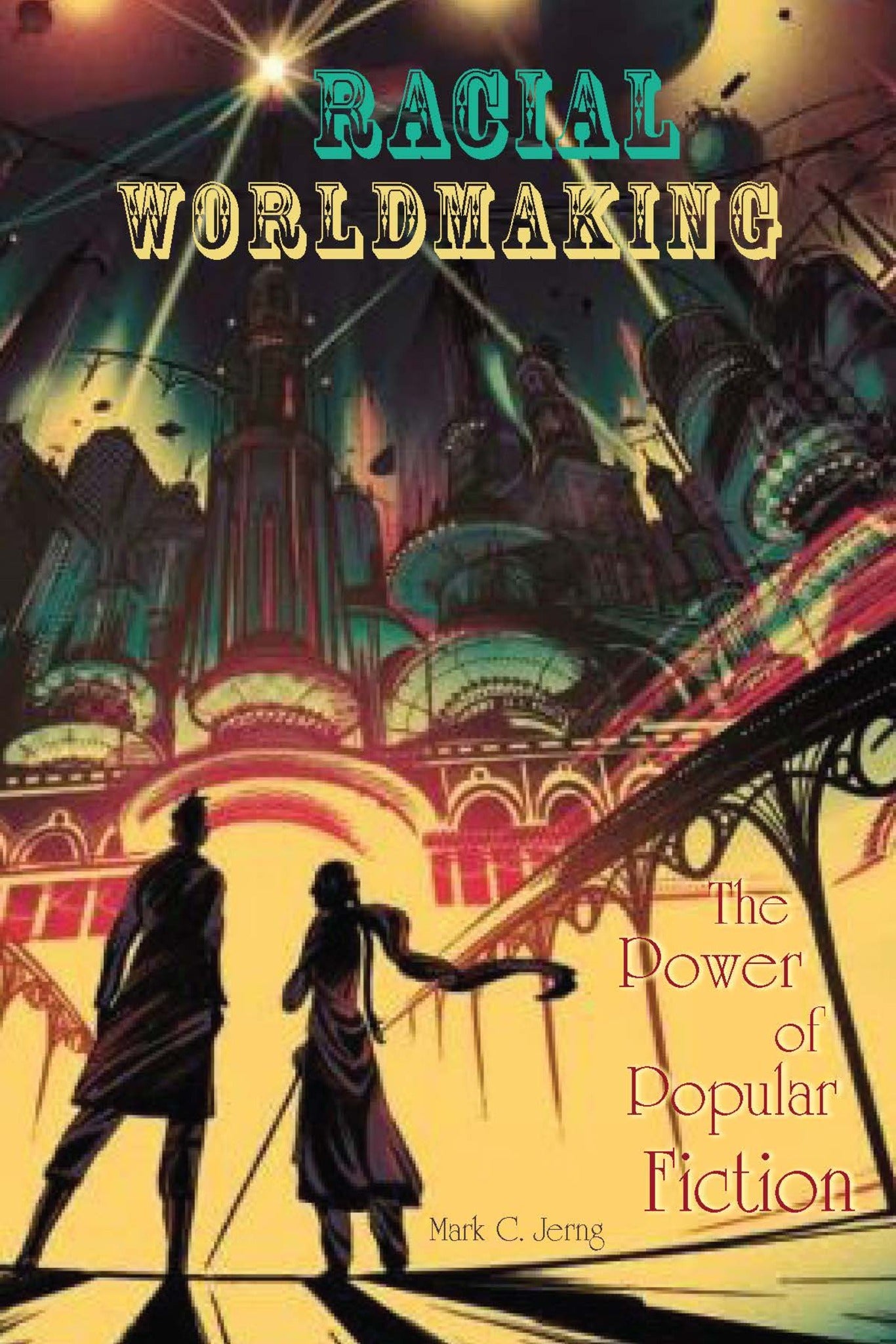
When does racial description become racism? Critical race studies has not come up with good answers to this question because it has overemphasized the visuality of race. According to dominant theories of racial formation, we see race on bodies and persons and then link those perceptions to unjust practices of racial inequality. Racial Worldmaking argues that we do not just see race. We are taught when, where, and how to notice race by a set of narrative and interpretive strategies. These strategies are named “racial worldmaking” because they get us to notice race not just at the level of the biological representation of bodies or the social categorization of persons. Rather, they get us to embed race into our expectations for how the world operates. As Mark C. Jerng shows us, these strategies find their most powerful expression in popular genre fiction: science fiction, romance, and fantasy.
Taking up the work of H.G. Wells, Margaret Mitchell, Samuel Delany, Philip K. Dick and others, Racial Worldmaking rethinks racial formation in relation to both African American and Asian American studies, as well as how scholars have addressed the relationships between literary representation and racial ideology. In doing so, it engages questions central to our current moment: In what ways do we participate in racist worlds, and how can we imagine and build one that is anti-racist?

Acknowledgments
Introduction: Racial Worldmaking
Part I. Yellow Peril Genres
Chapter 1. Worlds of Color
Chapter 2. Futures Past of Asiatic Racialization
Part II. Plantation Romance
Chapter 3. Romance and Racism after the Civil War
Chapter 4. Reconstructing Racial Perception
Part III. Sword and Sorcery
Chapter 5. The “Facts” of Blackness and Anthropological Worlds
Chapter 6. Fantasies of Blackness and Racial Capitalism
Part IV. Alternate History
Chapter 7. Racial Counterfactuals and the Uncertain Event of Emancipation
Chapter 8. World War II and Uncertain Forms of Racial Organization
Conclusion: Towards an Anti-racist Racial Worldmaking
Notes
Index