


Some error occured while loading the Quick View. Please close the Quick View and try reloading the page.
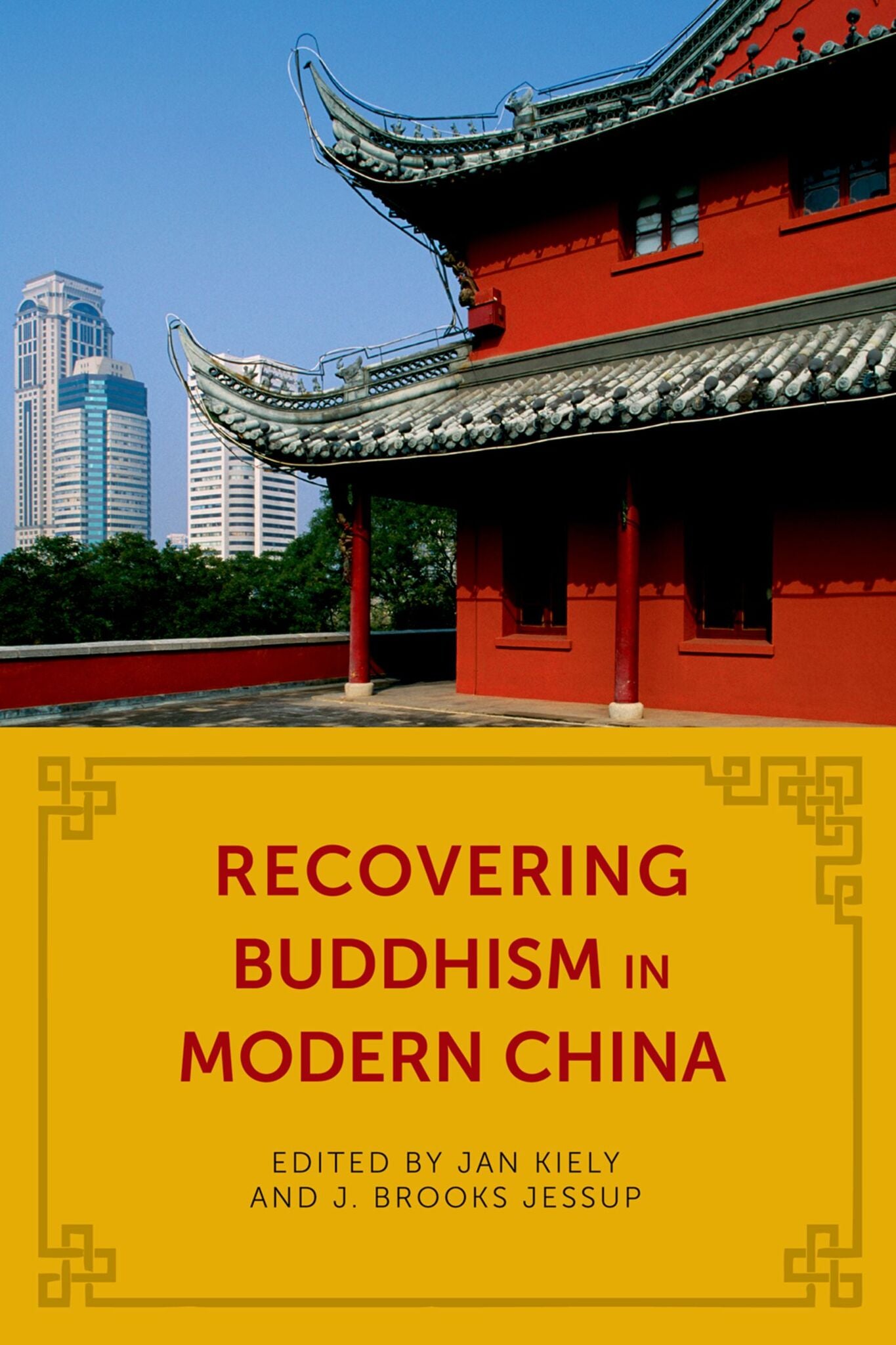
Modern Chinese history told from a Buddhist perspective restores the vibrant, creative role of religion in postimperial China. It shows how urban Buddhist elites jockeyed for cultural dominance in the early Republican era, how Buddhist intellectuals reckoned with science, and how Buddhist media contributed to modern print cultures. It recognizes the political importance of sacred Buddhist relics and the complex processes through which Buddhists both participated in and experienced religious suppression under Communist rule. Today, urban and rural communities alike engage with Buddhist practices to renegotiate class, gender, and kinship relations in post-Mao China.
This volume vividly portrays these events and more, recasting Buddhism as a critical factor in China's twentieth-century development. Each chapter connects a moment in Buddhist history to a significant theme in Chinese history, creating new narratives of Buddhism's involvement in the emergence of urban modernity, the practice of international diplomacy, the mobilization for total war, and other transformations of state, society, and culture. Working across an extraordinary thematic range, this book reincorporates Buddhism into the formative processes and distinctive character of Chinese history.

— Paul Katz, research fellow, Institute of Modern History, Academia Sinica
Jan Kiely is professor of Chinese studies and associate director of the Centre for China Studies at the Chinese University of Hong Kong.
J. Brooks Jessup is a postdoctoral fellow in Chinese studies at the Graduate School of East Asian Studies, Free University of Berlin.
Acknowledgments
Introduction
Part I: Republican-Era Modernity
1. Buddhist Activism, Urban Space, and Ambivalent Modernity in 1920s Shanghai, by J. Brooks Jessup
2. Buddhism and the Modern Epistemic Space: Buddhist Intellectuals in the Science and Philosophy of Life Debates, by Erik J. Hammerstrom
3. A Revolution of Ink: Chinese Buddhist Periodicals in the Early Republic, by Gregory Adam Scott
Part II: Midcentury War and Revolution
4. Resurrecting Xuanzang: The Modern Travels of a Medieval Monk, by Benjamin Brose
5. Buddhist Efforts for the Reconciliation of Buddhism and Marxism in the Early Years of the People's Republic of China, by Xue Yu
6. The Communist Dismantling of Temple and Monastic Buddhism in Suzhou, by Jan Kiely
Part III: Contemporary Social Practice
7. Mapping Religious Difference: Lay Buddhist Textual Communities in the Post-Mao Period, by Gareth Fisher
8. "Receiving Prayer Beads": A Lay-Buddhist Ritual Performed by Menopausal Women in Ninghua, Western Fujian, by Neky Tak-ching Cheung
Bibliography
List of Contributors
Index