


Some error occured while loading the Quick View. Please close the Quick View and try reloading the page.
2023 Lawrence W. Levine Award Winner, Organization of American Historians
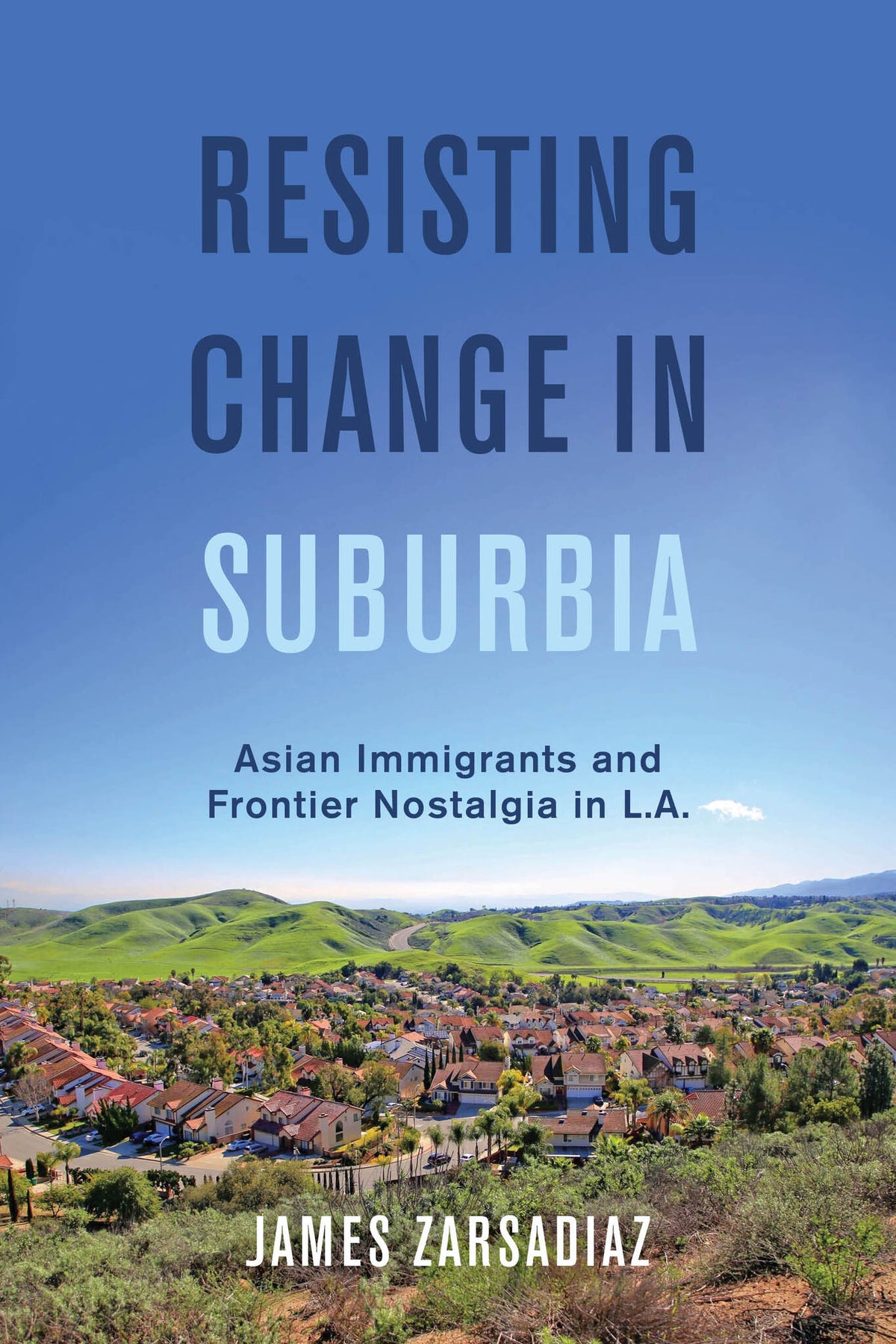
Between the 1980s and the first decade of the twenty-first century, Asian Americans in Los Angeles moved toward becoming a racial majority in the communities of the East San Gabriel Valley. By the late 1990s, their "model minority" status resulted in greater influence in local culture, neighborhood politics, and policies regarding the use of suburban space. In the "country living" subdivisions, which featured symbols of Western agrarianism including horse trails, ranch fencing, and Spanish colonial architecture, white homeowners encouraged assimilation and enacted policies suppressing unwanted "changes"—that is, increased density and influence of Asian culture. While some Asian suburbanites challenged whites' concerns, many others did not. Rather, white critics found support from affluent Asian homeowners who also wished to protect their class privilege and suburbia's conservative Anglocentric milieu. In Resisting Change in Suburbia, award-winning historian James Zarsadiaz explains how myths of suburbia, the American West, and the American Dream informed regional planning, suburban design, and ideas about race and belonging.
Between the 1980s and the first decade of the twenty-first century, Asian Americans in Los Angeles moved toward becoming a racial majority in the communities of the East San Gabriel Valley. By the late 1990s, their "model minority" status resulted in greater influence in local culture, neighborhood politics, and policies regarding the use of suburban space. In the "country living" subdivisions, which featured symbols of Western agrarianism including horse trails, ranch fencing, and Spanish colonial architecture, white homeowners encouraged assimilation and enacted policies suppressing unwanted "changes"—that is, increased density and influence of Asian culture. While some Asian suburbanites challenged whites' concerns, many others did not. Rather, white critics found support from affluent Asian homeowners who also wished to protect their class privilege and suburbia's conservative Anglocentric milieu. In Resisting Change in Suburbia, award-winning historian James Zarsadiaz explains how myths of suburbia, the American West, and the American Dream informed regional planning, suburban design, and ideas about race and belonging.

Price: $29.95
Pages: 306
Publisher: University of California Press
Imprint: University of California Press
Series: American Crossroads
Publication Date:
18 October 2022
Trim Size: 9.00 X 6.00 in
ISBN: 9780520345850
Format: Paperback
BISACs:
"Zooming in on the eastern portions of the San Gabriel Valley, which have often been overlooked in discussions of the region, James Zarsadiaz analyzes how the trope of the frontier shaped cultural imaginaries and local politics during periods of rapid development that have reconfigured the spatial, demographic, and political profile of East San Gabriel Valley since the 1980s."
James Zarsadiaz is Associate Professor of History and Director of the Yuchengco Philippine Studies Program at the University of San Francisco.
Contents
List of Illustrations
Acknowledgments
Introduction
1 • Constructing “Country Living”
2 • The People of “Country Living”
3 • Asian Families Making a Home in the Suburbs
4 • Asian Suburbanites in the “In-Between”
5 • Growth and the Imminent Death of “Country Living”
6 • To Remain Country, Become a City
Epilogue
Notes
Bibliography
Index
List of Illustrations
Acknowledgments
Introduction
1 • Constructing “Country Living”
2 • The People of “Country Living”
3 • Asian Families Making a Home in the Suburbs
4 • Asian Suburbanites in the “In-Between”
5 • Growth and the Imminent Death of “Country Living”
6 • To Remain Country, Become a City
Epilogue
Notes
Bibliography
Index