


Some error occured while loading the Quick View. Please close the Quick View and try reloading the page.
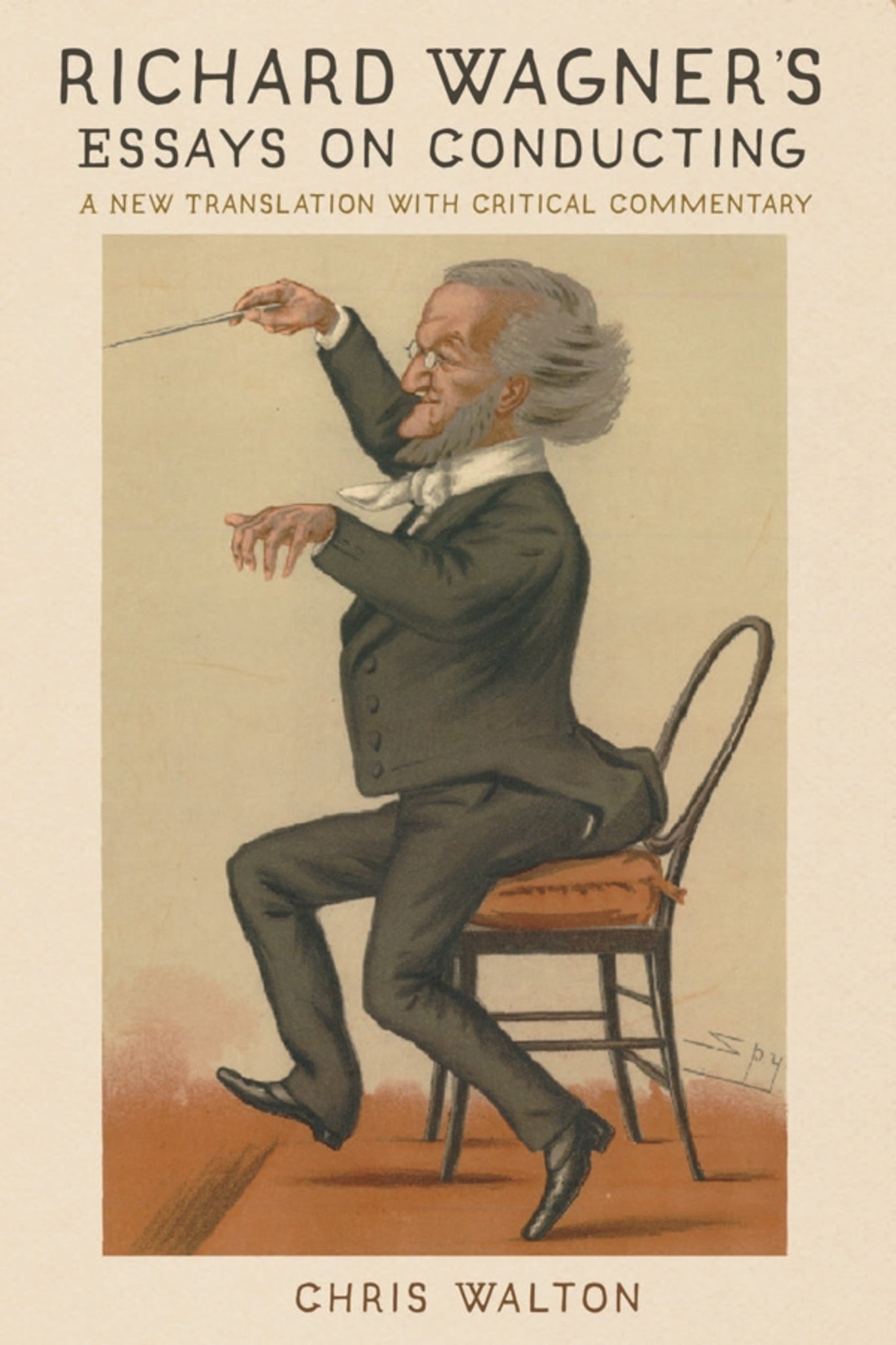
The first modern English edition of Richard Wagner's essays on conducting, extensively annotated, with a critical essay on Wagner as conductor: his aesthetic, practices, vocabulary, and impact.
Richard Wagner was one of the leading conductors of his time. Through his disciples Hans von Bülow, Hans Richter, Anton Seidl, Felix Mottl, Arthur Nikisch, and their many notable protégés, a Wagnerian art of interpretation became the norm in Europe and America until well into the twentieth century. Wagner's essays on conducting had an even longer impact, and were upheld as central to their art by later generations of conductors from Mahler to Strauss, Furtwängler, Böhm, Scherchen, and beyond.
This is the first complete, modern translation of Wagner's conducting essays to appear in English, and the first-ever edition to offer extensive annotations explaining their reception and impact. The accompanying critical essay offers a detailed analysis of Wagner's conducting practices, his innovations in tempo and the art of transition, his creation of a new vocabulary to describe his art, and his success in establishing a school of conductors to promote his works and his aesthetic.
A digital edition of this book is openly available thanks to generous support from the Swiss National Science Foundation.
Richard Wagner was one of the leading conductors of his time. Through his disciples Hans von Bülow, Hans Richter, Anton Seidl, Felix Mottl, Arthur Nikisch, and their many notable protégés, a Wagnerian art of interpretation became the norm in Europe and America until well into the twentieth century. Wagner's essays on conducting had an even longer impact, and were upheld as central to their art by later generations of conductors from Mahler to Strauss, Furtwängler, Böhm, Scherchen, and beyond.
This is the first complete, modern translation of Wagner's conducting essays to appear in English, and the first-ever edition to offer extensive annotations explaining their reception and impact. The accompanying critical essay offers a detailed analysis of Wagner's conducting practices, his innovations in tempo and the art of transition, his creation of a new vocabulary to describe his art, and his success in establishing a school of conductors to promote his works and his aesthetic.
A digital edition of this book is openly available thanks to generous support from the Swiss National Science Foundation.

Price: $36.95
Pages: 324
Publisher: Boydell & Brewer Inc.
Imprint: University of Rochester Press
Publication Date:
14 February 2021
Trim Size: 9.00 X 6.00 in
ISBN: 9781648250125
Format: Paperback
Walton's new translation and investigation should become the standard edition for all students of conducting. More widely, this book will also be of interest to any musician or scholar engaged in performances of Wagner's works or in 19th-century performance practices as a whole.
— Michael Graham
— Michael Graham
Introduction
PART I: RICHARD WAGNER'S WRITINGS ON CONDUCTING
Reminiscences of Spontini
Report on the Performance of Beethoven's Ninth Symphony in Dresden in 1846
About Conducting
On Performing Beethoven's Ninth Symphony
PART II: CRITICAL ESSAY
Richard Wagner and the Art of Conducting
PART I: RICHARD WAGNER'S WRITINGS ON CONDUCTING
Reminiscences of Spontini
Report on the Performance of Beethoven's Ninth Symphony in Dresden in 1846
About Conducting
On Performing Beethoven's Ninth Symphony
PART II: CRITICAL ESSAY
Richard Wagner and the Art of Conducting