


Some error occured while loading the Quick View. Please close the Quick View and try reloading the page.
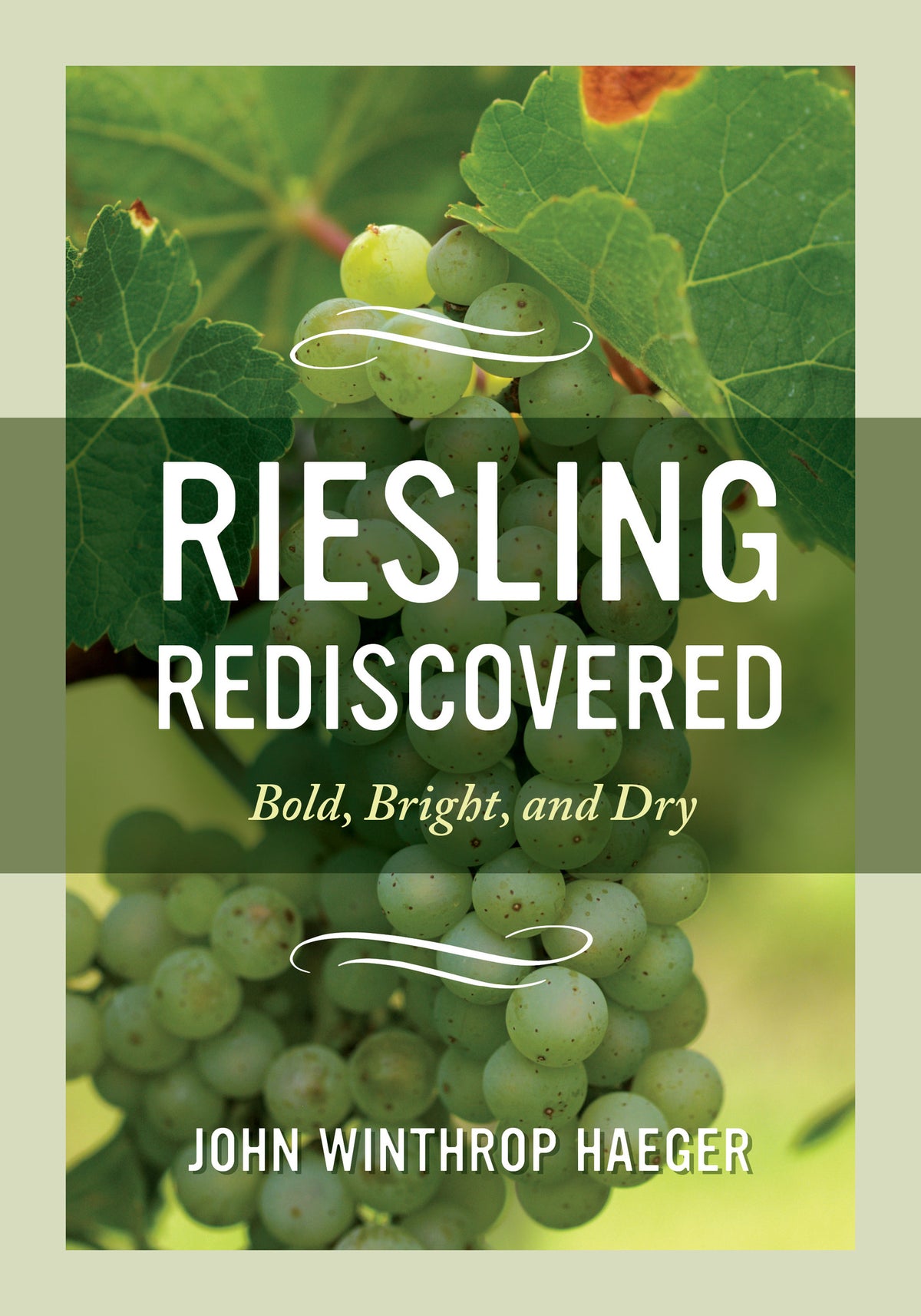
"What makes the book so encompassing, informative, and relevant is that Haeger has avoided focusing on viticulture or enology or economy in isolation, and has instead looked at all of them in their historic and contemporary scientific and socio-cultural context. . . . Not everyone loves Riesling, but those of us who do will find our passion articulately explained and expressed in Haeger’s book."—Anne Krebiehl, MW, The World of Fine Wine
"If you haven't been sold on dry riesling, this is required reading; if you're already a fan, it's an essential reference to add to your shelf."—Wine & Spirits
Riesling is the world’s seventh most-planted white wine grape variety and among the fastest growing over the past twenty years. It is a personal favorite of many sommeliers, chefs, and other food and wine professionals for its appealing aromatics, finesse, and minerality; for its uncanny ability to reflect terroir; and for its impressive versatility with cuisines of all types. It is stylistically paradoxical, however. Now usually made dry in most of Europe and Australia, and assumed dry by most German consumers, Riesling is made mostly sweet or lightly sweet in North America and is believed sweet in the American marketplace irrespective of origin. Riesling is thus consequently—but mistakenly—shunned by the mainstream of American wine drinkers, whose tastes and habits have been overwhelmingly dry for two generations.
Riesling Rediscovered looks at the present state of dry Riesling across the Northern Hemisphere: where it is grown and made, what models and objectives vintners have in mind, and what parameters of grape growing and winemaking are essential when the goal is a delicious dry wine. John Winthrop Haeger explores the history of Riesling to illuminate how this variety emerged from a crowded field of grape varieties grown widely across northern Europe. Riesling Rediscovered is a comprehensive, current, and accessible overview of what many consider to be the world’s finest and most versatile white wine.

Price: $39.95
Pages: 384
Publisher: University of California Press
Imprint: University of California Press
Publication Date:
08 March 2016
Trim Size: 10.00 X 7.00 in
ISBN: 9780520275454
Format: Hardcover
BISACs:
"What makes the book so encompassing, informative, and relevant is that Haeger has avoided focusing on viticulture or enology or economy in isolation, and has instead looked at all of them in their historic and contemporary scientific and socio-cultural context. . . . Not everyone loves Riesling, but those of us who do will find our passion articulately explained and expressed in Haeger’s book."
— Anne Krebiehl, MW
John Winthrop Haeger is a sinologist, historian, and academic administrator who has written about wine since 1985 for Connoisseur, Wine & Spirits, Saveur, and other publications. He is the author of North American Pinot Noir (2004) and Pacific Pinot Noir (2008), both published by UC Press.
Acknowledgments
Introduction
PART I
The Riesling Predicament
Riesling Behaviors, Typicity, and Terroirs
A History of Riesling, Reviewed and Amended
Sweet Wines and Dry Wines, Then and Now
How Dry Riesling is Made
What Differences Do Clones Make?
Riesling Habitats in Western Europe
Riesling Habitats in North America
PART II
Introduction to Sites and Producers
Rhine Basin
Danube Basin: Lower Austria
Adige Basin: Alto Adige
Eastern North America
Western North America
References
Index
Map Section
Introduction
PART I
The Riesling Predicament
Riesling Behaviors, Typicity, and Terroirs
A History of Riesling, Reviewed and Amended
Sweet Wines and Dry Wines, Then and Now
How Dry Riesling is Made
What Differences Do Clones Make?
Riesling Habitats in Western Europe
Riesling Habitats in North America
PART II
Introduction to Sites and Producers
Rhine Basin
Danube Basin: Lower Austria
Adige Basin: Alto Adige
Eastern North America
Western North America
References
Index
Map Section