


Some error occured while loading the Quick View. Please close the Quick View and try reloading the page.
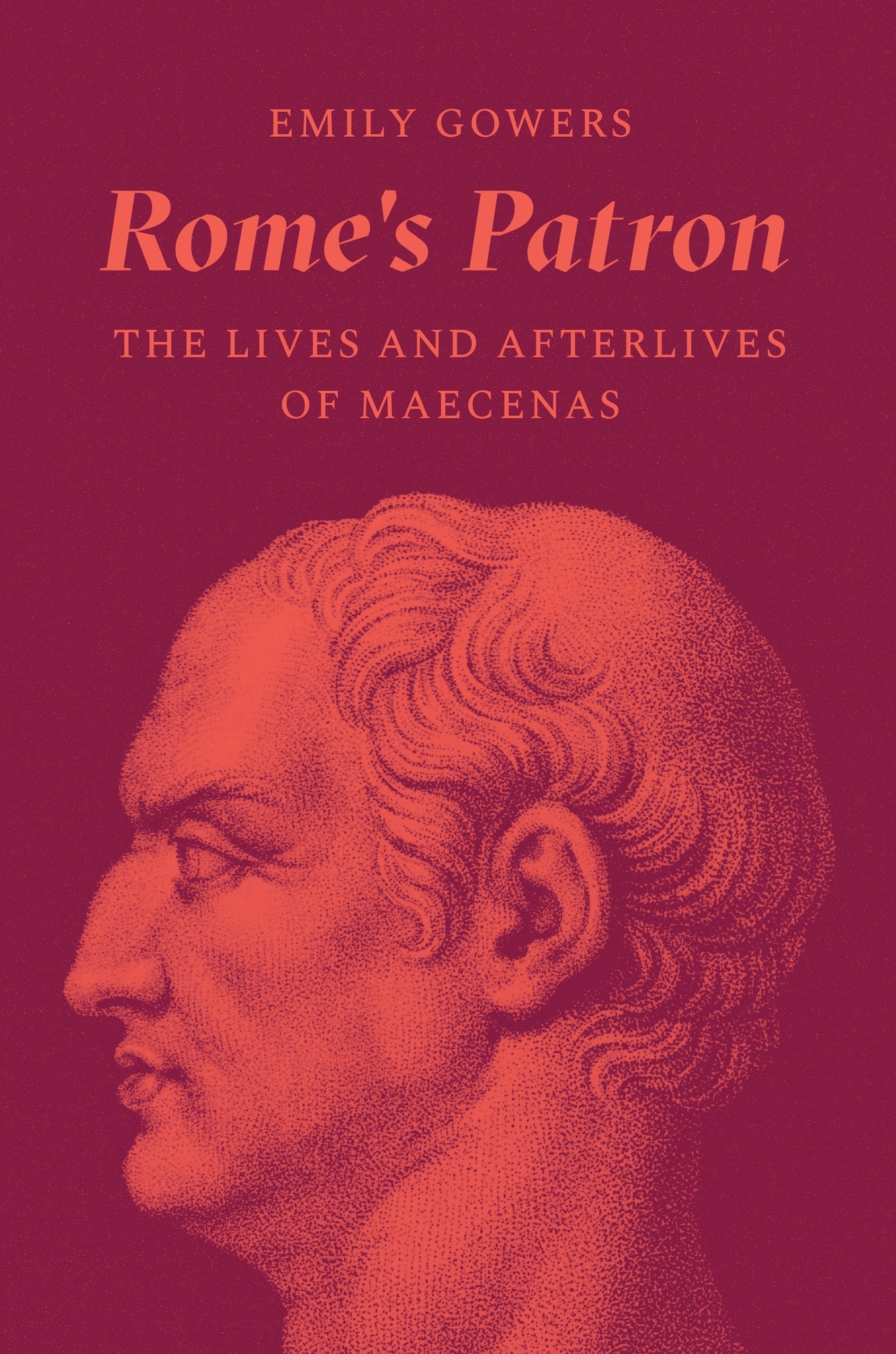
The story of Maecenas and his role in the evolution and continuing legacy of ancient Roman poetry and culture
An unelected statesman with exceptional powers, a patron of the arts and a luxury-loving friend of the emperor Augustus: Maecenas was one of the most prominent and distinctive personalities of ancient Rome. Yet the traces he left behind are unreliable and tantalizingly scarce. Rather than attempting a conventional biography, Emily Gowers shows in Rome’s Patron that it is possible to tell a different story, one about Maecenas’s influence, his changing identities and the many narratives attached to him across two millennia.
Rome’s Patron explores Maecenas’s appearances in the central works of Augustan poetry written in his name—Virgil’s Georgics, Horace’s Odes and Propertius’s elegies—and in later works of Latin literature that reassess his influence. For the Roman poets he supported, Maecenas was a mascot of cultural flexibility and innovation, a pioneer of gender fluidity and a bearer of imperial demands who could be exposed as a secret sympathizer with their own values. For those excluded from his circle, he represented either favouritism and indulgence or the lost ideal of a patron in perfect collaboration with the authors he championed.
As Gowers shows, Maecenas had and continues to have a unique cachet—in the fantasies that still surround the gardens, buildings and objects so tenuously associated with him; in literature, from Ariosto and Ben Johnson to Phillis Wheatley and W. B. Yeats; and in philanthropy, where his name has been surprisingly adaptable to more democratic forms of patronage.
