


Some error occured while loading the Quick View. Please close the Quick View and try reloading the page.
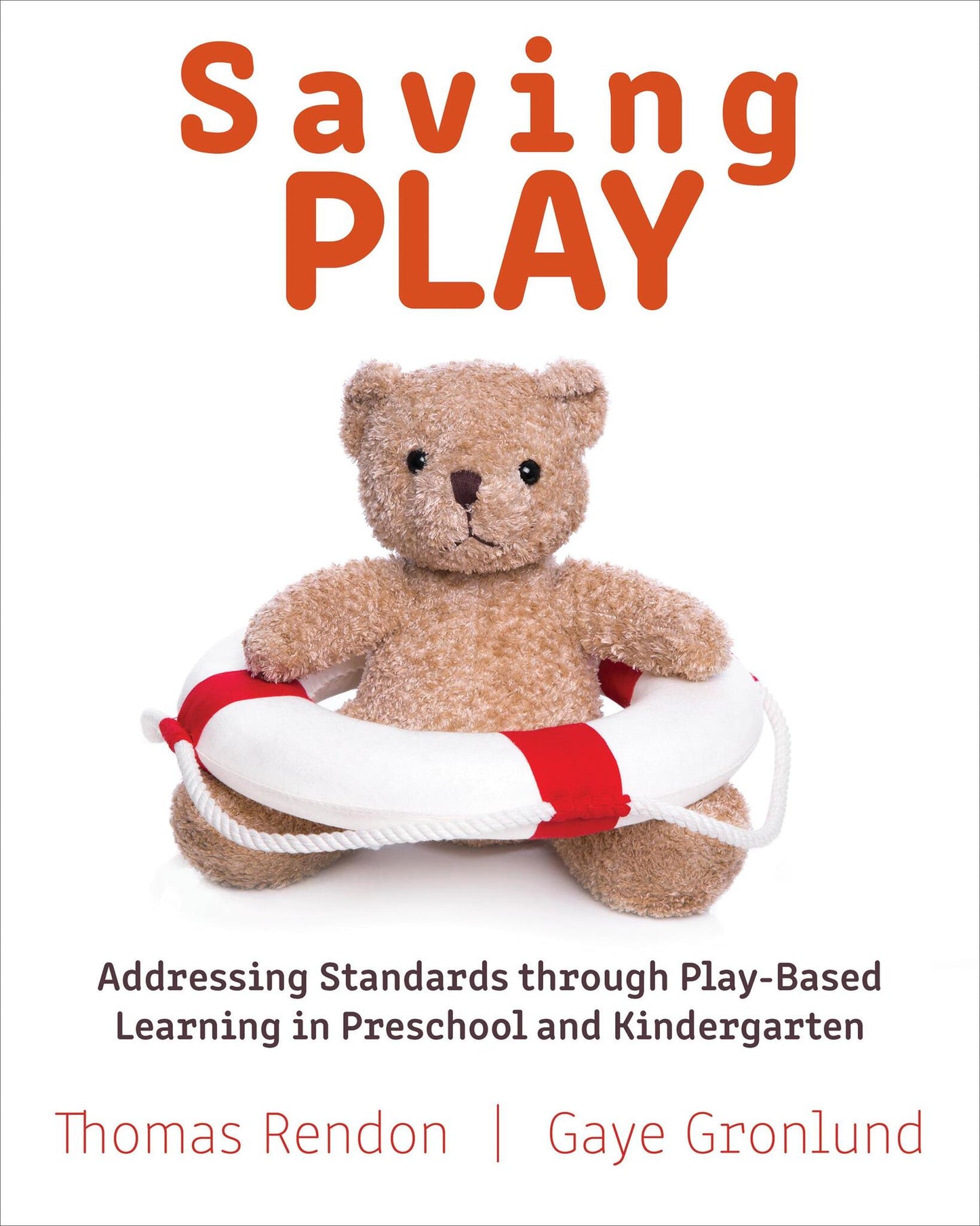
Play, academics, and standards can work together with the right strategies and support from educators. Take an active role in child-directed play to guide learning. Become a strong advocate for saving play in early childhood education by empowering teachers to join play and standards, and learn how child-led, open-ended play addresses the seven domains and Common Core Standards.
This book is full of research and resources that link academic learning and play experiences. Engage in provocative questions for teachers and administrators to help you effectively share the importance of play in early learning with others, and help restore play to its proper role as both fun and educational.
Gaye Gronlund, MA, is a nationally recognized consultant and author who works with early childhood programs across the country, specializing in developmentally appropriate practice, authentic assessment, play-based curriculum, and early learning standards. Her other publications include: Individualized Child-Focused Curriculum, Focused Observations, Second Edition, and Making Early Learning Standards Come Alive, Second Edition.
Thomas Rendon is the coordinator of the Iowa Head Start State Collaboration Office and an active supporter of policy to promote play at a state level. He has an MBA from the University of Iowa and is currently working on a PhD in early childhood special education from Kent State University.

—Walter F. Drew, EdD, Founder and Executive Director of the Institute for Self Active Education, Board Member for The Association for the Study of Play, and Co-Author of From Play to Practice: Connecting Teachers Play to Children’s Learning
“Saving Play is a delightful book—using research and written by an administrator and a practitioner—a great combination. Who says play is antithetical to learning? Even learning based on standards. Rendon and Gronlund show us how play is integral to helping children learn, and not just an extra that gets thrown in for 10 minutes between ‘learning activities.’ Playful learning is essential to helping children think, learn, and remember. Bravo for bringing these important ideas to life!”
—Roberta Michnick Golinkoff, Ph.D. University of Delaware and author of Becoming Brilliant: What Science Tells Us About Raising Successful Children
“A timely survival guide. This wonderfully challenging, readable book invites us to sharpen our perceptions of a whole range of state and national standards and to share responsibility for explaining them to teachers and parents and the public. As a standards-resister myself, I've just been won over. Read this book!”
— Elizabeth Jones, Faculty emerita, Pacific Oaks College, author of The Play's the Thing and Playing to Get Smart
"Saving Play is packed with research and resources that link academic learning and play experiences. Engage in provocative questions for teachers and administrators to help to effectively share the importance of play in early learning with others, and help to restore play to its proper role as both fun and educational . . . Highly recommended for school district and academic library Teacher Education collections." —Midwest Book Review
Part 1: ANTICIPATION
Chapter 1: The Value of Child-Directed, Open-Ended Play Experiences
Chapter 2: The Importance of Teacher Engagement in Child-Directed Play
Chapter 3: Why Standards? The Misconceptions and the Facts about Early Learning and Kindergarten Common Core Standards
Part 2: SURPRISE and PLEASURE
Chapter 4: How Teachers Can Address Standards as Children Play
Chapter 5: Ensuring that Play is Part of the Classroom Experience for ALL Young Children
Part 3: UNDERSTANDING and STRENGTH
Chapter 6: Addressing Approaches to Learning Standards in Play
Chapter 7: Addressing Language and Literacy Standards in Play
Chapter 8: Addressing Mathematics Standards in Play
Chapter 9: Addressing Science Standards in Play
Chapter 10: Addressing Social Studies in Play
Chapter 11: Addressing Physical and Motor Development Standards in Play
Chapter 12: Addressing Social/Emotional Standards in Play
Part 4: POISE
Chapter 13: The Importance of Reflection and Observation in Assessing Children’s Progress toward Standards in Play
Chapter 14: Being an Advocate for What’s Right for Children: Saving Play in Preschool and Kindergarten Classrooms
Appendix A: Policies That Seem to Interfere with Play