


Some error occured while loading the Quick View. Please close the Quick View and try reloading the page.
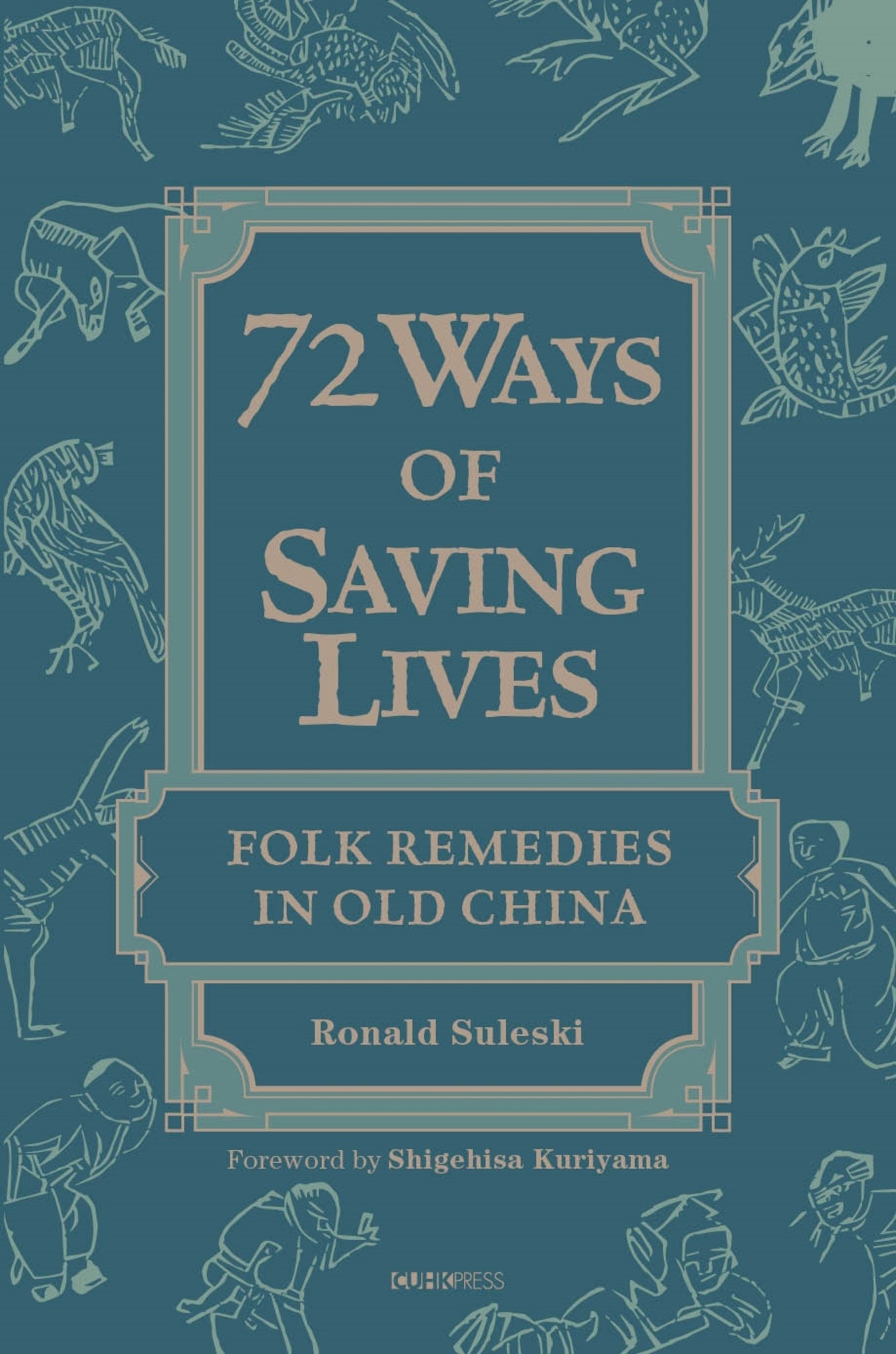
How did lay people in old China save their lives when dealing with acute or chronic health issues? Conventional medicine was costly and might not have been an option for many. Instead, people in villages and towns relied on remedies drawn from a woodblock-printed illustrated booklet called the Seventy-Two Therapies, first published in 1847.
The goal of this book is to foster an appreciation of China’s long tradition of folk remedies. Each folk remedy is illustrated by a page from the circa 1860s woodblock edition of the Seventy-Two Therapies which the author used for translation. He also added a historical and interpretive analysis to expand on each therapy and to place it in the context of contemporary thinking, aiming at academics and readers interested in the everyday lives of common people in pre-1950 China, and in the folk medicine wisdom inherited from the past.

received his PhD in Chinese history from the University of Michigan. He is Professor of History and Director of the Rosenberg Institute for East Asian Studies, Suffolk University, Boston. Prior to that he was Assistant Director of the Fairbank Center for Chinese Studies at Harvard University (2003–2009), he has taught at the University of Texas at Arlington and at Sophia University in Tokyo, served as Provost of the Tokyo Campus of Huron University, and been elected President of the Asiatic Society of Japan. His publications include The Modernization of Manchuria: An Annotated Bibliography (1994); Civil Government in Warlord China: Tradition, Modernization and Manchuria (2002); Manshū no seishōnen zō (Images of Youth in Manchuria) (2008, in Japanese); and Daily Life for the Common People of China, 1850 to 1950: Understanding Chaoben Culture (2018).
Shigehisa Kuriyama (Foreword by)
is Reischauer Institute Professor of Cultural History, Department of East Asian Languages and Civilizations, Harvard University.
Foreword (Shigehisa Kuriyama)
Acknowledgements
Introduction and Interpretive Overview
The Seventy-Two Therapies
Appendix A: Publication History of the Seventy-Two Therapies
Appendix B: Images and the Seventy-Two Therapies
Bibliography
Index