


Some error occured while loading the Quick View. Please close the Quick View and try reloading the page.
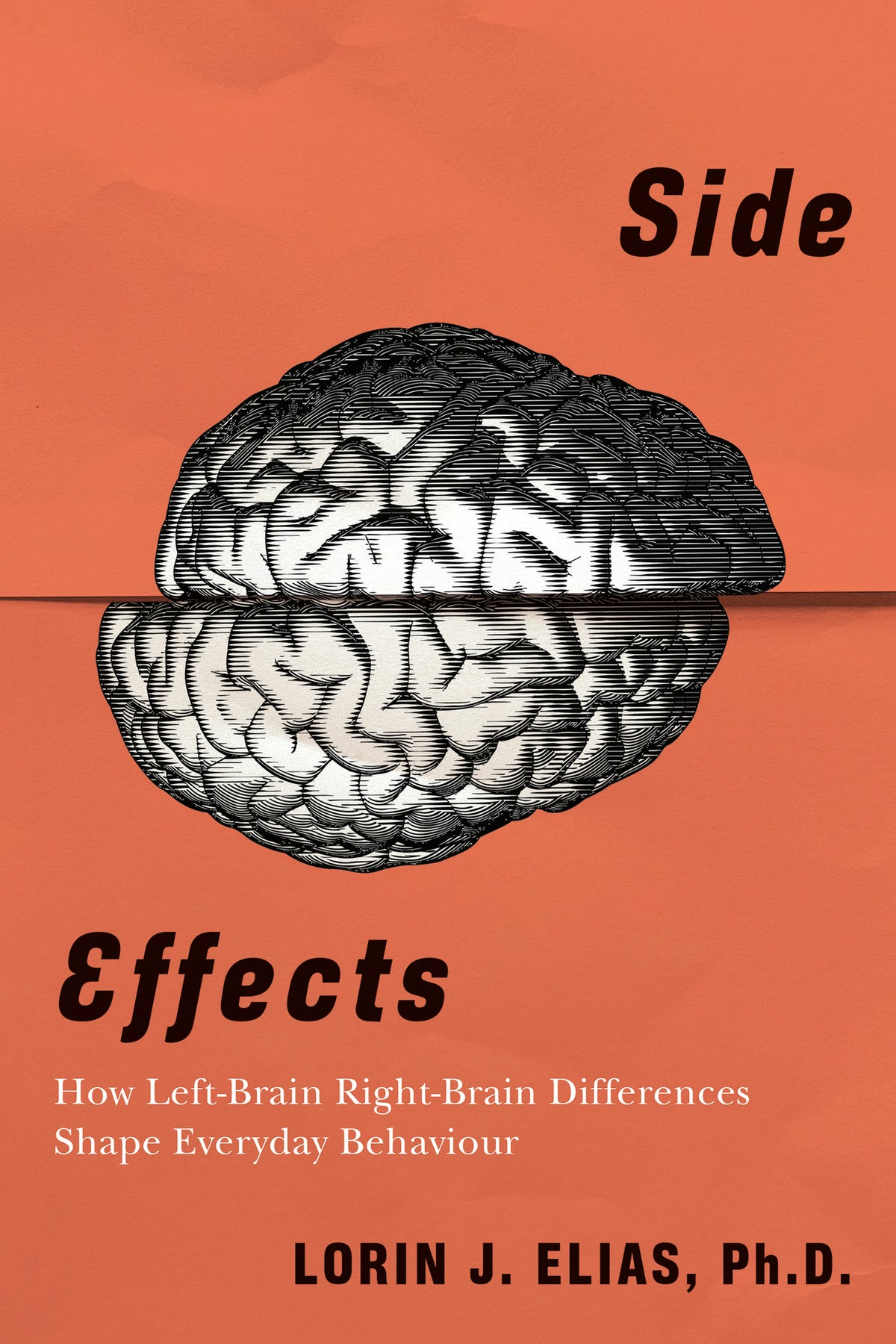
Understanding how right-brain and left-brain differences influence our habits, thoughts, and actions.
Human behaviour is lopsided. When cradling a newborn child, most of us cradle the infant to the left. When posing for a portrait, we tend to put our left cheek forward. When kissing a lover, we usually tilt our head to the right. Why is our behaviour so lopsided and what does this teach us about our brains? How have humans instinctively used this information to make our images more attractive and impactful? Can knowing how left-brain right-brain differences shape our opinions, tendencies, and attitudes help us make better choices in art, architecture, advertising, or even athletics?
Side Effects delves into how lateral biases in our brains influence everyday behaviour and how being aware of these biases can be to our advantage.
Human behaviour is lopsided. When cradling a newborn child, most of us cradle the infant to the left. When posing for a portrait, we tend to put our left cheek forward. When kissing a lover, we usually tilt our head to the right. Why is our behaviour so lopsided and what does this teach us about our brains? How have humans instinctively used this information to make our images more attractive and impactful? Can knowing how left-brain right-brain differences shape our opinions, tendencies, and attitudes help us make better choices in art, architecture, advertising, or even athletics?
Side Effects delves into how lateral biases in our brains influence everyday behaviour and how being aware of these biases can be to our advantage.

Price: $22.99
Pages: 248
Publisher: Dundurn Press
Imprint: Dundurn Press
Publication Date:
13 September 2022
Trim Size: 9.00 X 6.00 in
ISBN: 9781459747555
Format: Paperback
Lorin J. Elias, Ph.D., is a professor of psychology at the University of Saskatchewan. He completed his Ph.D. in behavioural neuroscience at the University of Waterloo and has been studying left-brain right-brain differences for over twenty years. Lorin lives in Saskatoon.
Contents
- Introduction
- Handedness: Are Left-Handers Always Right?
- Feet, Eyes, Ears, Noses: Starting on the Right Foot
- Words: The Left Isn’t Treated Right
- Kissing: Are We Kissing Right?
- Cradling Biases: Are You Holding Your Baby Right?
- Posing Biases: Putting the Best Cheek Forward
- Lighting Biases: Do We Have the Right Lighting?
- Side Effects in Art, Aesthetics, and Architecture
- Gestures: Leftover Behavioural Fossils
- Turning Biases: Things That Go Bump on the Right
- Seating Biases: 2B or Not 2B?
- Sports: Competing the Right Way
- Afterword
- Acknowledgments
- References
- Image Credits
- Index
- About the Author