


Some error occured while loading the Quick View. Please close the Quick View and try reloading the page.
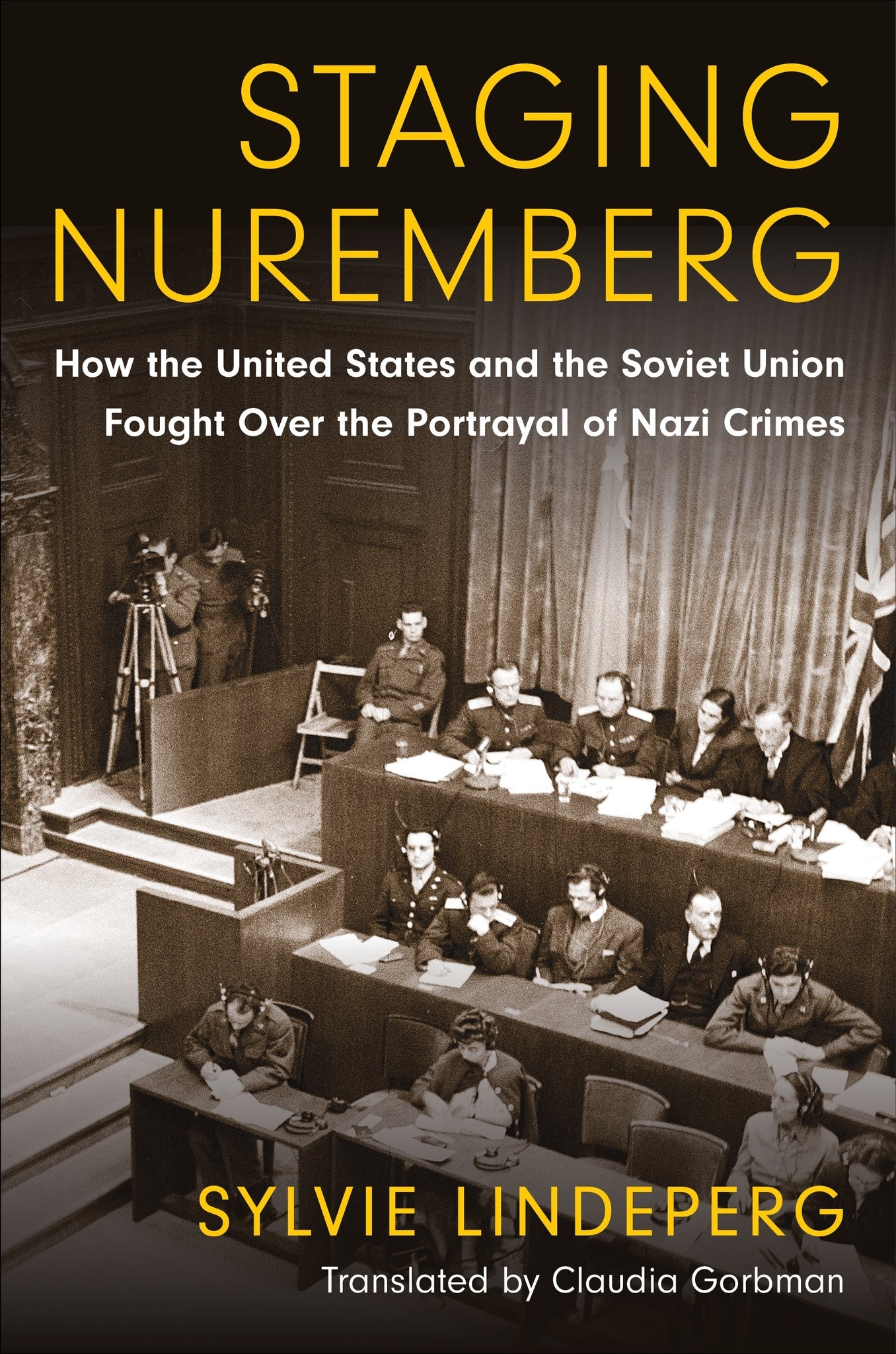
As victory in World War II drew near, the Allies decided to hold a major trial of Nazi leaders, which began in Nuremberg in November 1945. Conflict soon broke out between the United States and the Soviet Union over not only how to assess German guilt but also how to depict the trial. The Americans saw it as a judicial and media spectacle that would convey “the greatest moral tale ever told,” illustrated with Hollywood techniques. The Soviets, for their part, drew on extensive experience filming show trials to craft their own narrative of the tribunal.
Sylvie Lindeperg offers a pioneering account of the cinematic stagecraft, storytelling, and imagery of the Nuremberg trials, revealing how film was used both as legal evidence and as a propaganda tool. She follows the American campaign to influence world opinion before, during, and after the trial, on stage and behind the scenes. Lindeberg chronicles how the hope of scripting a Hollywood-style courtroom drama crumbled amid rising geopolitical tensions and the mundane reality of the tribunal. The book interweaves in-depth reconstruction of the filming of the trial with portraits of the colorful characters who played leading or supporting roles. Drawing on American, British, Soviet, French, and German archives as well as analysis of films, newsreels, and photographs, Staging Nuremberg is a revelatory study of the theater of justice.

Sylvie Lindeperg is a historian, emeritus member of the Institut Universitaire de France, and professor at the University of Paris 1 Panthéon–Sorbonne. She is the author of many books in French, and her books in English translation include “Night and Fog”: A Film in History (2014).
Claudia Gorbman is professor emerita of film studies at the University of Washington, Tacoma, and has translated several books by Michel Chion.
Note to Readers
Prologue: The Theater of Justice
Act I. Behind the Scenes: Conceiving the Ideal Trial
1. The Nuremberg Chessboard
2. Hollywood Goes to War
3. From MoMA to the Salt Mines: The Hunt for Images
4. The Editing Room: Or, the Inventory of the Possible
5. Gordon Dean’s Storytelling
6. The Drama’s Architecture
7. Cameras in the Courtroom
8. Soviet Cinema, Auxiliary to the Courts
9. The Fall of the House of Donovan
10. The Final Run-Through
Act II. On Stage: The Trial
11. The Curtain Rises on an American Week
12. “The Flesh of the Courts”
13. Phantoms of Propaganda
14. Nuremberg, “Citadel of Boredom”
15. The Curtain Falls
16. German Autumn: Ending Without Images
17. Voices Ever More Dissonant
Epilogue: The Profane and the Sacred
Conclusion: Justice on Stage: “The Two-Sided Mirror”
Acknowledgments
Appendix 1: Nuremberg in Television and Film
Appendix 2: Supplements
Notes
Sources
Index