


Some error occured while loading the Quick View. Please close the Quick View and try reloading the page.
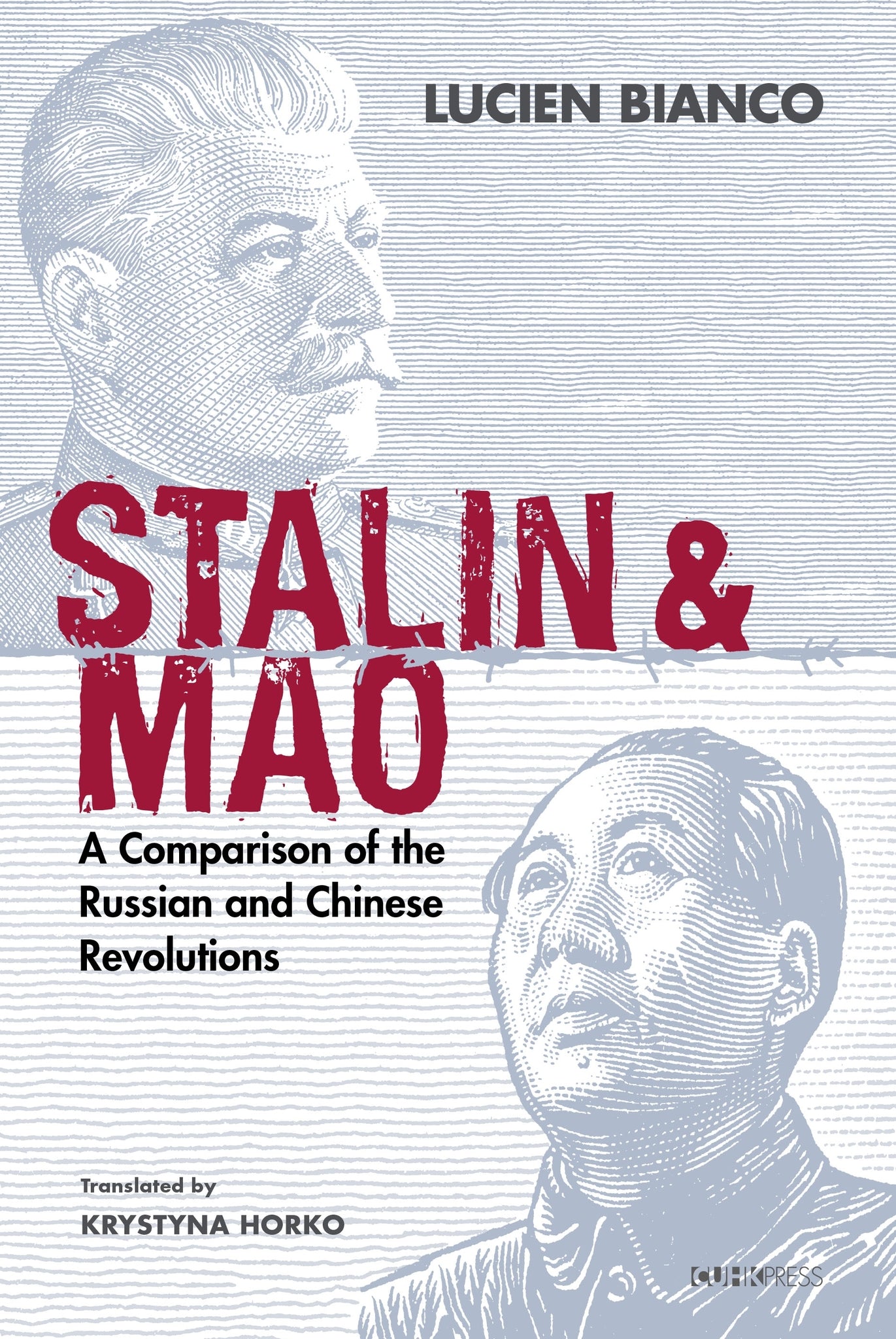
China’s ascent to the rank of the world’s second largest economic power has given its revolution a better image than that of its Russian counterpart. Yet the two have a great deal in common. Indeed, the Chinese revolution was a carbon copy of its predecessor, until Mao became aware, not so much of the failures of the Russian model, but of its inability to adapt to an overcrowded third-world country. Yet instead of correcting that model, Mao decided to go further and faster in the same direction. The aftershock of an earthquake may be weaker, but the Great Leap Forward of 1958 in China was far more destructive than the Great Turn of 1929 in the Soviet Union. It was conceived with an idealistic end but failed to take all the possibilities into account. China’s development only took off after—and thanks to—Mao’s death, once the country turned its back on the revolution.
Lucien Bianco’s original comparative study highlights the similarities: the all-powerful bureaucracy; the over-exploitation of the peasantry, which triggered two of the worst famines of the twentieth century; control over writers and artists; repression and labor camps. The comparison of Stalin and Mao that completes the picture, leads the author straight back to Lenin and he quotes the observation by a Chinese historian that, “If at all possible, it is best to avoid revolutions altogether.”

Lucien Bianco is professor emeritus at the École des Hautes Études en Sciences Sociales (EHESS) in Paris. His books include Origins of the Chinese Revolution, 1915–1949 (fourth revised and expanded French edition, 2007), Peasants Without the Party: Grass-Roots Movements in Twentieth-Century China (2001), and Jacqueries et Révolution dans la Chine du XXe Siècle (2005).
Krystyna Horko is a freelance translator and editor. She graduated with a degree in Chinese studies from SO AS, University of London and obtained a British Council scholarship to China in 1976. She worked as a journalist and editor in Hong Kong before moving to Paris where she earned a postgraduate diploma in Chinese sociology from EHESS, and another in translation from École Supérieure d’Interprètes et de Traducteurs.