


Some error occured while loading the Quick View. Please close the Quick View and try reloading the page.
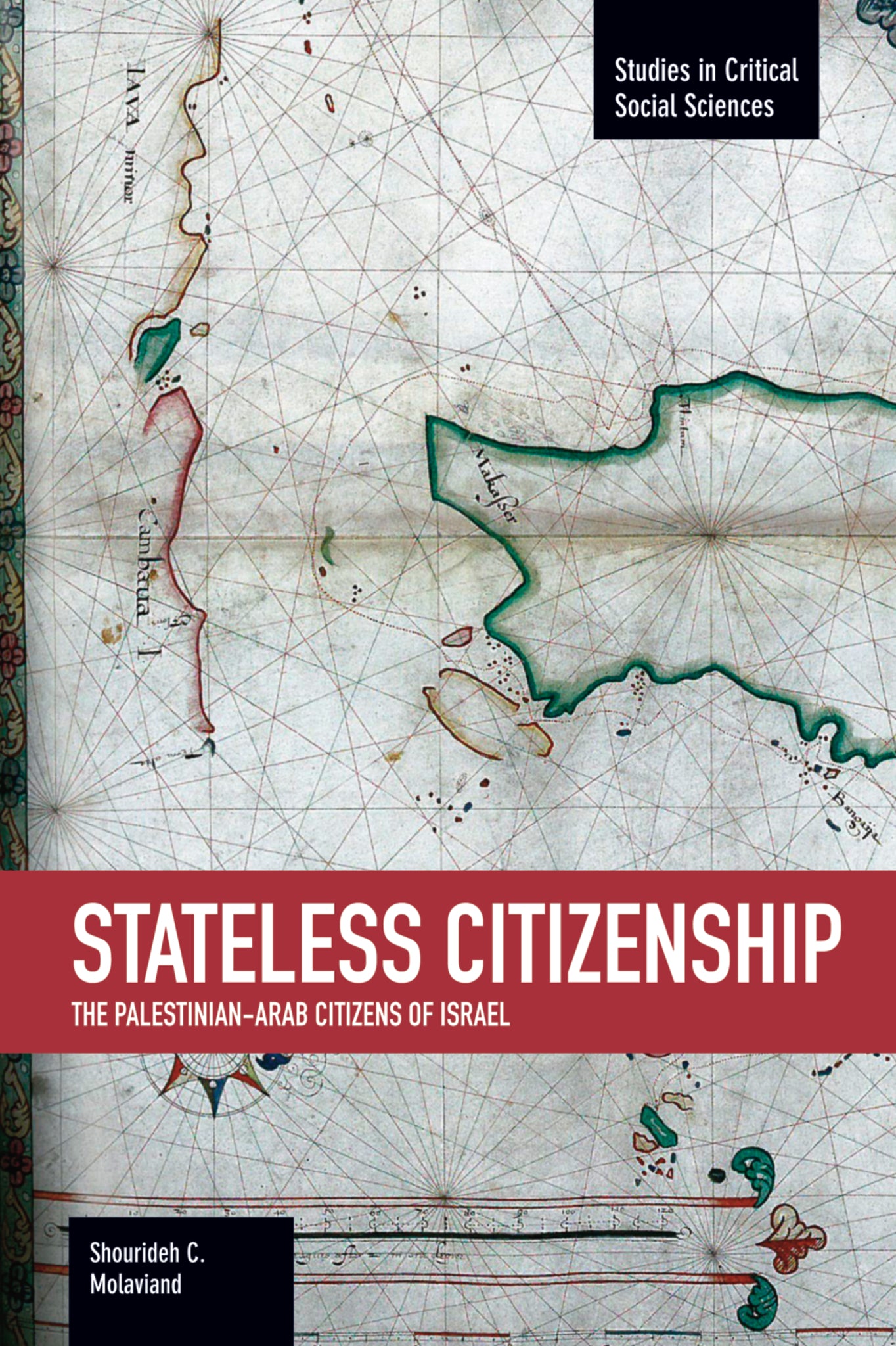
Palestinians living inside of Israel are placed in a paradoxical situation where, as Arab citizens of a Jewish state, they are both inside and outside, host and guest, citizen and stateless. Through the paradigm of stateless citizenship Molavi centers our analytical gaze on the paradox that it is through their status as Israeli citizens that Palestinians are deemed stateless.

Price: $30.00
Pages: 255
Publisher: Haymarket Books
Imprint: Haymarket Books
Series: Studies in Critical Social Sciences
Publication Date:
11 November 2014
Trim Size: 9.00 X 6.00 in
ISBN: 9781608463831
Format: Paperback
BISACs:
HISTORY / Middle East / Israel & Palestine
,
Middle Eastern history
,
LAW / Indigenous Law & Legal Systems
,
POLITICAL SCIENCE / Genocide & War Crimes
,
POLITICAL SCIENCE / Colonialism & Post-Colonialism
,
Jurisprudence and general issues
,
Indigenous peoples / Indigeneity
,
War crimes
,
Genocide and ethnic cleansing
,
Colonialism and imperialism
,
Politics and government
"Molavi has produced a richly-textured, and deeply engaging account of Palestinians and their place in Israel's citizenship regime. In both its impressive theoretical framing and comprehensive critique of liberal claims around citizenship, this book promises to be an essential reference point for many years to come."
Adam Hanieh, author of Lineages of Revolt
Citizenship has historically assumed membership of a sovereign nation state within a territory over which the state has a legitimate claim. In the modern world marginalized people are denizens rather than citizens in territories that are politically contested. This situation has given rise to a new vocabulary of semi-citizens, paperless citizens, and stateless citizens to describe contested state borders. Shourideh C. Molavi’s study of Palestinian-Arabs is an important contribution to both political theory and the ethics of hospitality.”
Bryan S. Turner, The Graduate Center CUNY
"[Molavi] has contributed to showing that the Israeli state, from its inception to the latest legislation, is far from being a democracy in its discriminatory treatment of its non-Jews."
Miriam Scharf, International Socialism
Adam Hanieh, author of Lineages of Revolt
Citizenship has historically assumed membership of a sovereign nation state within a territory over which the state has a legitimate claim. In the modern world marginalized people are denizens rather than citizens in territories that are politically contested. This situation has given rise to a new vocabulary of semi-citizens, paperless citizens, and stateless citizens to describe contested state borders. Shourideh C. Molavi’s study of Palestinian-Arabs is an important contribution to both political theory and the ethics of hospitality.”
Bryan S. Turner, The Graduate Center CUNY
"[Molavi] has contributed to showing that the Israeli state, from its inception to the latest legislation, is far from being a democracy in its discriminatory treatment of its non-Jews."
Miriam Scharf, International Socialism
“[Molavi] has contributed to showing that the Israeli state, from its inception to the latest legislation, is far from being a democracy in its discriminatory treatment of its non-Jews.” –International Socialism Journal
List of Figures
Preface
Acknowledgements
Introduction
1. Liberal Citizenship: Ambiguities and Inconsistencies
Framing citizenship
Theorizing citizenship
Citizenship beyond the state
Problematizing legal categorizations
Racial state, racialized citizenship
2. The Israeli Incorporation Regime
Colonizing the land of milk and honey
A multifaceted discrimination
Legislative level
Formal and declarative levels
Structural and institutional levels
Mass protests of October 2000
Acre Riots of 2008
The 2008-2009 War on Gaza
Criminalizing Arab Political Participation and Discourse
Targeting Arab MKs: From Bishara to Zoabi
Arab civil society: A non-state alternative
Response to the rise of Arab civil society: The case of Ameer Makhoul
Operative and budgetary level
Israeli apartheid: Beyond South Africa
3. Israeli Hostipitality
From hospitality to Derridean ‘hostipitality’
Oscillating between host and guest
Israeli ‘hostipitality’
4. Liberal Pretence of a Jewish State
The UN Partition Plan of 1947
The principle of ‘two states for two peoples’
Israel as a ‘state for all of its citizens’
Rashid Bey: The de-Palestinianized Arab
Zionist democracy in a comparative context
Israeli demographobia
Liberal rubber stamp for Israeli crimes
5. From Citizenship to Stateless Citizenship
‘Israeli’ and ‘Palestinian’ as incomplete identities
Defining the ‘Israeli’ nation
Research on Palestinians in Israel: An Overview
Formulating Palestinian citizenship – Stateless citizenship
6. The Anatomy of Stateless Citizenship
Knowing the terrain: From the exception to the example
An exclusive inclusion
A perpetual state of emergency
Coexistence without existence
Conclusion
Appendix I: Selections from The Democratic Constitution by Adalah: Legal Center for Arab Minority Rights in Israel (20 March 2007)
Appendix II: Selections from The Haifa Declaration by Mada al-Carmel: The Arab Center for Applied Social Research (15 May 2007)
References
Index
Preface
Acknowledgements
Introduction
1. Liberal Citizenship: Ambiguities and Inconsistencies
Framing citizenship
Theorizing citizenship
Citizenship beyond the state
Problematizing legal categorizations
Racial state, racialized citizenship
2. The Israeli Incorporation Regime
Colonizing the land of milk and honey
A multifaceted discrimination
Legislative level
Formal and declarative levels
Structural and institutional levels
Mass protests of October 2000
Acre Riots of 2008
The 2008-2009 War on Gaza
Criminalizing Arab Political Participation and Discourse
Targeting Arab MKs: From Bishara to Zoabi
Arab civil society: A non-state alternative
Response to the rise of Arab civil society: The case of Ameer Makhoul
Operative and budgetary level
Israeli apartheid: Beyond South Africa
3. Israeli Hostipitality
From hospitality to Derridean ‘hostipitality’
Oscillating between host and guest
Israeli ‘hostipitality’
4. Liberal Pretence of a Jewish State
The UN Partition Plan of 1947
The principle of ‘two states for two peoples’
Israel as a ‘state for all of its citizens’
Rashid Bey: The de-Palestinianized Arab
Zionist democracy in a comparative context
Israeli demographobia
Liberal rubber stamp for Israeli crimes
5. From Citizenship to Stateless Citizenship
‘Israeli’ and ‘Palestinian’ as incomplete identities
Defining the ‘Israeli’ nation
Research on Palestinians in Israel: An Overview
Formulating Palestinian citizenship – Stateless citizenship
6. The Anatomy of Stateless Citizenship
Knowing the terrain: From the exception to the example
An exclusive inclusion
A perpetual state of emergency
Coexistence without existence
Conclusion
Appendix I: Selections from The Democratic Constitution by Adalah: Legal Center for Arab Minority Rights in Israel (20 March 2007)
Appendix II: Selections from The Haifa Declaration by Mada al-Carmel: The Arab Center for Applied Social Research (15 May 2007)
References
Index