


Some error occured while loading the Quick View. Please close the Quick View and try reloading the page.
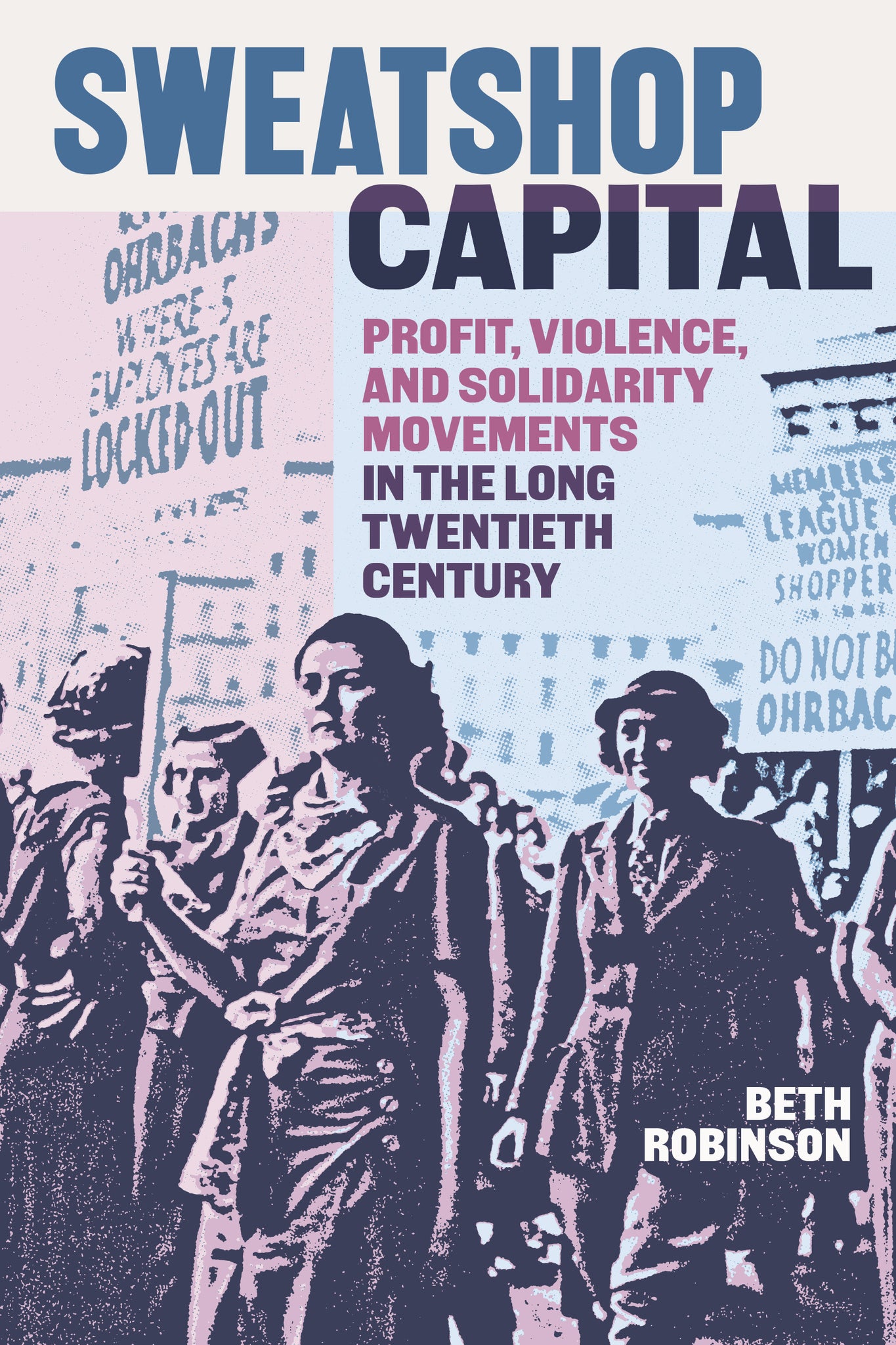
In Sweatshop Capital, Beth Robinson examines the brutal sweatshop labor conditions that produced American consumer goods from the late nineteenth through the early twenty-first centuries, as well as the labor and social movements that contested them. Arguing that sweatshop labor is a persistent feature of capitalism, she shows how manufacturers used both their influence in government and their mobility to sidestep US labor laws, maximize profits, and perpetuate abuses. She outlines how workers and their allies routinely confronted manufacturers by building solidarity networks across race, class, and national lines. Drawing on activists’ literature, news accounts, archival sources, and oral histories, Robinson presents the long history of the antisweatshop movements that responded to American capital’s pursuit of profit through hyperexploitation with a wide range of protest, legal action, and creativity. Beginning with the sweatshops and reformers of the Progressive Era, Robinson moves through the Great Depression and the activism of the Popular Front, the “free trade” globalization of the 1990s and its discontents, and, finally, the global cyber and gig economies of the twenty-first century and the growing movements to rein them in.

Price: $29.95
Pages: 240
Publisher: Duke University Press
Imprint: Duke University Press
Publication Date:
11 November 2025
Trim Size: 9.00 X 6.00 in
ISBN: 9781478032793
Format: Paperback
BISACs:
“Putting the fight against sweatshops in broad perspective, Beth Robinson connects the violation of labor standards to the shifting political economy of the United States. She argues for the persistent dependence of capitalism on the exploitation of the most vulnerable wage laborers, mostly women and more often immigrant or US women of color. A new generation of students and activists will find inspiration in these pages that memorialize the past to generate the knowledge for making a better future.”—Eileen Boris, author of, Making the Woman Worker: Precarious Labor and the Fight for Global Standards, 1919–2019
“Sweatshop Capital traces the historical throughline of antisweatshop activism to demonstrate that this history has much to teach us about contemporary manifestations of sweated labor and our collective efforts to challenge worker exploitation. Beth Robinson mines valuable lessons from both the successes and failures of feminist activism to powerfully remind us that feminism has made important contributions to labor history.”—Mary Margaret Fonow, author of, Union Women: Forging Feminism in the United Steelworkers of America
"By turns inspiring and depressing, the book provides ample resources for students and activists to understand how the contemporary moment fits into a longer story of anti-sweatshop activism. Highly recommended. General readers and lower-division undergraduates."—Choice
“Sweatshop Capital traces the historical throughline of antisweatshop activism to demonstrate that this history has much to teach us about contemporary manifestations of sweated labor and our collective efforts to challenge worker exploitation. Beth Robinson mines valuable lessons from both the successes and failures of feminist activism to powerfully remind us that feminism has made important contributions to labor history.”—Mary Margaret Fonow, author of, Union Women: Forging Feminism in the United Steelworkers of America
"By turns inspiring and depressing, the book provides ample resources for students and activists to understand how the contemporary moment fits into a longer story of anti-sweatshop activism. Highly recommended. General readers and lower-division undergraduates."—Choice
Beth Robinson is Assistant Professor of History at St. Catherine University.
Abbreviations vii
Acknowledgments ix
Prologue xiii
Introduction 1
1. “The Struggle Has But Begun”: The Labor Feminism of the Progressive Error 13
2. “Don’t Overlook Any Channel for Publicity”: The Solidarity of the Popular Front 47
3. “Settle the Case, or We’ll Be in Your Face”: The Worldview of the Global Justice Movement 77
4. “Amazon Crime”: The Omnipresence of the New Global Assembly Line 109
Conclusion 149
Notes 159
Bibliography 193
Index 211
Acknowledgments ix
Prologue xiii
Introduction 1
1. “The Struggle Has But Begun”: The Labor Feminism of the Progressive Error 13
2. “Don’t Overlook Any Channel for Publicity”: The Solidarity of the Popular Front 47
3. “Settle the Case, or We’ll Be in Your Face”: The Worldview of the Global Justice Movement 77
4. “Amazon Crime”: The Omnipresence of the New Global Assembly Line 109
Conclusion 149
Notes 159
Bibliography 193
Index 211