


Some error occured while loading the Quick View. Please close the Quick View and try reloading the page.
"[Ibrahim Abu Lughod is] Palestine's foremost academic and intellectual."—Edward Said
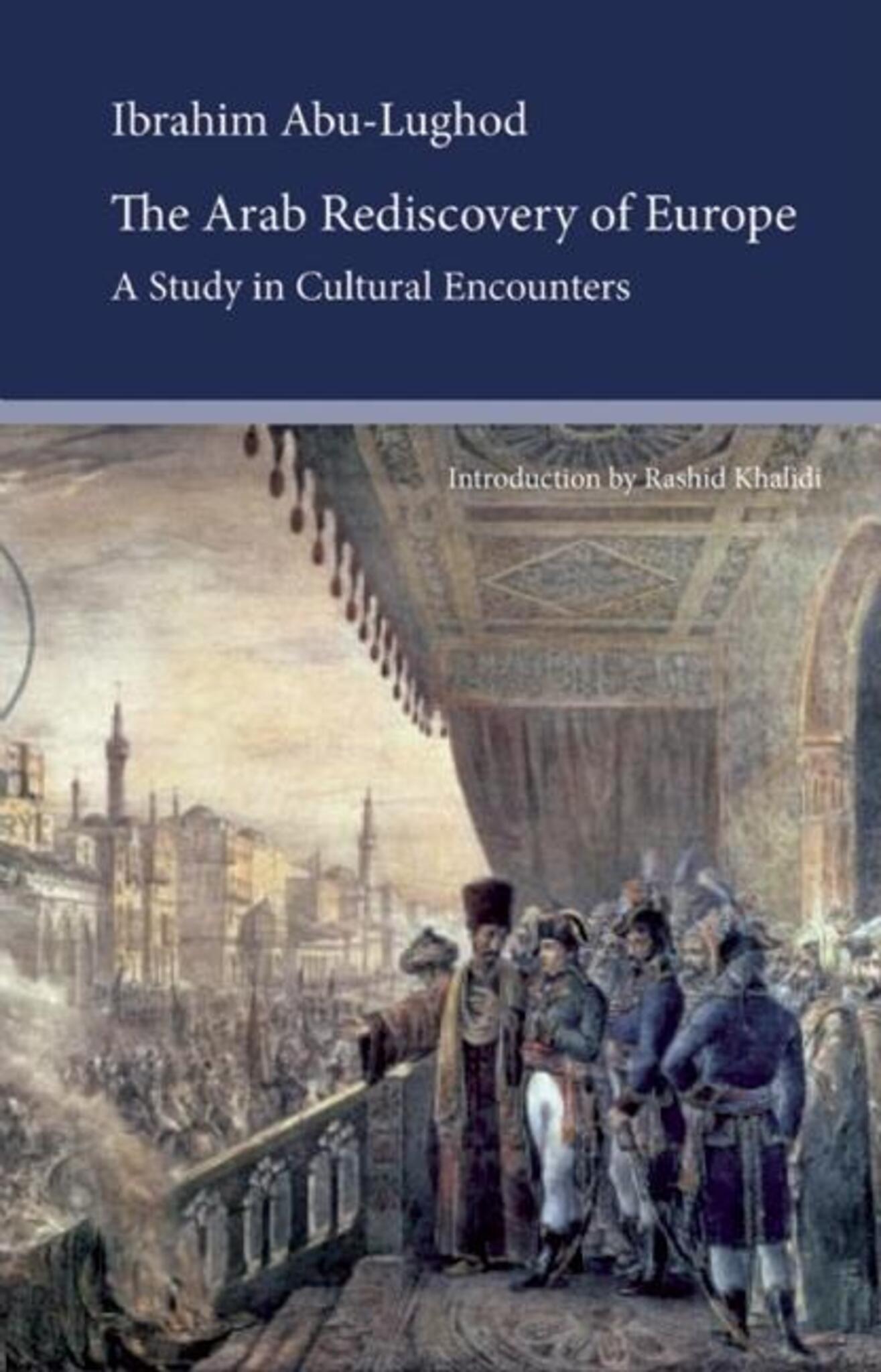
Napoleon’s invasion of Egypt in 1798 exposed the Arab provinces of the Ottoman Empire to a Europe vastly different from the one known to the Arabs of the Middle Ages. At the start of the nineteenth century, Arabs were unprepared for the social, economic, and political progress made in Europe.
By 1870, however, their vague notions had evolved into a fairly sophisticated knowledge of the historic background and contemporary achievements of various European nations. The new reform movements in Egypt and the Fertile Crescent had incorporated into their programs the ideological premises and political institutions of European liberalism.
The Arab Rediscovery of Europe is a pioneering work tracing the role of the Arab intelligentsia in increasing Arab awareness of Europe and in shaping an Arab image of the West. First published in 1963, it was hugely influential in instigating a detailed study of Arab views and experiences of Europe during the reign of Egypt’s Mohammad Ali in the early to mid-nineteenth century.
Ibrahim Abu-Lughod (1929–2001) was an American Palestinian academic, writer, and editor. He taught at Smith College, Massachusetts; McGill University, Montreal; and then spent thirty-four years at Northwestern University, Illinois, where he founded the Institute of African Studies. He founded the Association of Arab-American University Graduates in 1968 and the journal Arab Studies Quarterly in 1978, and held two UNESCO posts. He later became a professor and vice president of Bir Zeit University in the West Bank.

He founded the Association of Arab-American University Graduates in 1968 and the journal Arab Studies Quarterly in 1978, and held two UNESCO posts. He later became a professor and vice-president of Bir Zeit University in the West Bank.
Rashid Khalidi is the Edward Said Professor of Modern Arab Studies at Columbia University. He is the director of the Middle East Institute of Columbia’s School of International and Public Affairs. His publications include The Iron Cage: The Story of the Palestinian Struggle for Statehood (2007).
Preface v
Introduction: The Setting of Westernization 3
I Arab Awareness of the West: Modern Beginnings 11
The Napoleonic Proclamations • The Arab
Chroniclers of the French Expedition
II The Development of the Translation Movement 28
Unorganized Official Interpreting • Random
Translation • Organized Period of Official Translation
• The Decline of Official Translation • The Revival of the
Translation Movement
III The Nature of the Translated Material 46
Translations Undertaken • List of Translations •
Content of the Translations • Other Translators of
the Nineteenth Century • A Digression on Ninth
and Nineteenth-Century Translation • Justifications
for the Translations • Impact of Translations on Arab
Intellectual Development
IV Arab Travellers to Europe 66
Pre-Nineteenth-Century Travellers • Nineteenth-
Century Travellers • Travel Accounts • The
Subject Matter of Travel Books • Impact of the Travels
V Travellers' Views of Europe: Political and Social Organization 86
The Political Organization of the State • Private Organizations
VI Travellers' Views of Europe: The Educational 115
System and the Social Order
Education and Learning • Miscellaneous Sociological
Observations
VII Arab Attitudes and Reactions to Western 135
Achievements
Statements of Individual Writers • Reactions to th
Invidious Comparisons
VIII Conclusions and Subsequent Developments 155
Bibliography 169
Index 181