


Some error occured while loading the Quick View. Please close the Quick View and try reloading the page.
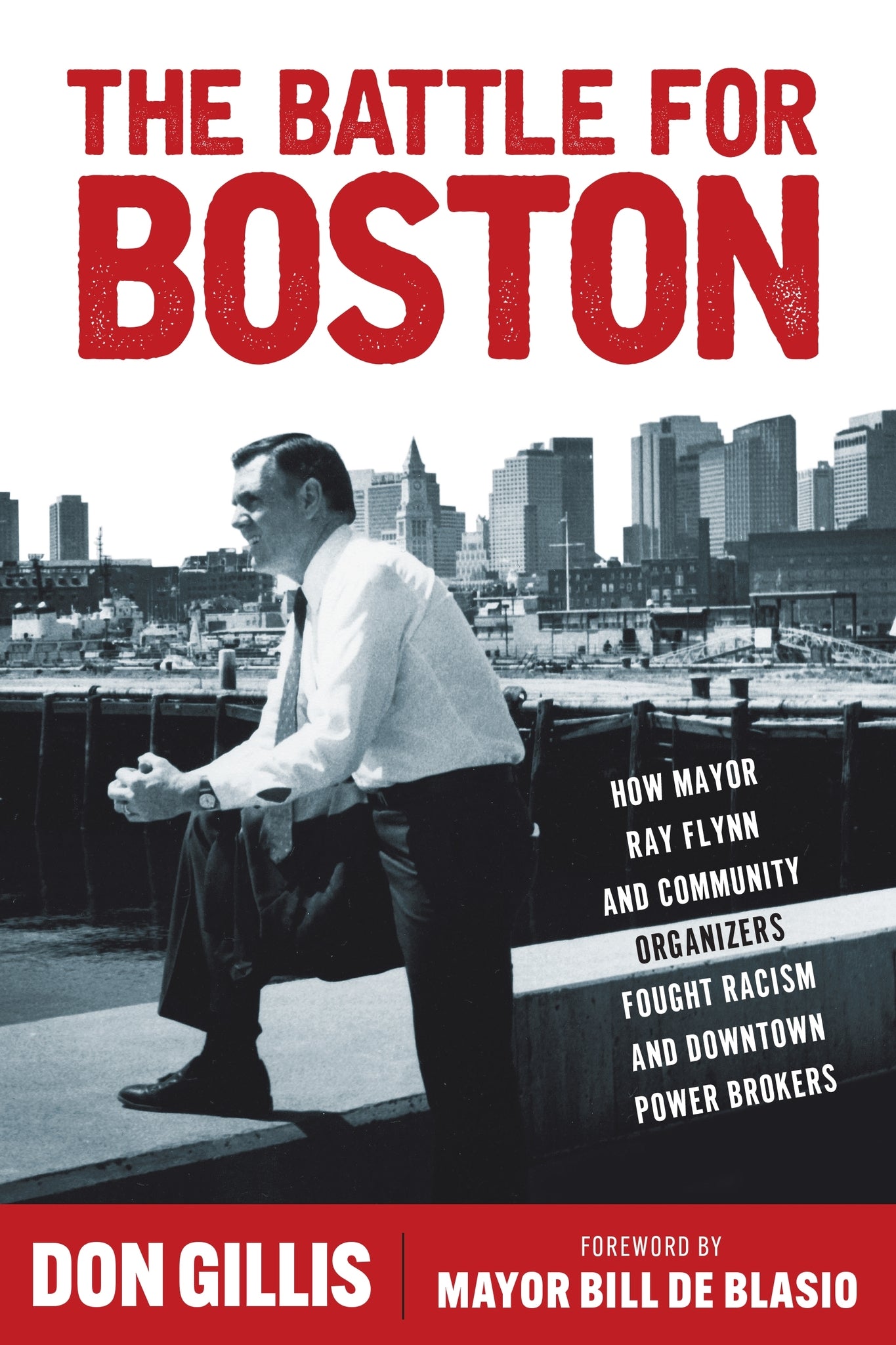
How Mayor Ray Flynn’s leadership and a coalition of activists transformed Boston, challenging established powers and setting new precedents for urban governance
The Battle for Boston captures the remarkable era under Mayor Ray Flynn, whose election in 1983 marked the beginning of a profound shift in the city’s political and social landscape. Don Gillis, a Flynn senior advisor, chronicles the inspiring journey of a city that dared to challenge the entrenched power brokers—including developers, landlords, and banking industry leaders—through powerful grassroots campaigns.
Gillis provides a vivid portrayal of the political dynamics and the coalition of community organizers, neighborhood leaders, and residents that played a pivotal role in rejecting the business-backed growth machine and the city’s historically divisive racial politics. This book charts the strategic battles fought within the corridors of power and on the streets and highlights the substantial impact these movements had on the city’s governance and power dynamics.
In a historic turn, in 2021, Michelle Wu became the first woman, person of color, and Asian- American elected Mayor of Boston. Wu’s victory on a similarly progressive platform as Flynn underscores the enduring relevance of his legacy, signaling a hopeful future for more inclusive and effectively governed cities.
The Battle for Boston poses a critical inquiry: Can cities truly embrace progressivism and govern effectively in the twenty-first century? This qualitative narrative study is a testament to the possibility of such governance, driven by the indomitable spirit of those who strive for a fair and equitable society.

Boston Neighborhoods Map | ix
List of Charts and Tables | xi
Foreword by Mayor Bill de Blasio | xiii
Preface: A City in the Twenty-First Century | xvii
Introduction: Can Cities Be Economically and Socially Progressive? | 1
1 City Limits and Opportunities | 14
2 Political, Social, and Economic History of Boston | 32
3 The New Boston and the 1983 Race for Mayor | 46
4 Community Organizing as Political Governance | 78
5 Confronting the Housing Crisis and Landlords | 91
6 Redlining, Blockbusting, and Fighting Bank Discrimination | 110
7 Challenging the Growth Machine: A New “Social Contract” | 125
8 Boston’s Racial Politics: Ending Racial Violence | 149
9 Civil Rights and Wrongs: The Search for Racial Justice | 169
10 “Death at an Early Age”: Public Education Debates | 196
11 Rebuilding the City: Urban Finances and Infrastructure | 226
12 Confronting Poverty and Homelessness | 234
13 The 2013 and 2021 Mayoral Elections: New Directions for Boston | 245
14 How Does Urban Progressivism Succeed? | 272
Acknowledgments | 311
Appendix 1: Cities Defined as Progressive | 315
Appendix 2: Urban Theories Used in Boston Analysis | 327
Interviews by Author | 331
Notes | 333
Bibliography | 365
Index | 379
Photos follow page 206