


Some error occured while loading the Quick View. Please close the Quick View and try reloading the page.
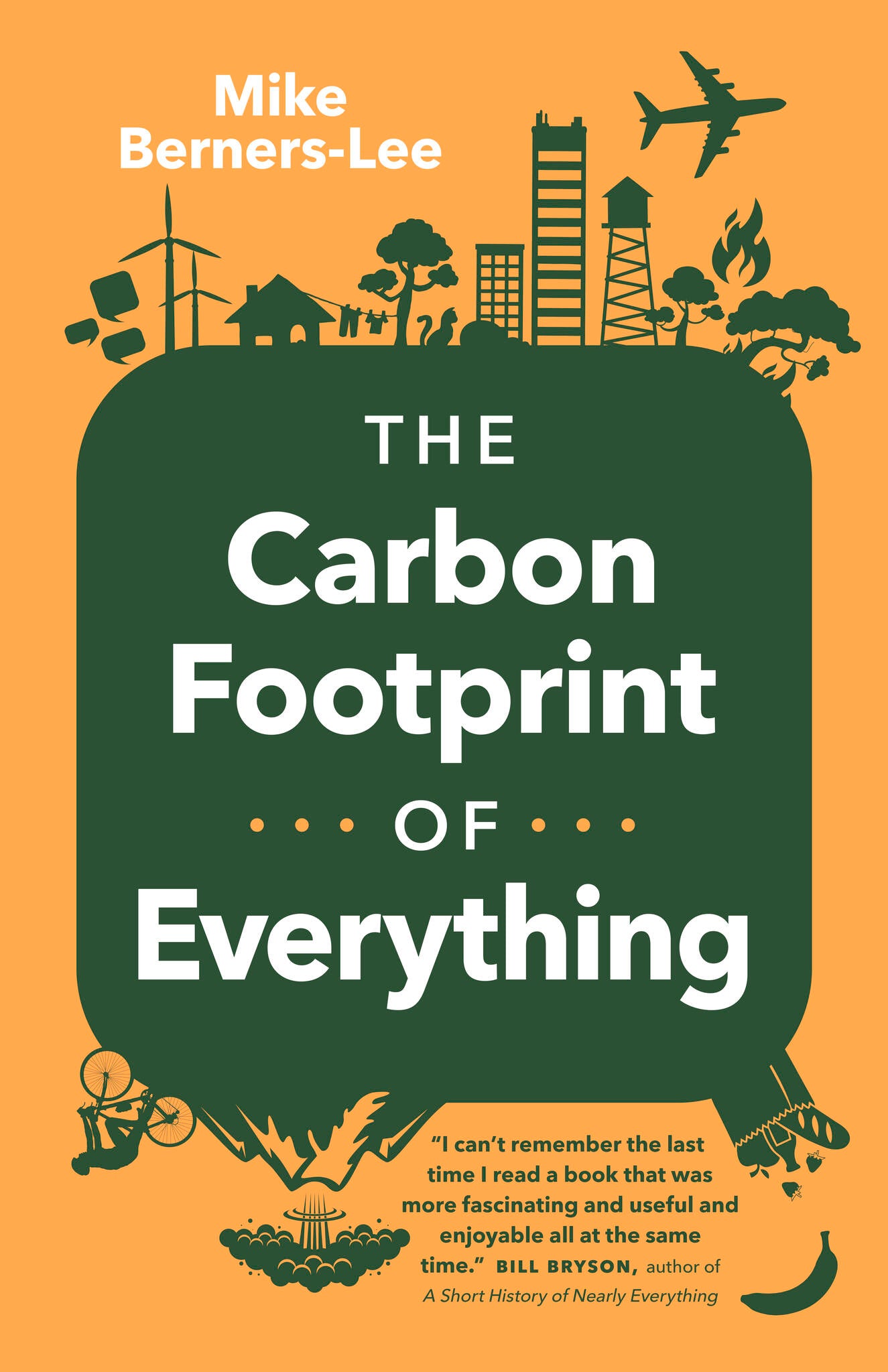
“I can’t remember the last time I read a book that was more fascinating and useful and enjoyable.”—Bill Bryson
Reduce your carbon footprint and understand the issue with this “up-to-date life guide for carbon-conscious readers.”—Kirkus
- Calculate your carbon footprint: with an item-by-item breakdown.
- Meet your company’s carbon goals: using the latest research.
- Covid-19 and the carbon battle: understand the new global supply chain.
The Carbon Footprint of Everything breaks items down by the amount of carbon they produce, creating a calorie guide for the carbon-conscious. With engaging writing, leading carbon expert Mike Berners-Lee shares new carbon calculations based on recent research. He considers the impact of the pandemic on the carbon battle—especially the embattled global supply chain—and adds items we didn’t consider a decade ago, like bitcoin and other cryptocurrencies.
Supported by solid research, cross-referenced with other expert sources, illustrated with easy-to-follow charts and graphs, and written with Berners-Lee’s trademark sense of humor, The Carbon Footprint of Everything should be on everyone’s bookshelf.
The Carbon Footprint of Everything is an extensively revised and updated edition of How Bad Are Bananas.

Price: $18.95
Pages: 312
Publisher: Greystone Books
Imprint: Greystone Books
Publication Date:
19 April 2022
Trim Size: 8.50 X 5.50 in
ISBN: 9781771645768
Format: Paperback
The first edition won the 2012 Green Book Festival Award
“Deftly blends intelligence with entertainment, perhaps creating a unique genre: a page-turner for the climate-conscious.”
—Publishers Weekly
“A user-friendly reminder of our environmental impact... [that] will find an audience among patrons concerned about climate change.”
—Booklist, STARRED review
“An easy, often amusing read…Readers can enjoy the fun as Berners-Lee reveals the carbon footprints of hundreds of elements in our lives.”
—Kirkus Reviews
Praise for There Is No Planet B
“I can’t remember the last time I read a book that was more fascinating and useful and enjoyable.”
—Bill Bryson, author of A Short History of Nearly Everything and The Body
“There is no Planet B is a massively entertaining compendium of bite-sized facts … It’s also massively important, given the current state of the planet.”
—Bill McKibben, author of The End of Nature and American Earth
“There is no Planet B is a rallying cry for a generation worried that they will inherit a world shorn of nature’s wonders and of the freedoms and opportunities we take for granted… [this book] will go a long way to ensuring the planet we hand on may just be liveable.”
—Adrian Barnett, New Scientist
“Who should read There is no Planet B? Everyone. Mike Berners-Lee has written a far-ranging and truth-telling handbook that is as readable as it is instructive.”
—Elizabeth Kolbert, The New Yorker, author of The Sixth Extinction: An Unnatural History
Mike Berners Lee is a leading expert in carbon footprinting and the author of several books. He is a professor and fellow of the Institute for Social Futures at Lancaster University and director and principal consultant of Small World Consulting, based in the Lancaster Environment Centre.
Introduction
A brief guide to carbon footprints
Less than 10 grams
10 to 100 grams
100 to 500 grams (3.5 to 17.5 oz)
500 grams to 1 kil (1.1 to 2.2 pounds)
1 to 10 kilos (2.2 to 22 pounds)
10 to 100 kilos (22 to 220 pounds)
100 to 1,000 kilos (220 pounds to 1 ton)
1 to 10 tons
10 to 1,000 tons
Millions of tons
Billions of tons
Negative emissions
What can we do?
Where the numbers come from
Appendix: Calculating footprints
Notes and references
Thanks
Index