


Some error occured while loading the Quick View. Please close the Quick View and try reloading the page.
A wider conversation on the policies and collective experiences of large-scale development that are shaping China’s urban future.
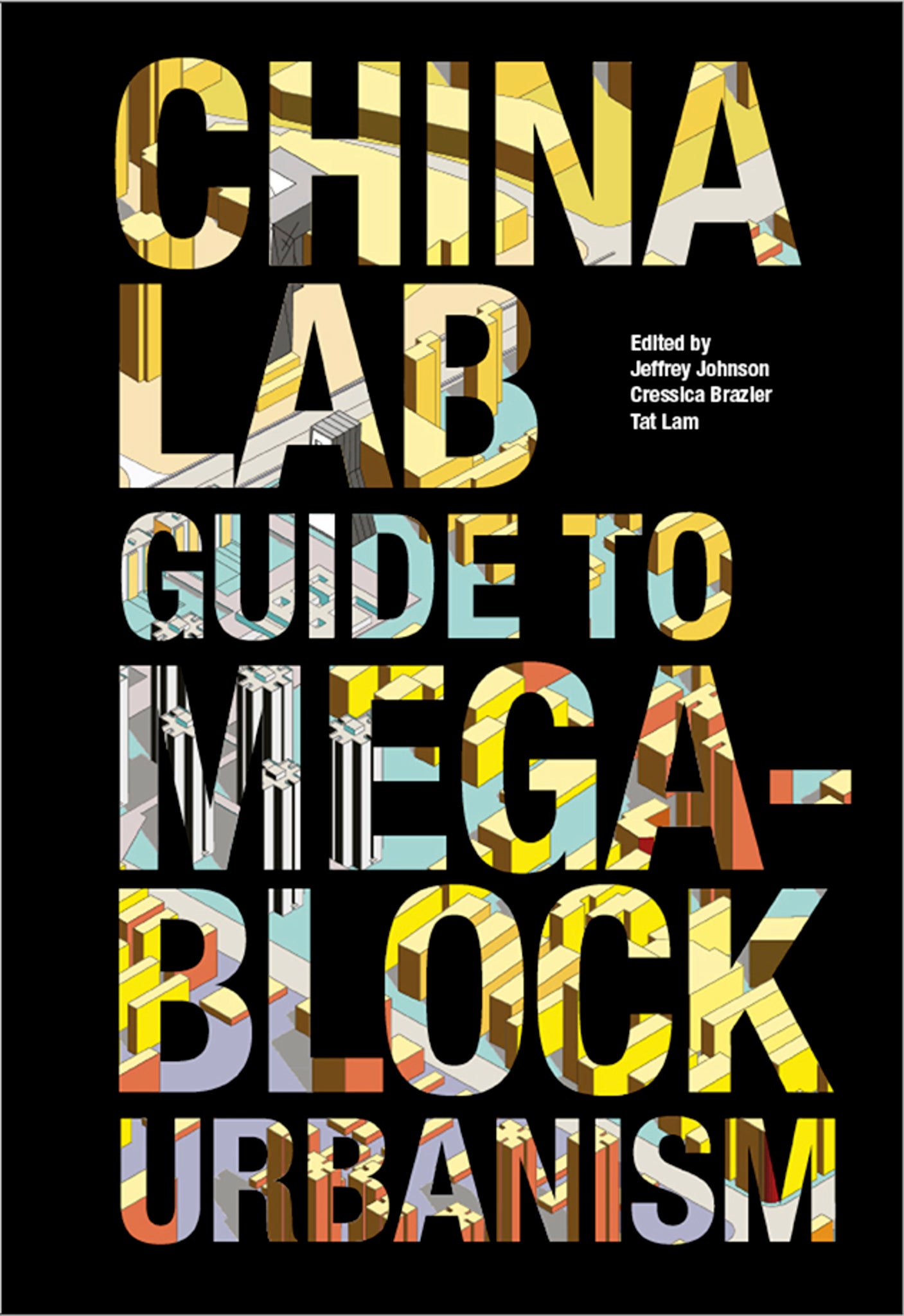
Superblocks are the basic unit of China’s urban development, but they are also spatial instruments with social, cultural, environmental, and economic implications, operating between the scales of architecture and the city. These redefined ‘Megablocks’ then become laboratories for the consequences, opportunities, and potential global proliferation of Chinese urban models, reconsidered through the filters of ecology, economics, and ethics. In this bilingual Guide to Megablock Urbanisms, China Lab aims to document and advance China’s urban future.
Co-published with GSAPP, Columbia University.
Contributions: Amale Andraos, David Bray, Eric Chang, Yung Ho Chang, Renee Y. Chow, Edward Denison, Duanfang Lu, Joris Fach, John Fitzgerald, Steven Holl, Michiel Hulshof, Jun Jiang, Clover Lee, Zhongjie Lin, Matthew Niederhauser, Xuefei Ren, Daan Roggeveen, André Schmidt, Grahame Shane, Jian Shi, Jiaming Zhu, Jianfei Zhu
Superblocks are the basic unit of China’s urban development, but they are also spatial instruments with social, cultural, environmental, and economic implications, operating between the scales of architecture and the city. These redefined ‘Megablocks’ then become laboratories for the consequences, opportunities, and potential global proliferation of Chinese urban models, reconsidered through the filters of ecology, economics, and ethics. In this bilingual Guide to Megablock Urbanisms, China Lab aims to document and advance China’s urban future.
Co-published with GSAPP, Columbia University.
Contributions: Amale Andraos, David Bray, Eric Chang, Yung Ho Chang, Renee Y. Chow, Edward Denison, Duanfang Lu, Joris Fach, John Fitzgerald, Steven Holl, Michiel Hulshof, Jun Jiang, Clover Lee, Zhongjie Lin, Matthew Niederhauser, Xuefei Ren, Daan Roggeveen, André Schmidt, Grahame Shane, Jian Shi, Jiaming Zhu, Jianfei Zhu

Price: $49.95
Pages: 408
Publisher: Actar D
Imprint: Actar
Publication Date:
24 November 2020
Trim Size: 9.80 X 6.80 in
ISBN: 9781940291161
Format: Paperback
"The consistent layout and good graphics make comparisons among the superblocks easy, even for those few that are found beyond China, such as Stuyvesant Town in New York and Les Tours Aillaud in Paris.
Similar data-heavy graphics reappear at the start of the chapters that follow the catalog, where timelines highlight important events related to each theme, and maps and architectural diagrams draw attention to considerations that range from the scale of the country down to individual projects. Along with the essays and other contributions, the overarching book is a lot to digest. People with a strong interest in Chinese urbanism are obviously the main audience for this book, and they should like it. " --John Hill, A Daily Dose of Architecture
Similar data-heavy graphics reappear at the start of the chapters that follow the catalog, where timelines highlight important events related to each theme, and maps and architectural diagrams draw attention to considerations that range from the scale of the country down to individual projects. Along with the essays and other contributions, the overarching book is a lot to digest. People with a strong interest in Chinese urbanism are obviously the main audience for this book, and they should like it. " --John Hill, A Daily Dose of Architecture