


Some error occured while loading the Quick View. Please close the Quick View and try reloading the page.
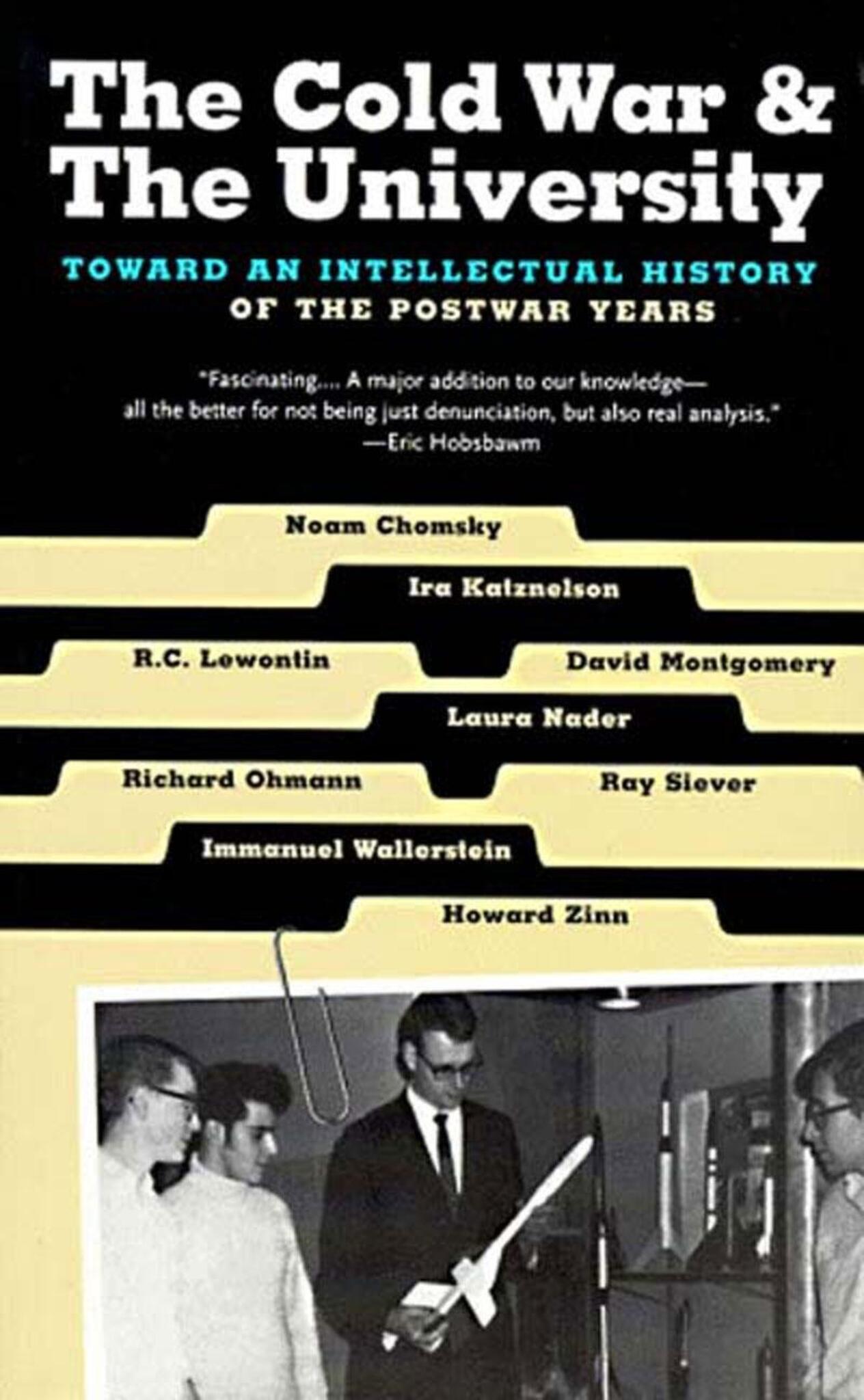
The years following 1945 witnessed a massive change in American intellectual thought and in the life of American universities. The effort to mobilize intellectual talent during the war established new links between the government and the academy. After the war, many of those who had worked with the military or the Office of Strategic Studies took jobs in the burgeoning postwar structure of university-based military research and intelligence agencies, bringing large infusions of government money into many fields.
The essays in this text explore what happened to the university in these years and why. They show the many ways existing disciplines, such as anthropology, were affected by the Cold War ethos, and discuss the rise of new fields, such as area studies, and the changing nature of dissent and academic freedom during and since the Cold War.

"Engrossing . . . The Cold War and the University adds new dimensions to the history of Cold War repression." —The Nation
Ira Katznelson is a professor of political science at Columbia University. He has been a Guggenheim Fellow and is a fellow of the American Academy of Arts and Sciences and of the American Philosophical Society. He is a co-author (with Noam Chomsky, R.C. Lewontin, David Montgomery, Laura Nader, Richard Ohmann, Ray Siever, Immanuel Wallerstein, and Howard Zinn) of The Cold War and the University: Toward an Intellectual History of the Postwar Years (The New Press).
R.C. Lewontin is an evolutionary biologist, a geneticist, and a social commentator. He is professor biology, emeritus, and Alexander Agassiz Professor of Zoology, emeritus, at Harvard University. He is a co-author (with Noam Chomsky, Ira Katznelson, David Montgomery, Laura Nader, Richard Ohmann, Ray Siever, Immanuel Wallerstein, and Howard Zinn) of The Cold War and the University: Toward an Intellectual History of the Postwar Years (The New Press).
David Montgomery (1927 – 2011) was Farnum Professor Emeritus of History at Yale University. He was one of the founders of "New Labor History" in the United States. He is a co-author (with Noam Chomsky, Ira Katznelson, R.C. Lewontin, Laura Nader, Richard Ohmann, Ray Siever, Immanuel Wallerstein, and Howard Zinn) of The Cold War and the University: Toward an Intellectual History of the Postwar Years (The New Press).
Laura Nader is a professor of anthropology at the University of California, Berkeley. She is a co-author (with Noam Chomsky, Ira Katznelson, R.C. Lewontin, David Montgomery, Richard Ohmann, Ray Siever, Immanuel Wallerstein, and Howard Zinn) of The Cold War and the University: Toward an Intellectual History of the Postwar Years (The New Press).
Richard Ohmann is the Benjamin Waite Professor of English, Emeritus, at Wesleyan University. He is a co-author (with Noam Chomsky, Ira Katznelson, R.C. Lewontin, David Montgomery, Laura Nader, Ray Siever, Immanuel Wallerstein, and Howard Zinn) of The Cold War and the University: Toward an Intellectual History of the Postwar Years (The New Press).
Immanuel Wallerstein is a senior research scholar in the department of sociology at Yale University and director emeritus of the Fernand Braudel Center at Binghamton University. He is also a resident researcher at the Maison des Sciences de l'Homme in Paris. His many books include The Modern World-System and Historical Capitalism. The New Press has published After Liberalism, The Decline of American Power, and a collection of his works, The Essential Wallerstein. He lives in New Haven, Connecticut, and Paris, France.
Howard Zinn (1922–2010) was a historian, a playwright, and an activist. He wrote the classic A People's History of the United States and is a co-author (with Noam Chomsky, Ira Katznelson, R.C. Lewontin, David Montgomery, Laura Nader, Richard Ohmann, Ray Siever, and Immanuel Wallerstein) of The Cold War and the University: Toward an Intellectual History of the Postwar Years (The New Press). He received the Lannan Foundation Literary Award for Nonfiction and the Eugene V. Debs Award for his writing and political activism.