


Some error occured while loading the Quick View. Please close the Quick View and try reloading the page.
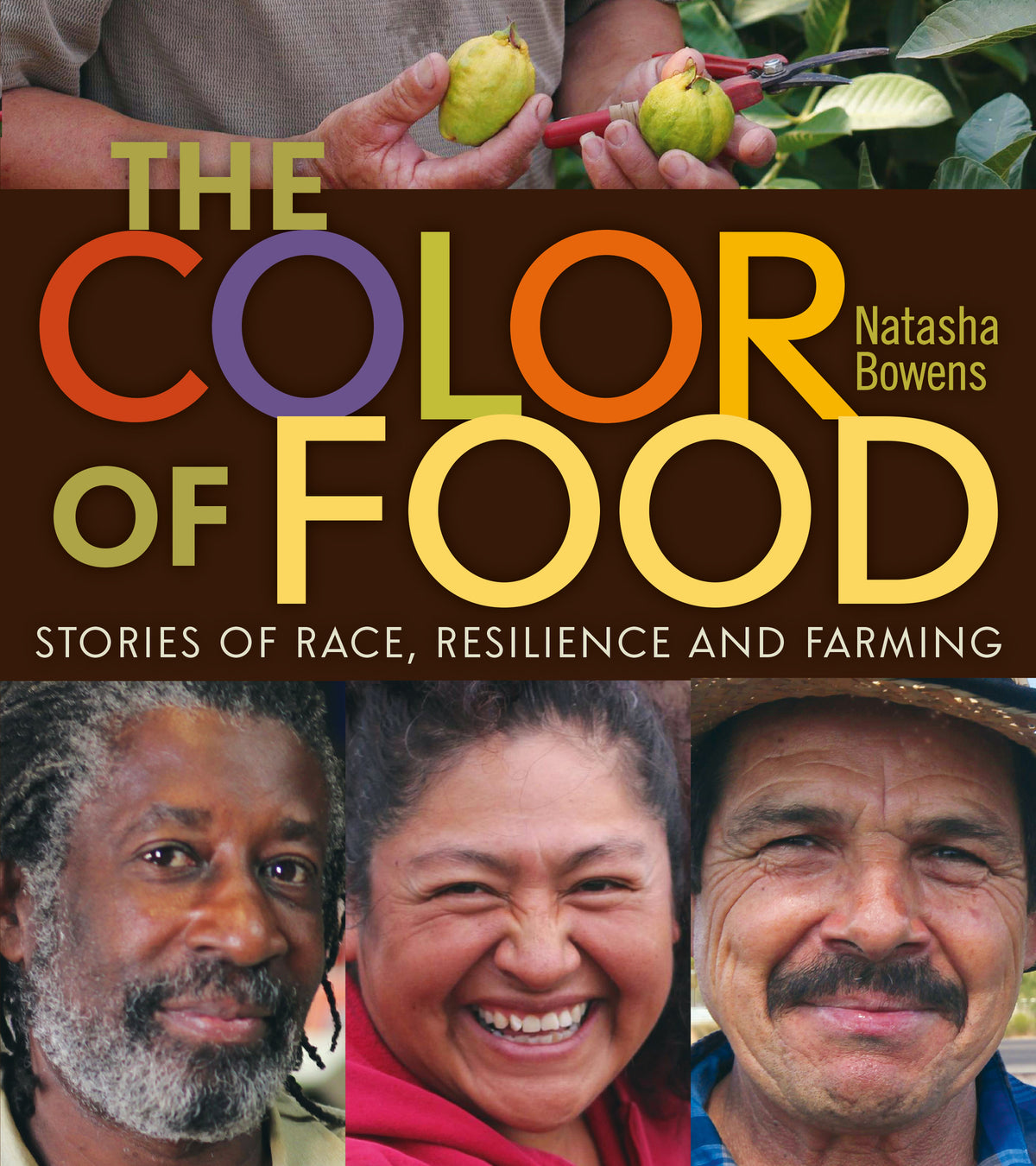
“Anyone who eats should read this book: You will come to the table with new appreciation for the intersections between race and food . . . powerful.”—Anna Lappé, author of Diet for a Hot Planet
The growing trend of organic farming and homesteading is changing the way the farmer is portrayed in mainstream media, and yet, farmers of color are still largely left out of the picture. The Color of Food seeks to rectify this.
By recognizing the critical issues that lie at the intersection of race and food, this stunning collection of portraits and stories challenges the status quo of agrarian identity. Author, photographer, and biracial farmer Natasha Bowens’ quest to explore her own roots in the soil leads her to unearth a larger story, weaving together the seemingly forgotten history of agriculture for people of color, the issues they face today, and the culture and resilience they bring to food and farming.
The Color of Food teaches us that the food and farm movement is about more than buying local and protecting our soil. It is about preserving culture and community, digging deeply into the places we’ve overlooked, and honoring those who have come before us. Blending storytelling, photography, oral history, and unique insight, these pages remind us that true food sovereignty means a place at the table for everyone.
“Natasha Bowens, through her compelling stories and powerful images of a rainbow of farmers, reminds us that the industrialization of our food system and the oppression of our people—two sides of the same coin—will, if not confronted, sow the seeds of our own destruction.”—Mark Winne, author of Food Town, USA
AWARDS
- GOLD | 2015 Foreword INDIES: Social Sciences

"What a book! Dive into the stories and photographs Natasha Bowens shares in these pages and you come up for air with a profound apprecation for the diversity of people planting the seeds and harvesting the foods to keep alive cultural traditions and nourish communities around the country. Anyone who eats should read this book: You will come to the table with new appreciation for the intersections between race and food that so often go unsaid and undocumented. Kudos to Bowens for creating this powerful and important book."
—Anna Lappé, author, Diet for a Hot Planet and Hope's Edge
"Natasha Bowens, through her compelling stories and powerful images of a rainbow of farmers, reminds us that the industrialization of our food system and the oppression of our people — two sides of the same coin — will, if not confronted, sow the seeds of our own destruction."
—Mark Winne, author, Closing the Food Gap: Resetting the Table in the Land of Plenty
" The Color of Food captures the heart and souls of farmers of color... farmers that are frequently forgotten as the stories of agriculture in our country are told. Through the lens of a camera we step into the cultural history of our foods and the beautiful and proud people that grow them."
—Cynthia Hayes, Executive Director, Southeastern African American Farmers Organic Network
"True to her ancestral ties, Natasha brings forth the hope of a new generation of young people of color fixed on recapturing the energy, history and tradition of farming. The power of storytelling is etched in each farmer's tale of courage and resiliency as they look at farming, not as oppressive, but as a vibrant celebration of who they are. The Color of Food makes the ancestors rise up in triumph!"
—Karen Washington, farmer, activist, and cofounder, Black Urban Growers
"It is impossible to understand food in America without digging deeply into "race," class and culture. People's perceptions are their realities, and The Color of Food contributes to changing our reality by changing our perception of the hands, hearts and faces in the food movement."
—Malik Yakini, executive director, Detroit Black Community Food Security Network
"Natasha Bowens brings us two critical reminders: the potential and pitfalls of "a movement" in any singular form; and the importance of vision and determination in doing truly groundbreaking research. The Color of Food represents the best kind of research—inspired and independent, a project of deep listening and unbounded sharing. Our task is to cultivate the questions she scatters, in a rich and colorful light."
—Philip Ackerman-Leist, author, Rebuilding the Foodshed and director, Masters in Sustainable Food Systems, Green Mountain College
"The food movement has woken the world to joy of food, but the beauty of the people who grow it is too often hidden. That's why The Color of Food is so gorgeous. This is a book that celebrates the food movement leaders to whom I've been honored to be able to turn for wisdom. To read Natasha Bowen's journey through North America is to draw from the rich, exquisite and too often hidden work of people of color in reinventing the modern food system. From First Nation to immigration, there isn't a topic on which Bowen's curiosity doesn't latch, nor her camera capture. It's a must-share book for anyone who holds hope in their hearts about the future of food."
—Raj Patel, author, Stuffed and Starved
Natasha Bowens is an author, farmer, and political activist whose advocacy focuses on food sovereignty and social issues. As a young biracial woman in today's agricultural movement , she is dedicated to honoring, preserving and amplifying the stories of Black, Native, Asian and Latina farmers and food activists. Her multimedia project The Color of Food evolved from her work exploring the intersection of race and agriculture for Grist magazine, and from her blog Brown.Girl.Farming , where she writes about issues related to racial inequality, food sovereignty, and resilience. Natasha has interviewed and photographed over 65 North American farmers of color; her work has garnered her national media attention, and she has been featured on CNN, The Atlantic , and Colorlines .
Prologue : Sowing Seeds for the Road
Part 1: Brown Girl Farming
Part 2: Rooted in Rights
Portrait 1: Land Is Freedom. Daniel Whitaker, Tillery, North Carolina
Portrait 2: Forced Migration. Alma Maquitico, The Border Agricultural Workers Project
Portrait 3: Lifeblood of the Land. Tyrone Thompson, North Leupp Family Farm
Portrait 4: Home, Land. Gary and Kaye Kozuki, Kozuki Farms
Portrait 5: Black Land Loss. Gary Grant, Black Farmers and Agriculturists Association
Part 3: Seeds of Resilience
Portrait 1: Katrina to Chickens. Yasin & Elaine Muhaimin, Yard Bird Farm
Portrait 2: Transitioning to Sovereignty. Luis Castañeda, SOLAR Farm
Portrait 3: Bucking Dependence. Renard "Azibo" Turner, Vanguard Ranch .
Portrait 4: Surviving as Transplants. Pang Chang, PEC Tropical Farm
Portrait 5: Transforming the South. Cynthia Hayes, Southeastern African American Farmers Organic Network
Part 4: Preserving Culture and Community
Portrait 1: Cherokee Seed Bank. Kevin Welch, Center for Cherokee Plants
Portrait 2: Sustaining Community. Jenga Mwendo, Backyard Gardeners Network
Portrait 3: Acequia Culture. Don Bustos, Santa Cruz Farm
Portrait 4: Gullah Seedlings. Sará and Bill Green, Marshview Community Organic Farm
Portrait 5: Taste of Home. Menkir Tamrat, Timeless Harvest
Part 5: Fierce Farming Women
Portrait 1: Alabama Strong. Sandra Simone, Huckleberry Hill Farm
Portrait 2: American Indian Mothers. Beverly Collins-Hall, American Indian Mothers and Three Sisters Farm
Portrait 3: Sisters. Carol Jackson and Joyce Bowman, My Sister's Farm
Portrait 4: A Farm of Her Own. Nelida Martinez, Pure Nelida Farms and Viva Farms
Portrait 5: Defying the Odds. Sulina, Sulina & Bay's Farm
Part 6: Generation Rising
Portrait 1: Tierra Negra. Tahz Walker and Cristina Rivera-Chapman, Tierra Negra Farms
Portrait 2: Breaking Down Borders. Kandace Vallejo, Ivon Diaz, Cristina Dominguez-Eshelman, Manny García
Portrait 3: Growing with Energy. Eugene Cooke, Grow Where You Are
Portrait 4: Kitchen Kwento. Aileen Suzara, Dennis Lee and Kristyn Leach, Namu Gaji and Namu Farm
Portrait 5: Foods Are Our Teachers. Valerie Segrest, Muckleshoot Tribe
Epilogue and Acknowledgements: Coming Home
Collage : We Are Here Too
Appendix
Notes
About the Author