


Some error occured while loading the Quick View. Please close the Quick View and try reloading the page.
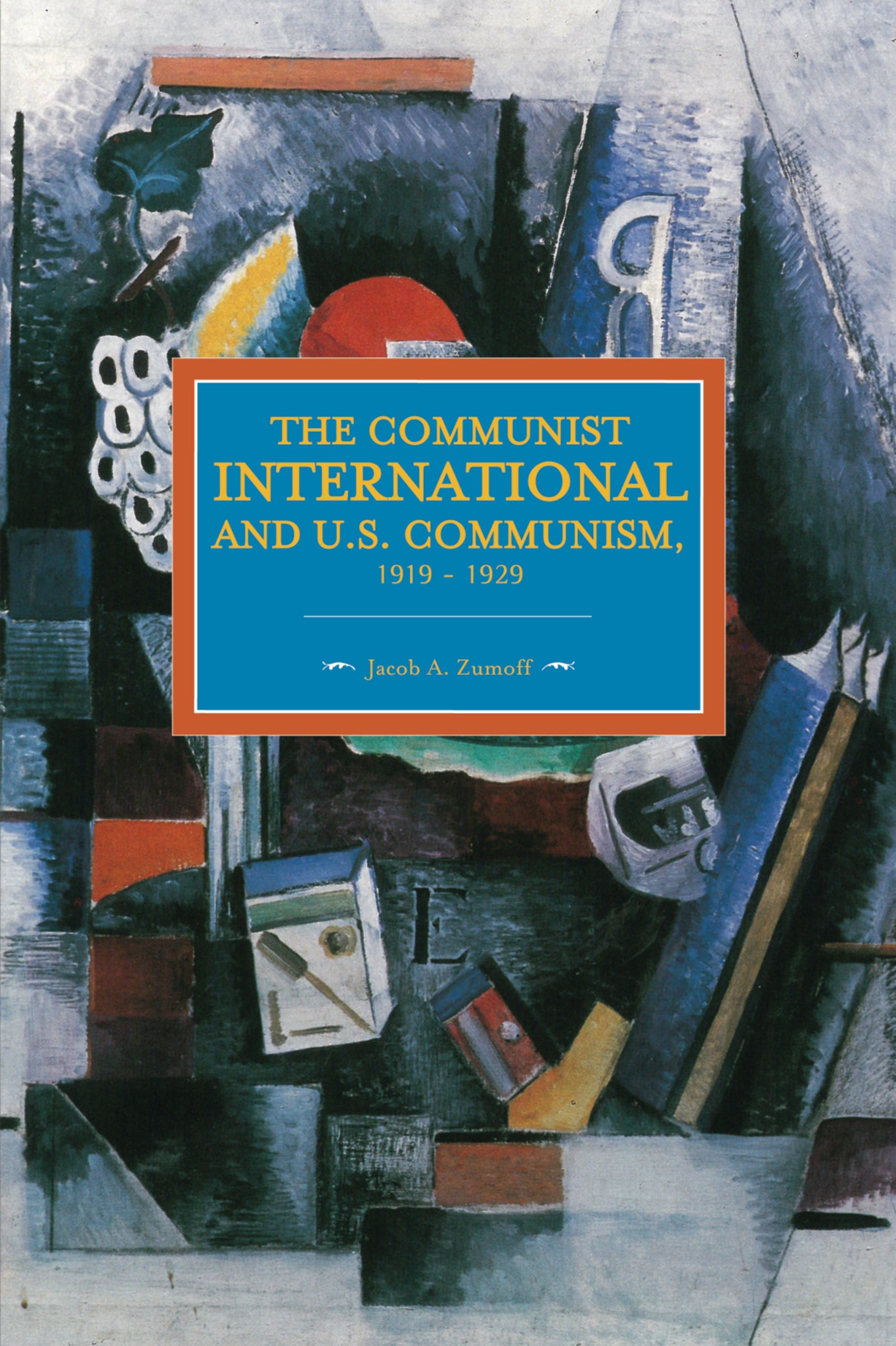
The Communist Party of the United States of America was founded amid the wave of international revolutionary struggles inspired by the Russian Revolution, with the express goal of leading US workers in the struggle against capitalism. Despite these intentions, the first years of its existence were plagued by sectarianism, infighting, and an obsession over the need for an underground organization. It was only through the intervention of the Communist International (Comintern) that the party was pushed to Americanize,” come out from the underground,” and focus on the struggles for Black liberation. This unique contribution documents the positive contribution of the Comintern in its early revolutionary years and its decline under Stalin.

Price: $40.00
Pages: 400
Publisher: Haymarket Books
Imprint: Haymarket Books
Series: Historical Materialism
Publication Date:
05 May 2015
Trim Size: 9.00 X 6.02 in
ISBN: 9781608464876
Format: Paperback
"[...] this fine book stands as a major contribution to the history of Communism in the United States."
Paul Le Blanc, Labour/Le Travail (2015)
Jacob Zumoff’s book is a major contribution to the history of the CPUSA and of the Communist International itself in its first decade. Based on meticulous scholarship and rigorous analysis, it will become the standard text on the party’s first decade. But, more importantly, the book also serves as a vital tool for those who today view the history of the early Communist International and the successes and failures of the CPUSA not merely as a topic of historical enquiry but as a crucial programmatic component for today’s struggles to build a party that can lead a successful workers’ revolution.”
Tony Colins, Marx and Philosophy Review of Books
"The Communist International and US Communism, 1919-1929 is a detailed, nuanced book that analyses a very important period in U.S. communist history. It is a book worth reading. And reading again."
Tony Pecinovsky, People's World
Jacob A. Zumoff has written an impressive scholarly tome [that] belongs in all research libraries and in big city public libraries”
Dan La Botz, New Politics
"This book deserves a much more detailed examination and review than we are able to bring in this last issue of NWF labor scholars will find it interesting."
Gerry Henkel, New World Finn
In many ways Jacob Zumoff’s recent in-depth look at the earliest years of the Communist movement in the U.S. affirms Theodore Draper’s earlier work, but it has much to offer on its own, especially in today’s political climate Using Soviet archives unavailable to Draper, Zumoff presents a nuanced story of change, both in the U.S. party and in the Comintern itself. Along the way he offers insight into the importance of tempering ideology with reality while avoiding factional pettiness.”
Beverly Tomek, WorkingUSA
Paul Le Blanc, Labour/Le Travail (2015)
Jacob Zumoff’s book is a major contribution to the history of the CPUSA and of the Communist International itself in its first decade. Based on meticulous scholarship and rigorous analysis, it will become the standard text on the party’s first decade. But, more importantly, the book also serves as a vital tool for those who today view the history of the early Communist International and the successes and failures of the CPUSA not merely as a topic of historical enquiry but as a crucial programmatic component for today’s struggles to build a party that can lead a successful workers’ revolution.”
Tony Colins, Marx and Philosophy Review of Books
"The Communist International and US Communism, 1919-1929 is a detailed, nuanced book that analyses a very important period in U.S. communist history. It is a book worth reading. And reading again."
Tony Pecinovsky, People's World
Jacob A. Zumoff has written an impressive scholarly tome [that] belongs in all research libraries and in big city public libraries”
Dan La Botz, New Politics
"This book deserves a much more detailed examination and review than we are able to bring in this last issue of NWF labor scholars will find it interesting."
Gerry Henkel, New World Finn
In many ways Jacob Zumoff’s recent in-depth look at the earliest years of the Communist movement in the U.S. affirms Theodore Draper’s earlier work, but it has much to offer on its own, especially in today’s political climate Using Soviet archives unavailable to Draper, Zumoff presents a nuanced story of change, both in the U.S. party and in the Comintern itself. Along the way he offers insight into the importance of tempering ideology with reality while avoiding factional pettiness.”
Beverly Tomek, WorkingUSA
Jacob A. Zumoff, PhD (2003) in history, University of London, has lectured at several universities, including as a visiting professor at the Instituto Tecnológico y de Estudios Superiores de Monterrey and, most recently, New Jersey City University. He has published on the labour movement and racial oppression in the Americas.
Abbreviations
Acknowledgements
Introduction: History and Historiography of American Communism in the 1920s
1: The Formation of the Communist Party, 1912–21
2: The Fight for Legality
3: Communists and the Labour Movement
4: William Z. Foster and the Turn towards the Labour Movement
5: The Farmer-Labor Party
6: The La Follette Fiasco, 1923–24
7: The Double-Edged Sword of ‘Bolshevisation’, 1924–26
8: The Foreign-Language Federations and ‘Bolshevisation’
9: Factionalism and Mass Work, 1925–27
10: The death of Ruthenberg and the Ascension of Lovestone, 1926–27
11: Lovestone between Bukharin and Stalin, 1927–28
12: The ‘Third Period’, the Sixth Congress and the Elimination of Opposition, 1928–29
13: Lovestone becomes a Lovestoneite, 1928–1929
14: The ‘Negro Question’ to the Fourth Comintern Congress
15: The ‘Negro Question’ from the Fourth to the Sixth Congress
16: The Sixth Congress and the ‘Negro Question’
17: ‘Self-Determination’ and Comintern Intervention
Conclusion
Bibliography
Index
Acknowledgements
Introduction: History and Historiography of American Communism in the 1920s
1: The Formation of the Communist Party, 1912–21
2: The Fight for Legality
3: Communists and the Labour Movement
4: William Z. Foster and the Turn towards the Labour Movement
5: The Farmer-Labor Party
6: The La Follette Fiasco, 1923–24
7: The Double-Edged Sword of ‘Bolshevisation’, 1924–26
8: The Foreign-Language Federations and ‘Bolshevisation’
9: Factionalism and Mass Work, 1925–27
10: The death of Ruthenberg and the Ascension of Lovestone, 1926–27
11: Lovestone between Bukharin and Stalin, 1927–28
12: The ‘Third Period’, the Sixth Congress and the Elimination of Opposition, 1928–29
13: Lovestone becomes a Lovestoneite, 1928–1929
14: The ‘Negro Question’ to the Fourth Comintern Congress
15: The ‘Negro Question’ from the Fourth to the Sixth Congress
16: The Sixth Congress and the ‘Negro Question’
17: ‘Self-Determination’ and Comintern Intervention
Conclusion
Bibliography
Index