


Some error occured while loading the Quick View. Please close the Quick View and try reloading the page.
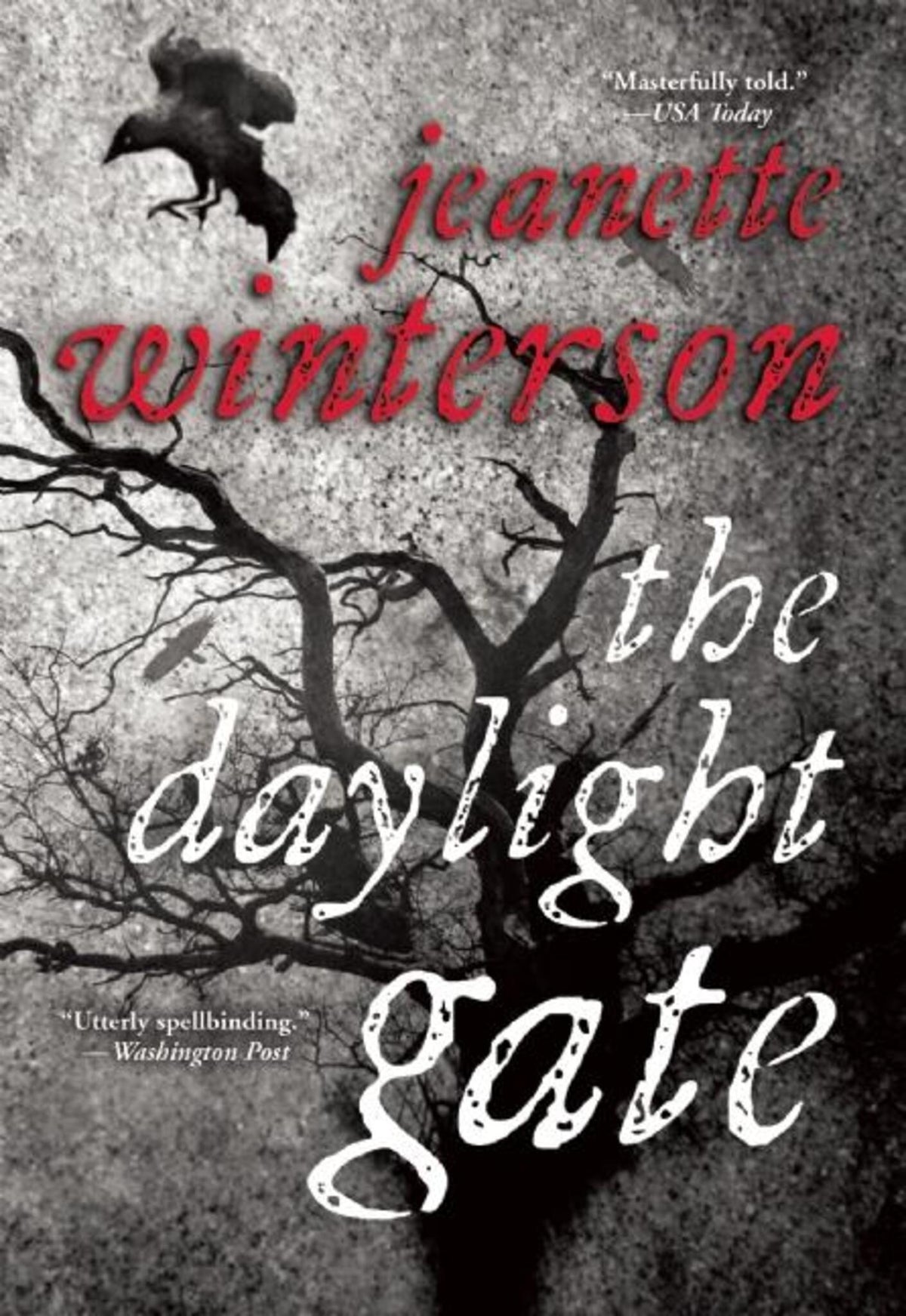
"A gripping and grisly gothic tale" of Alice Nutter and the 17th century Pendle witch hunt by the Whitbread Award-winning author of The Passion (The Guardian, UK).
England, 1612. Less than a decade after the infamous Gunpowder Plot nearly took his life, King James I is paranoid about conspirators and obsessed with heresy. Across the country, laws against Catholicism and witchery are fanatically enforced.
On Good Friday, deep in the woods of Pendle Hill, a gathering of thirteen is interrupted by the local magistrate. Two of their coven have already been imprisoned for witchcraft and are awaiting trial, but those who remain are vouched for by the wealthy and respected Alice Nutter. Shrouded in mystery and gifted with eternally youthful beauty, Alice is established in Lancashire society and insulated by her fortune. As those accused of witchcraft retreat into darkness, Alice stands alone as a realm-crosser, a conjurer of powers that will either destroy her or set her free.

One of NPR’s Great Reads for 2013
“Winterson’s writing has an uncanny glow: Her pared-down, poetic prose serves as an artful yet unobtrusive foil to the quick, visceral cadence of a plot that walks a fine line between gothic horror and historical fiction, tempering the shock value of its sex and violence. From one gruesome development to the next, Winterson’s haunting imagery and narrative immediacy captivate…an engrossing story that’s sure to leave you shivering.” —Catherine Straut, Elle
“Electrifying…. a nightmarish novella that burns like a hot coal. “—Kirkus Reviews (starred review)
“This book is addictive, a page-turner . . . Winterson lays on the horror and the supernatural with gleeful abandon.” —LA Review of Books
“Delightfully gruesome.” —New York Times
“A daring historical novel . . . a portal in prose, through which readers enter fully into the bloody, raucous England of the early 17th century . . . Any reader who crosses over into this novel will remember vividly where he or she has traveled—through the tumultuous years when English heroines and witches appeared interchangeable, and passion erupted at the gateway between love and despair.” —Alan Cheuse, NPR
“Absorbing . . . [there is] pleasure in its intensely visual qualities.” —Publishers Weekly (starred review)
“More than a shivery treat . . . This harrowing novel, set in early-seventeenth-century England, touches on nearly every aspect of witchcraft, both historical and imaginative. In little more than 200 pages, Jeanette Winterson depicts starving hags, gorgeous Renaissance orgies, alchemists searching for the secret of eternal life, horrific torture and even the Dark Gentleman himself. Much of the story, moreover, is true . . . The Daylight Gate proffers a series of short, sharp shocks . . . the reader . . . is gripped by the realistic horrors and brutality Winterson describes . . . Winterson neatly shifts back and forth among various ‘realities’ throughout . . . Yet she never tries to dazzle the reader, keeping her sentences sober, precise and solemnly beautiful as the novel moves along with a steady relentlessness’. utterly spellbinding.” —Michael Dirda, Washington Post
“Mixing historical detail and dark horror, the author brilliantly brews a spellbinding take on the 1612 English witch trials.” —People
“Winterson’s Lancashire, a place “alive in its black-and-green coat cropped like an animal pelt . . . is a haunting place indeed.” —Nicholas Mancusi, Miami Herald
“Exhilarating . . . More than a re-imagining of a vanished moment. It is concerned with freedom, choice, and destiny, truth to emotion and to personal experience, the nature of conviction and belief, evil and, above all, good. . . . A tour de force of horror writing . . . [Slipping] effortlessly between apparent realism and full-throttle fantasy, grotesquerie or burlesque . . . Winterson succeeds triumphantly.” —Matthew Dennison, The Times (London)
“Vigorous . . . Filled with Winterson’s characteristic intelligence and energy . . . This dark story with its fantastical trappings of magic and mysticism, its strong women and wild, Lancastrian setting is Winterson’s natural habitat and she maps it with relish.” —Jane Shiling, New Statesman
“Dazzling . . . Winterson is a deft storyteller and a writer of wonderful economy. . . . Amid the blood, mud, and violence, [it is also] intensely poetic. . . . One of the very few contemporary novels that I actually wished were longer.” —Christena Appleyard, The Literary Review
“Winterson lavishly embroiders a tale rich in . . . supernatural touches, but mainly accentuates the very real torment and degradation endured by [the] accused. . . . Winterson creates a deliciously dreadful tale that cleverly blurs the line between real and imagined horror.” —Claire Allfree, Metro (4 stars)
Jeanette Winterson was born in Manchester. She is a beloved cultural icon and queer trailblazer who published her first novel, Oranges Are Not the Only Fruit, at twenty-five. Over two decades later she revisited that material in her internationally bestselling memoir Why Be Happy When You Could Be Normal? Winterson has written thirteen novels for adults and three collections of short stories, as well as children’s books, non-fiction and screenplays. Her novel Written on the Body was named one of the 25 Most Influential Works of Postwar Queer Literature by the New York Times. Since her innovative and forward-thinking writing about AI in her essay collection 12 Bytes, she speaks at tech conferences around the world. She is professor of New Writing at the University of Manchester and writes a popular Substack, Mind Over Matter. She lives in the Cotswolds in a wood and in Spitalfields, London.