


Some error occured while loading the Quick View. Please close the Quick View and try reloading the page.
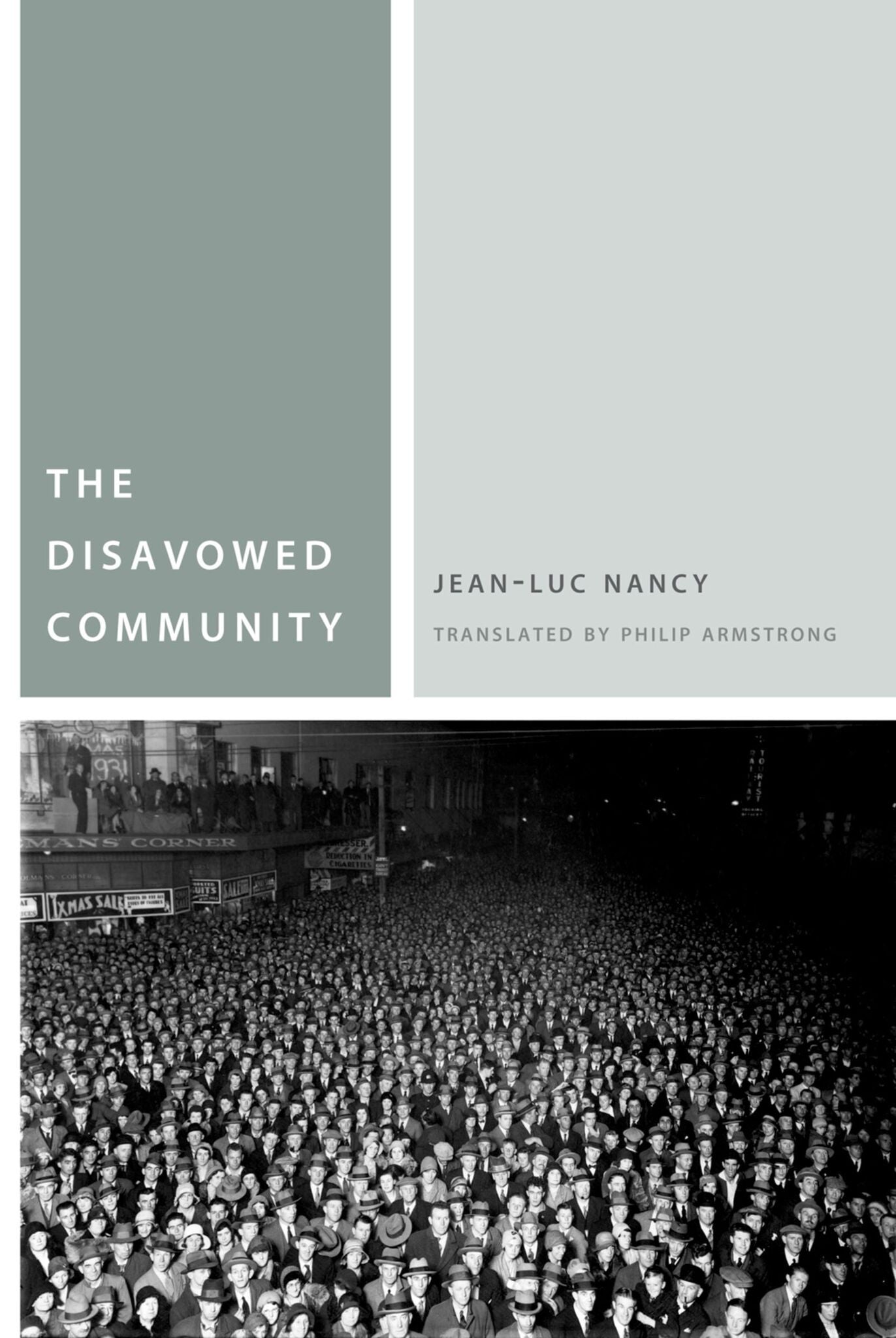
Over thirty years after Maurice Blanchot writes The Unavowable Community (1983)—a book that offered a critical response to an early essay by Jean-Luc Nancy on “the inoperative community”—Nancy responds in turn with The Disavowed Community. Stemming from Jean-Christophe Bailly’s initial proposal to think community in terms of “number” or the “numerous,” and unfolding as a close reading of Blanchot’s text, Nancy’s new book addresses a range of themes and motifs that mark both his proximity to and distance from Blanchot’s thinking, from Bataille’s “community of lovers” to the relation between community, communitarianism, and being-in-common; to Marguerite Duras, to the Eucharist. A key rethinking of politics and the political, this exchange opens up a new understanding of community played out as a question of avowal.

Price: $30.00
Pages: 144
Publisher: Fordham University Press
Imprint: Fordham University Press
Series: Commonalities
Publication Date:
01 September 2016
Trim Size: 9.00 X 6.00 in
ISBN: 9780823273850
Format: Paperback
“This is a powerful and important book, in several respects: first, because this is Nancy’s first public engagement with Maurice Blanchot’s 1983 book The Unavowable Community, bringing to focus decades of research on this issue and shedding exciting new light on the relation between the two thinkers. Second, this work provides the latest elaborations by Jean-Luc Nancy on what has been his longstanding research on being-with and community, issues that have occupied him for the past thirty years. Finally, the analyses proposed are some of the most sophisticated that one can find in Nancy’s corpus. As such, they represent a significant contribution to philosophical work and research.”---—François Raffoul, Louisiana State University