


Some error occured while loading the Quick View. Please close the Quick View and try reloading the page.
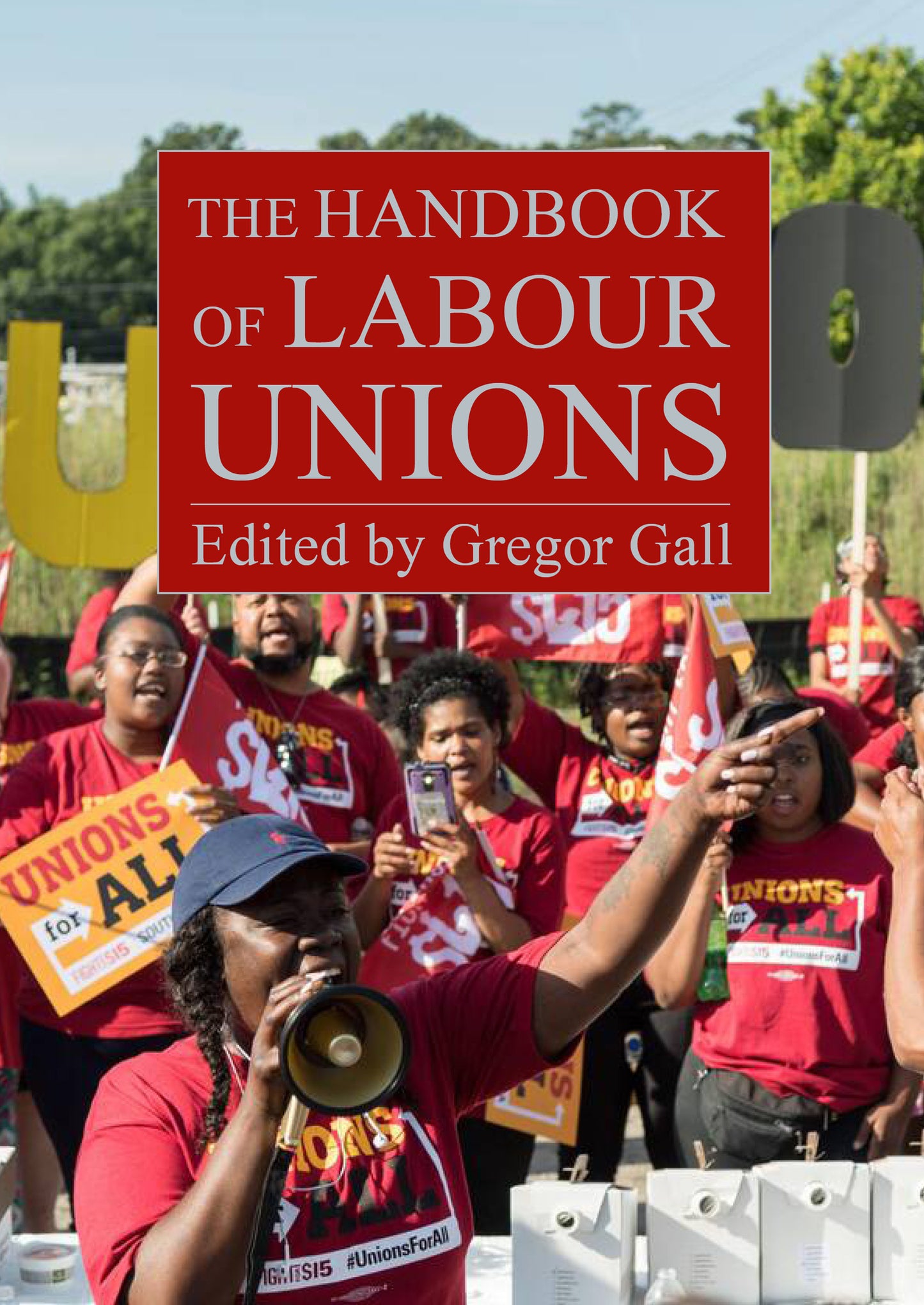
Growing levels of income and wage inequality and the precaritization of many sections of the labour force have made labour unions as salient as ever. Although membership levels have decreased, they remain among the world’s largest representative organizations and continue to play a significant role as vehicles for democracy, sustainable development and social justice.
This handbook assembles an array of experts to critically engage with the debates and discussions about the role and purpose of unions and the many means by which they seek to attain them. The book provides insights into how unions can meet the challenges of structural changes in the labour market, including technological progress, the green agenda and the digital platform economy, and how they can better represent the needs of their members, in particular migrant, domestic and informal workers.
The book is a valuable resource for industrial relations, labour economics, sociology of work, employment and labour law, history of trade unionism, working patterns and practices, workplace culture and workers’ rights.

Introduction – Gregor Gall
Part I Components, Characteristics and Context
1. Union identity and appeal – Lorenzo Frangi and Tinting Zhang
2. Union interests and ideologies – Ronaldo Munck
3. Union resources: the power-resources approach – Stefan Schmalz and Edward Webster
4. Union forms: adaptation and inertia – Chiara Benassi, Christian Ibsen and Maite Tapia
5. Union governance: South Africa and its lessons – Geoffrey Wood and Christine Bischoff
6. Union relations – Kurt Vandaele
7. Union terrains – Jamie Woodcock
Part II Space, Power and Periodization
8. The liberal capitalist starting point – Stefan Berger
9. The social democratic high point – Greg Patmore
10. The "socialist" experiment – Jeremy Morris
11. The neoliberal low point – Chris Howell
Part III The Practice of Building Presence and Power
12. Union and the agendas of joint-regulation – Miguel Martinez Lucio
13. From contesting the managerial prerogative to producing workers’ control – Alan Tuckman
14. From sectionalism and sectionality to inter-sectionality – Jenny Rodriguez
15. The rationality and limitations of labour union bureaucracy – David Camfield
16. Unions as schools for lessons in democratic citizenship: implications for union strategy – Ed Snape
17. Commitment to, and activism within, labour unionism – Jack Fiorito, Andrew Keyes, Pauline De Becdelièvre and Zachary Russell
18. Working with and learning from other social movements – Heather Connolly
19. Concentric circles of class struggle: from the workplace to the world – Marissa Brookes
20. Unions and politics: why unions are not just the economic wing of the labour movement – Jörg Nowak and Roland Erne
21. Constantly outpaced and outgunned? Unions in the platform economy – Horen Voskeritsian
22. When may the interests of labour and capital align? Johanna MacNeil and Mark Bray
Conclusion – Gregor Gall