


Some error occured while loading the Quick View. Please close the Quick View and try reloading the page.
"Serious but easily readable. The History of Havana employs conventional documentary, written and visual sources and a variety of testimonials from throughout the world to bring to life the complex portraits and challenges of contemporary Havana." —Harry Belafonte
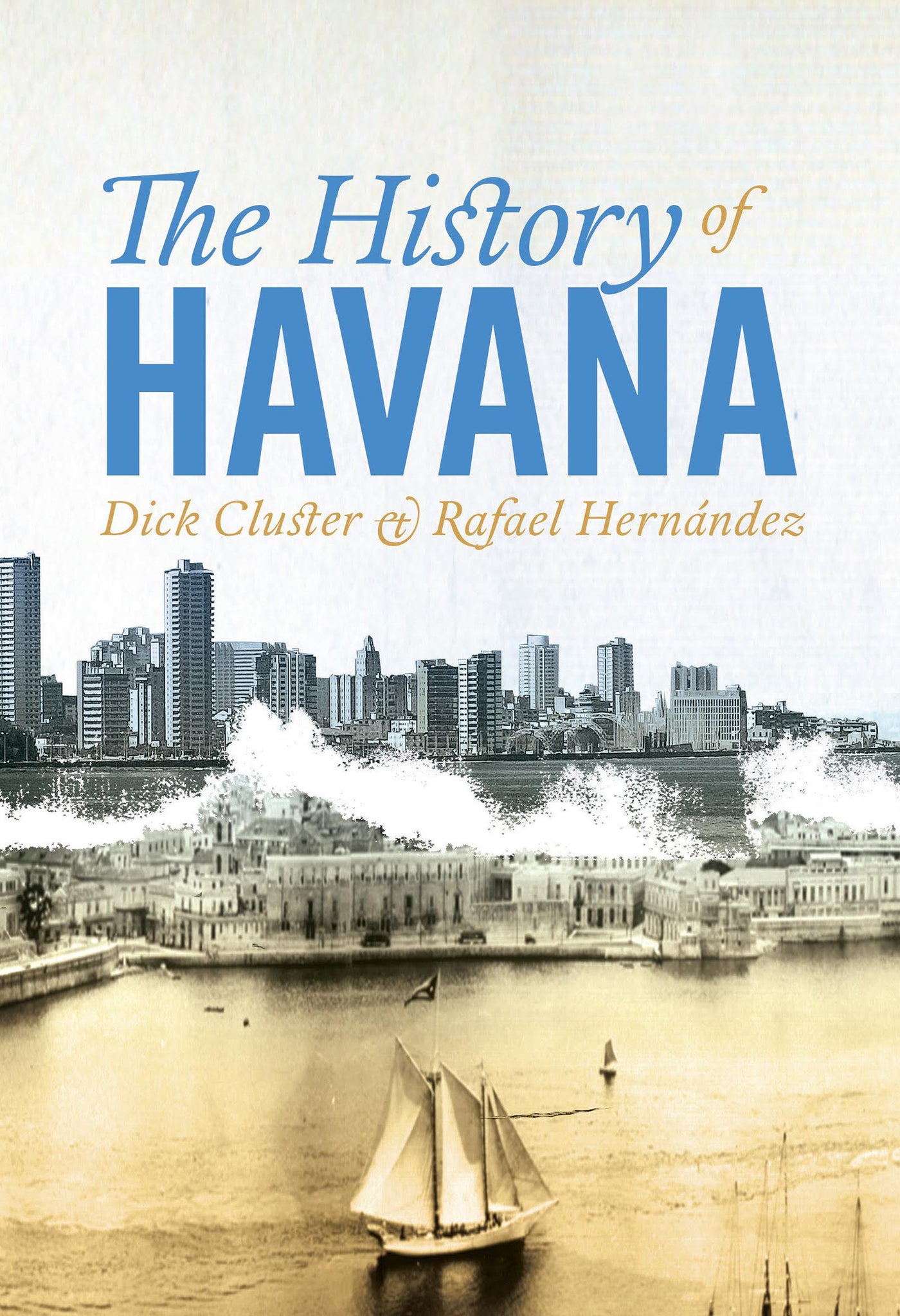
Since its founding in 1519, Havana has drawn people from all over the world, including explorers, immigrant, refugees, and the exiled, to create a melting pot of influences and cultures––and a very distinct history.
From its colonial roots to its communist revolution, authors Dick Cluster and Rafael Hernández examine not only the ruptures in the city's life, but its continuities as well. The traditions that make the city unique, like its idiosyncratic combination of territorialism and hospitality or its proclivity for protest, are as much a drive for change as an integral element of its character. Drawing on oral histories and cultural artifacts alike, this history acknowledges the rich and artfully selected stories of the citizens, from their fascinating exploits to their grand successes, to be as significant to the very fabric of the city as its dynamic culture and intriguing politics, making it a superbly well-rounded account of the most alluring city in the Caribbean.
With grace and precision, in this updated and revised second edition of their classic history of the city Cluster and Hernández offer the divergent but productive perspectives of the American and the Cuban in lyrical and accessible prose on Cuba's magical capital. Generously illustrated with black-and-white photographs and maps.
Since its founding in 1519, Havana has drawn people from all over the world, including explorers, immigrant, refugees, and the exiled, to create a melting pot of influences and cultures––and a very distinct history.
From its colonial roots to its communist revolution, authors Dick Cluster and Rafael Hernández examine not only the ruptures in the city's life, but its continuities as well. The traditions that make the city unique, like its idiosyncratic combination of territorialism and hospitality or its proclivity for protest, are as much a drive for change as an integral element of its character. Drawing on oral histories and cultural artifacts alike, this history acknowledges the rich and artfully selected stories of the citizens, from their fascinating exploits to their grand successes, to be as significant to the very fabric of the city as its dynamic culture and intriguing politics, making it a superbly well-rounded account of the most alluring city in the Caribbean.
With grace and precision, in this updated and revised second edition of their classic history of the city Cluster and Hernández offer the divergent but productive perspectives of the American and the Cuban in lyrical and accessible prose on Cuba's magical capital. Generously illustrated with black-and-white photographs and maps.

Price: $17.95
Pages: 352
Publisher: OR Books
Imprint: OR Books
Publication Date:
13 March 2018
Trim Size: 8.25 X 5.50 in
ISBN: 9781944869670
Format: Paperback
BISACs:
Praise for The History of Havana
"Serious but easily readable. The History of Havana employs conventional documentary, written and visual sources and a variety of testimonials from throughout the world to bring to life the complex portraits and challenges of contemporary Havana." —Harry Belafonte
"A rich and readable social and cultural history, which incorporates popular culture—film and radio, dance music and popular religion--to weave a historical tapestry as beguiling as a Havana night." —History Book Club
"This colorful work explains the singular allure of Havana . . . What makes it compelling is how effectively Cluster and Hernandez convey the personality of the city." —Chicago Sun-Times
"Gorgeous, feisty, savvy, cosmopolitan, sexy, defiant and yes, at times decadent and decaying, yet always resilient and ribald, battered repeatedly but never beaten—the city of Havana, where everyone deserves to have been born, is the star of this loving, gritty history. The authors lead the reader from Columbus’ stumbling into Cuba in his quest for the Orient in the fifteenth century to our own decade. They tell the story of Havana’s people, their physical space, their welcoming and unwelcome encounters with foreigners, and their capacity for re-invention. It’s a great read." —Jorge I. Domínguez, Clarence Dillon Professor of International Affairs, Harvard University
"One of the few books in English to cover the history of the Cuban capital specifically, [The History of Havana] provides a history of Cuba too. This engaging, people-centered account takes a social and cultural perspective as much as an economic and political one and is peppered with lively personal testimonies helping to make the facts of the past more pertinent and more real." —Rough Guide to Cuba
"This beautifully written, reliably informative, and extremely sensitive account provides a delightful examination across time of the extraordinary human dimensions of an extraordinary people.” —Franklin Knight, Johns Hopkins University, Choice
"In fine prose, with academic rigor, clarity that shows respect for the reader, and a good dose of lyricism, the co-authors serve us up the trajectory of the Cuban capital." —Diario Las Américas, Miami
"Serious but easily readable. The History of Havana employs conventional documentary, written and visual sources and a variety of testimonials from throughout the world to bring to life the complex portraits and challenges of contemporary Havana." —Harry Belafonte
"A rich and readable social and cultural history, which incorporates popular culture—film and radio, dance music and popular religion--to weave a historical tapestry as beguiling as a Havana night." —History Book Club
"This colorful work explains the singular allure of Havana . . . What makes it compelling is how effectively Cluster and Hernandez convey the personality of the city." —Chicago Sun-Times
"Gorgeous, feisty, savvy, cosmopolitan, sexy, defiant and yes, at times decadent and decaying, yet always resilient and ribald, battered repeatedly but never beaten—the city of Havana, where everyone deserves to have been born, is the star of this loving, gritty history. The authors lead the reader from Columbus’ stumbling into Cuba in his quest for the Orient in the fifteenth century to our own decade. They tell the story of Havana’s people, their physical space, their welcoming and unwelcome encounters with foreigners, and their capacity for re-invention. It’s a great read." —Jorge I. Domínguez, Clarence Dillon Professor of International Affairs, Harvard University
"One of the few books in English to cover the history of the Cuban capital specifically, [The History of Havana] provides a history of Cuba too. This engaging, people-centered account takes a social and cultural perspective as much as an economic and political one and is peppered with lively personal testimonies helping to make the facts of the past more pertinent and more real." —Rough Guide to Cuba
"This beautifully written, reliably informative, and extremely sensitive account provides a delightful examination across time of the extraordinary human dimensions of an extraordinary people.” —Franklin Knight, Johns Hopkins University, Choice
"In fine prose, with academic rigor, clarity that shows respect for the reader, and a good dose of lyricism, the co-authors serve us up the trajectory of the Cuban capital." —Diario Las Américas, Miami
DICK CLUSTER landed in Havana's José Martí airport for the first time in 1969 and has been fascinated by the city ever since, exploring it by foot, bicycle, city bus, tour bus, car, ferryboat, and other means. An Oakland resident, he is a translator of Latin American literature, most recently editing and translating the collection Kill the Ámpaya: The Best Latin American Baseball Fiction and Mylene Fernández Pintado's novel of contemporary Havana, A Corner of the World. Previous nonfiction books include They Should Have That Cup of Coffee, about U.S. radical movements of the '60s and '70s, and Shrinking Dollars, Vanishing Jobs, about the U.S. economy.
RAFAEL HERNÁNDEZ is the editor of Temas, a Cuban quarterly in the field of history, culture, economics, and politics. Hernández graduated from the University of Havana with a degree in French literature, and from the Colegio de México in political science. He has oriented, guided, and taught many American visitors to Cuba, whether students, academics, or travelers, and been visiting professor and researcher at Columbia, Harvard, Johns Hopkins, the Woodrow Wilson Center, Tulane, and the University of Puerto Rico, and lectured at numerous other schools and academic conferences. His publications include three books of poetry and ten books of essays. His essay collection Looking at Cuba won the Cuban Critics Award in 2000, and was published by the University Press of Florida in 2003.
RAFAEL HERNÁNDEZ is the editor of Temas, a Cuban quarterly in the field of history, culture, economics, and politics. Hernández graduated from the University of Havana with a degree in French literature, and from the Colegio de México in political science. He has oriented, guided, and taught many American visitors to Cuba, whether students, academics, or travelers, and been visiting professor and researcher at Columbia, Harvard, Johns Hopkins, the Woodrow Wilson Center, Tulane, and the University of Puerto Rico, and lectured at numerous other schools and academic conferences. His publications include three books of poetry and ten books of essays. His essay collection Looking at Cuba won the Cuban Critics Award in 2000, and was published by the University Press of Florida in 2003.
Introduction: Un tipo muy popular
1 Key to the Indies
2 The Hour of the Mameys
3 Paris of The Antilles
4 Cecilia, Cabildos, and Contradance
5 Stirrings of Nationhood
6 Revolutions and Retributions: From the Teatro Villanueva to the Maine
7 Many Happy Returns? U.S. Occupation and Its Aftermath
8 Symbol of an Era: Alberto Yarini y Ponce de León
9 Catch a Ford on the Malecón: Republican Havana's Growth and Decay
10 The Battle of Havana, 1933–35
11 Radio Days
12 City Lights: The Fabulous Fifties
13 Havana in Revolution
14 Revolution with Pachanga: Havana Transfigured
15 Russian Meat, Miami Butterflies, and Other Unexpected Adventures
16 The Blackout: Havana in the "Special Period" and Beyond
Epilogue: 2006-2017
1 Key to the Indies
2 The Hour of the Mameys
3 Paris of The Antilles
4 Cecilia, Cabildos, and Contradance
5 Stirrings of Nationhood
6 Revolutions and Retributions: From the Teatro Villanueva to the Maine
7 Many Happy Returns? U.S. Occupation and Its Aftermath
8 Symbol of an Era: Alberto Yarini y Ponce de León
9 Catch a Ford on the Malecón: Republican Havana's Growth and Decay
10 The Battle of Havana, 1933–35
11 Radio Days
12 City Lights: The Fabulous Fifties
13 Havana in Revolution
14 Revolution with Pachanga: Havana Transfigured
15 Russian Meat, Miami Butterflies, and Other Unexpected Adventures
16 The Blackout: Havana in the "Special Period" and Beyond
Epilogue: 2006-2017