


Some error occured while loading the Quick View. Please close the Quick View and try reloading the page.
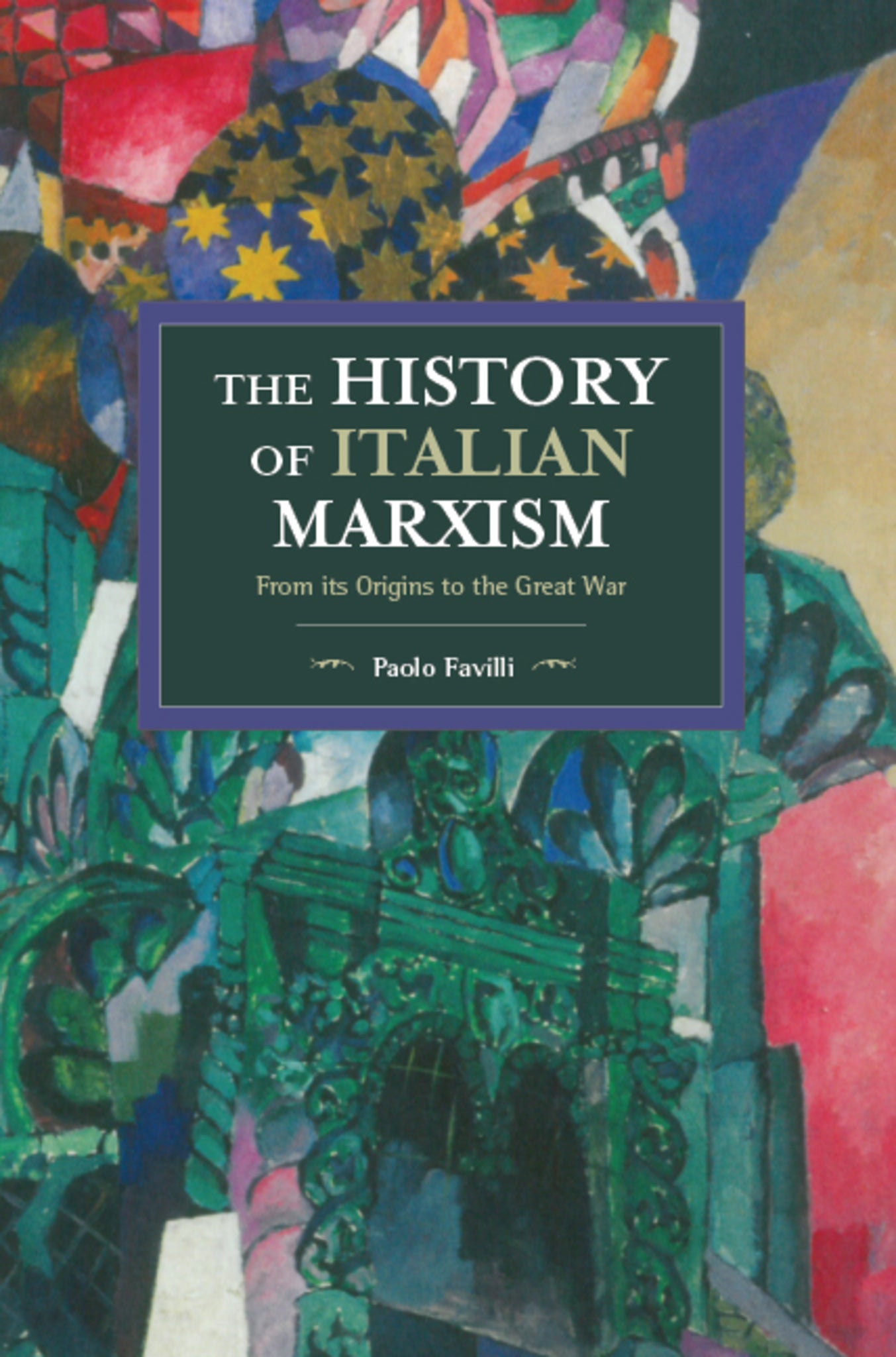
This comprehensive historical survey of Italian Marxism explores the growth of different forms of Marxist culture in the period from the Paris Commune through the First World War. In it, Favilli provides indispensible insight on the impact of various debatessuch as those surrounding revisionism,’ and on the rise of revolutionary syndicalismon the burgeoning Italian workers’ movement.

Price: $40.00
Pages: 478
Publisher: Haymarket Books
Imprint: Haymarket Books
Series: Historical Materialism
Publication Date:
26 December 2017
Trim Size: 9.00 X 6.00 in
ISBN: 9781608468034
Format: Paperback
BISACs:
POLITICAL SCIENCE / Political Ideologies / Communism
,
Post-Communism & Socialism
,
Political ideologies and movements
,
SOCIAL SCIENCE / Social Classes & Economic Disparity
,
HISTORY / Europe / Italy
,
POLITICAL SCIENCE / Political Economy
,
Social classes
,
European history
,
Political economy
Paolo Favilli was a professor of Contemporary History and Head of Humanities Department at Genoa University. He is a scholar of the History of Cultures of Socialism. His studies on the history of Marxism include Il Socialismo italiano e la teoria economica di Marx (Bibliopolis, 1980), Marxismo e storia. Saggio sull’innovazione storiografica in Italia (1945-1970) (FrancoAngeli, 2006) and Il Marxismo e le sue storie (FrancoAngeli, 2016).
Preface to the English Edition
Chapter One
The 1860s and 1870s: Marxism rejected, and the humus of Marxism
1.1 The democratic antithesis
1.2. The anarchist antithesis
Chapter Two
The Marxism of the 1880s: the characteristics of a transition
2.1. Socialist culture: sociology
2.2. Socialist culture: political economy
Chapter Three
The Marxism of the 1890s: Foundation – and Orthodoxy?
3.1. The ‘Partito marxista’
3.2. Between ideology, science, utopia and religio
3.3. ‘The anatomy of civil society’
3.4. The end-of-century Marxist corpus
Chapter Four
Historical Materialism
4.1. What philosophy? What philosophy of history?
4.2. Materialism and a ‘philosophy for socialism’
Chapter Five
Marxism and Reformism
5.1. Did reformism have theoretical roots? On the question of ‘catastrophism’
5.2. Turati, the ‘Marxist’ and ‘reformist’
5.3. The economic theory of the workers’ movement
5.4. The articulations of non-Marxist reformism, the returns of history, and again on reformist Marxism
Chapter Six
Marxism and Revolutionary Syndicalism
6.1. Did syndicalism have roots in end-of-the-century ‘revisionism’?
6.2. Early definitions of a ‘Left’-Marxism
6.3. Enrico Leone’s and Arturo Labriola’s Marx in the ‘high’ period of syndicalist theory
6.4. Marxism and elitism in the universe of ‘minor’ syndicalist intellectuals
6.5. De hominis dignitate. A workers’ syndicalist Marxism? La Scintilla in Ferrara and Il Martello in Piombino
References
Index
Chapter One
The 1860s and 1870s: Marxism rejected, and the humus of Marxism
1.1 The democratic antithesis
1.2. The anarchist antithesis
Chapter Two
The Marxism of the 1880s: the characteristics of a transition
2.1. Socialist culture: sociology
2.2. Socialist culture: political economy
Chapter Three
The Marxism of the 1890s: Foundation – and Orthodoxy?
3.1. The ‘Partito marxista’
3.2. Between ideology, science, utopia and religio
3.3. ‘The anatomy of civil society’
3.4. The end-of-century Marxist corpus
Chapter Four
Historical Materialism
4.1. What philosophy? What philosophy of history?
4.2. Materialism and a ‘philosophy for socialism’
Chapter Five
Marxism and Reformism
5.1. Did reformism have theoretical roots? On the question of ‘catastrophism’
5.2. Turati, the ‘Marxist’ and ‘reformist’
5.3. The economic theory of the workers’ movement
5.4. The articulations of non-Marxist reformism, the returns of history, and again on reformist Marxism
Chapter Six
Marxism and Revolutionary Syndicalism
6.1. Did syndicalism have roots in end-of-the-century ‘revisionism’?
6.2. Early definitions of a ‘Left’-Marxism
6.3. Enrico Leone’s and Arturo Labriola’s Marx in the ‘high’ period of syndicalist theory
6.4. Marxism and elitism in the universe of ‘minor’ syndicalist intellectuals
6.5. De hominis dignitate. A workers’ syndicalist Marxism? La Scintilla in Ferrara and Il Martello in Piombino
References
Index