


Some error occured while loading the Quick View. Please close the Quick View and try reloading the page.
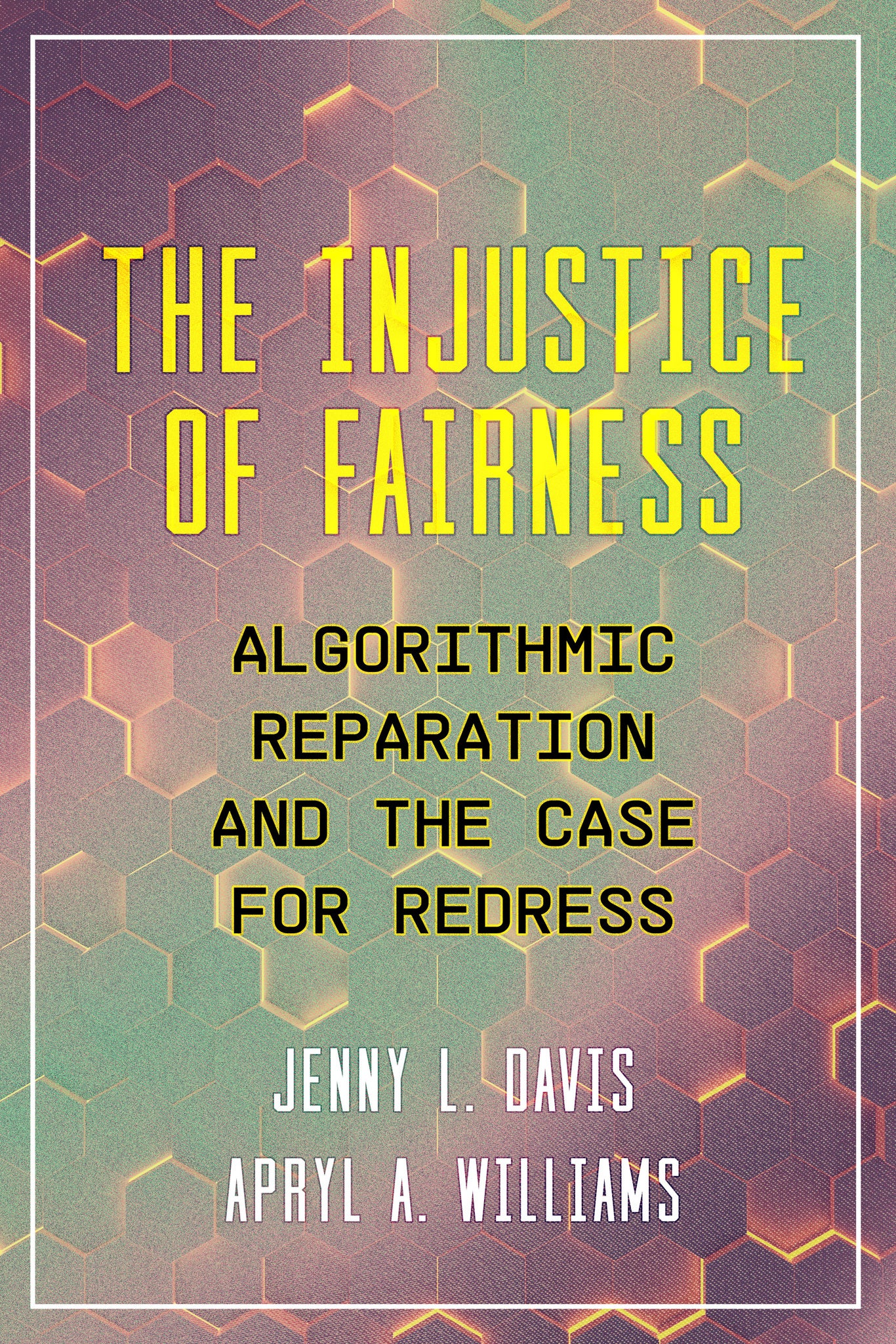
The Injustice of Fairness shifts the foundation of algorithmic ethics, displacing “fairness” with repair and redress. A substantial and growing field, algorithmic ethics aims to mitigate harms and realize social good. The fairness paradigm dominates this field across AI, machine learning, and other data-driven domains. So far, efforts toward fairness have been unsuccessful, with algorithmic harms that propagate and persist. Jenny L. Davis and Apryl A. Williams explain why algorithmic fairness perpetually fails and present “algorithmic reparation” in its place.
The stakes are high because algorithms are everywhere—from law to love, healthcare to housing, education to media, and beyond. More than lines of code or mathematical operations, algorithms carry history, configure the present, and are actively shaping the future. Set against a backdrop of societal instability and technological transformation, The Injustice of Fairness offers a careful critique, original framework, and blueprint for social change with algorithms as entry points and levers.

Apryl A. Williams is Associate Professor of Digital Studies and Communication at the University of Michigan and Faculty Associate at Harvard University's Berkman Klein Center for Internet & Society. Her previous book, Not My Type, offers a powerful critique of how technology replicates and amplifies real-world social inequities in digital culture.
Contents
Introduction
Part One
1. What's Wrong with Fairness?
2. Toward a Reparative Research Program
Part Two
Interlude: Speculative Design for Reparative Algorithmic Futures
3. Speculative Design I: Pik | A Reparative Dating App for Black Women and Femmes
4. Speculative Design II: The Power-to-Prove Legal Paradigm
Part Three
5. Obstacles and Inroads
Conclusion
Acknowledgments
Notes
Bibliography
Index