Skip to product information
1 of 1

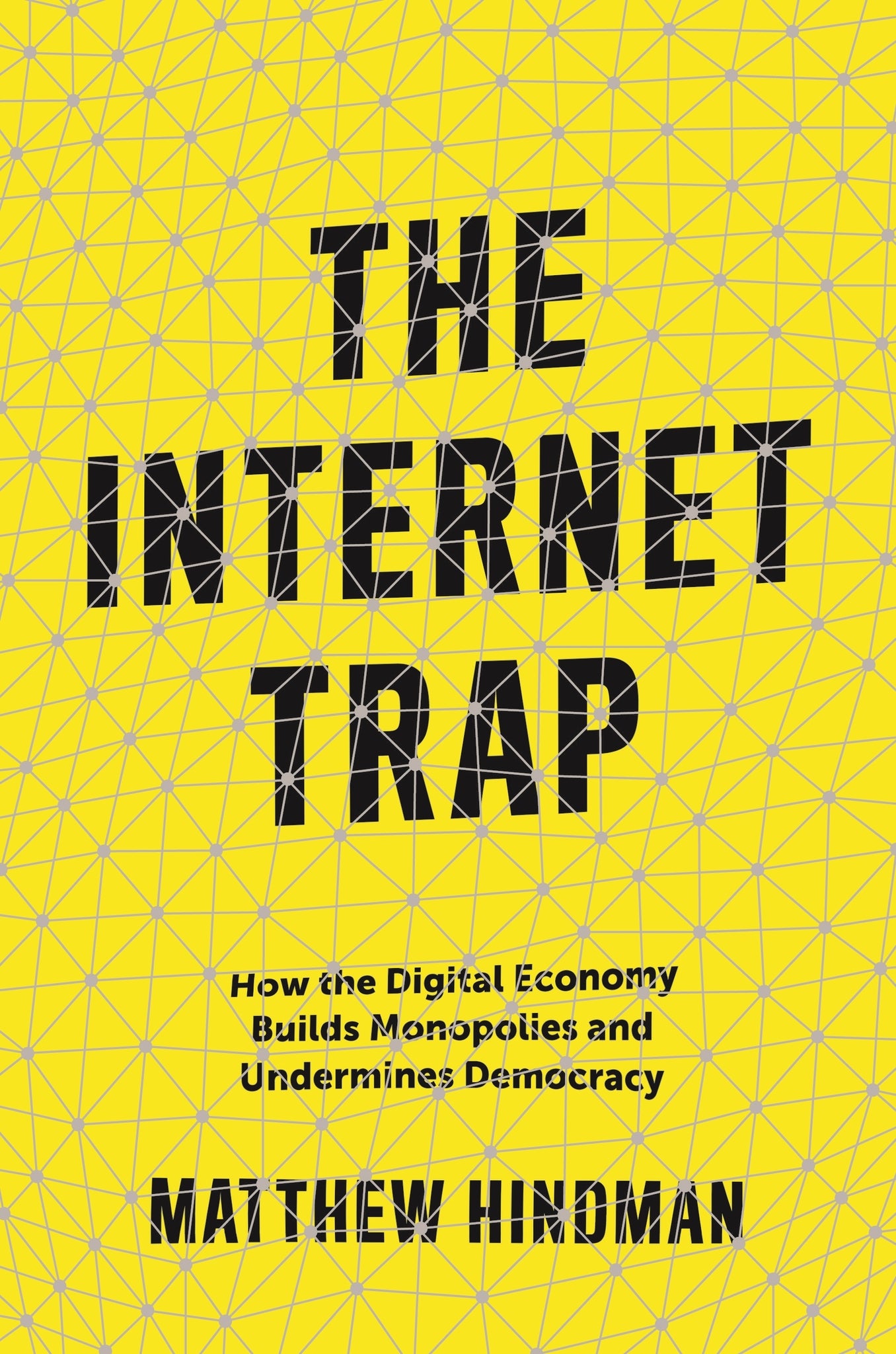
The Internet Trap

Regular price $24.95
Sale price $24.95 Regular price $24.95
Sale Sold out
Why there is no such thing as a free audience in today's attention economyThe internet was supposed to fragment audiences and make media monopolies impossible. Instead, behemoths like Google and Fa...
Read More
  • Format:
  • 10 November 2020
View Product Details

Why there is no such thing as a free audience in today's attention economy

The internet was supposed to fragment audiences and make media monopolies impossible. Instead, behemoths like Google and Facebook now dominate the time we spend online—and grab all the profits. This provocative and timely book sheds light on the stunning rise of the digital giants and the online struggles of nearly everyone else, and reveals what small players can do to survive in a game that is rigged against them. Challenging some of the most enduring myths of digital life, Matthew Hindman explains why net neutrality alone is no guarantee of an open internet, and demonstrates what it really takes to grow a digital audience in today's competitive online economy.

files/i.png Icon
Price: $24.95
Pages: 256
Publisher: Princeton University Press
Imprint: Princeton University Press
Publication Date: 10 November 2020
ISBN: 9780691210209
Format: Paperback
BISACs:

POLITICAL SCIENCE / Political Process / Media & Internet, Political structures: democracy, POLITICAL SCIENCE / Political Ideologies / Democracy, POLITICAL SCIENCE / Censorship, BUSINESS & ECONOMICS / Industries / Media & Communications, COMPUTERS / Internet / General, COMPUTERS / Design, Graphics & Media / General, Media studies: internet, digital media and society, Ethical issues: censorship, Monopolies, Economics

"Co-winner of the 2019 Goldsmith Book Prize for Academic Books, Shorenstein Center on Media, Politics and Public Policy at the Harvard Kennedy School"
Matthew Hindman is associate professor of media and public affairs at George Washington University and the author of the award-winning book The Myth of Digital Democracy (Princeton).