


Some error occured while loading the Quick View. Please close the Quick View and try reloading the page.
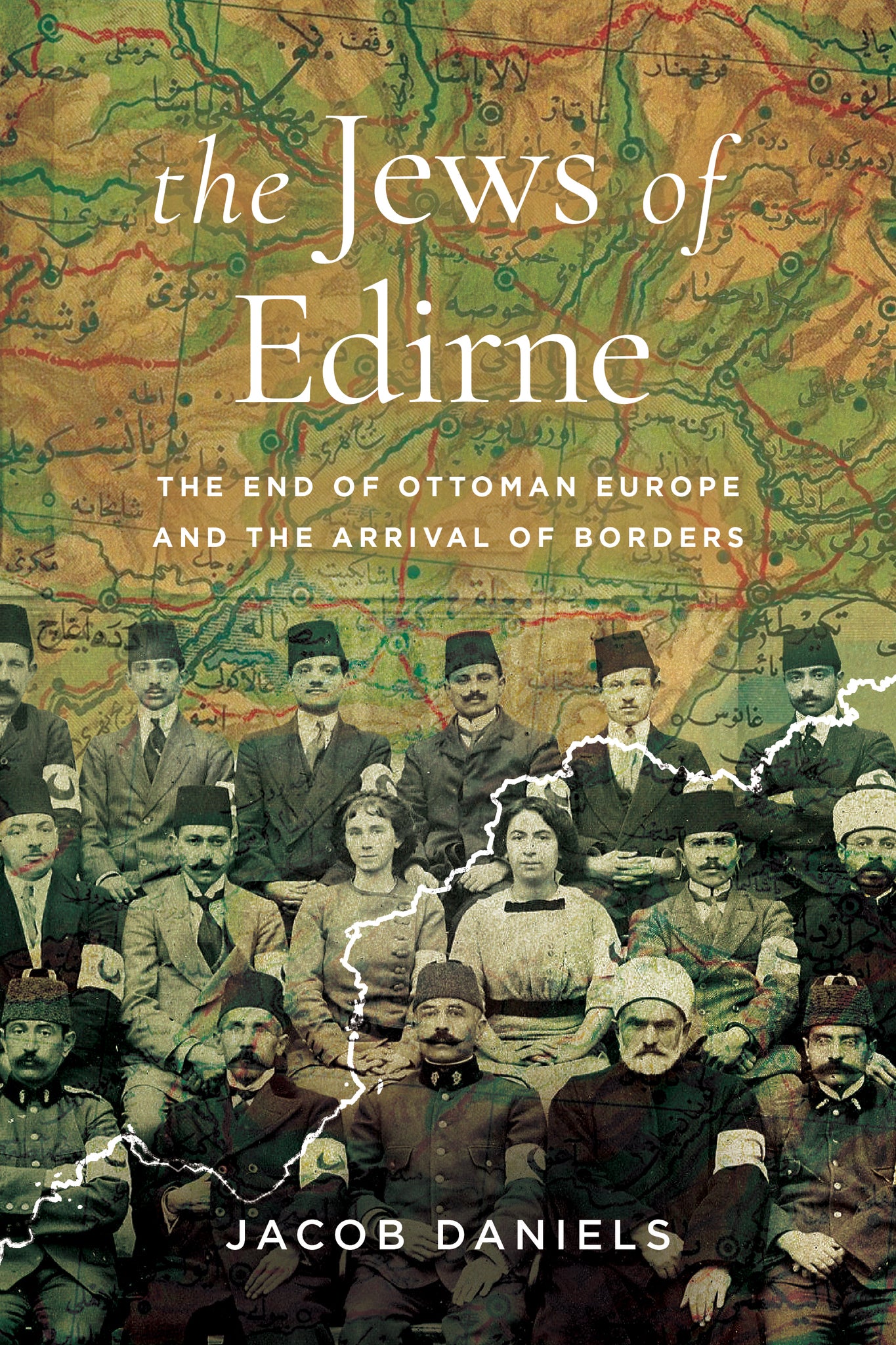
At the turn of the twentieth century, the city of Edirne was a bustling center linking Istanbul to Ottoman Europe. It was also the capital of Edirne Province—among the most religiously diverse regions of the Ottoman Empire. But by 1923, the city had become a Turkish border town, and the province had lost much of its non-Muslim population. With this book, Jacob Daniels explores how one of the world's largest Sephardi communities dealt with the encroachment of modern borders.
Using Ladino, French, English, and Turkish sources, Daniels offers a new take on the ways in which ethno-religious minorities experienced the transition "from empire to nation-state." Rather than tracing a linear path, Edirne Jews zigzagged between the Ottoman Empire and three nation-states—without moving a mile. And by maintaining interstate Sephardi networks, they resisted pressure to treat the shifting border as a limit to their zone of belonging. Ultimately, proximity to the border would undo Edirne's Jewish community, but the way this ending came about—local Jews were rarely killed or deported—challenges common assumptions about state borders and Jewish history. By studying Jewish encounters with the nation-state alongside the emergence of modern borders, Daniels sheds light on both phenomena.

Maps: The Edirne Region
Introduction
1. Foundations of a Borderland Community: Mobility, Networks, and Economic Life
2. Liberty and Limits: Public Spheres on the Imperial Border, 1908–1912
3. The Eye of the Storm: Borderland Violence and the Jews, 1912–1918
4. Days of Blue and White: Hellenism and Zionism in Northeastern Greece, 1919–1922
5. Peacetime Violence: Completing Borderland Intolerance, 1923–1934
Conclusion
Epilogue: Bordering the Holocaust
Notes
Bibliography
Index