


Some error occured while loading the Quick View. Please close the Quick View and try reloading the page.
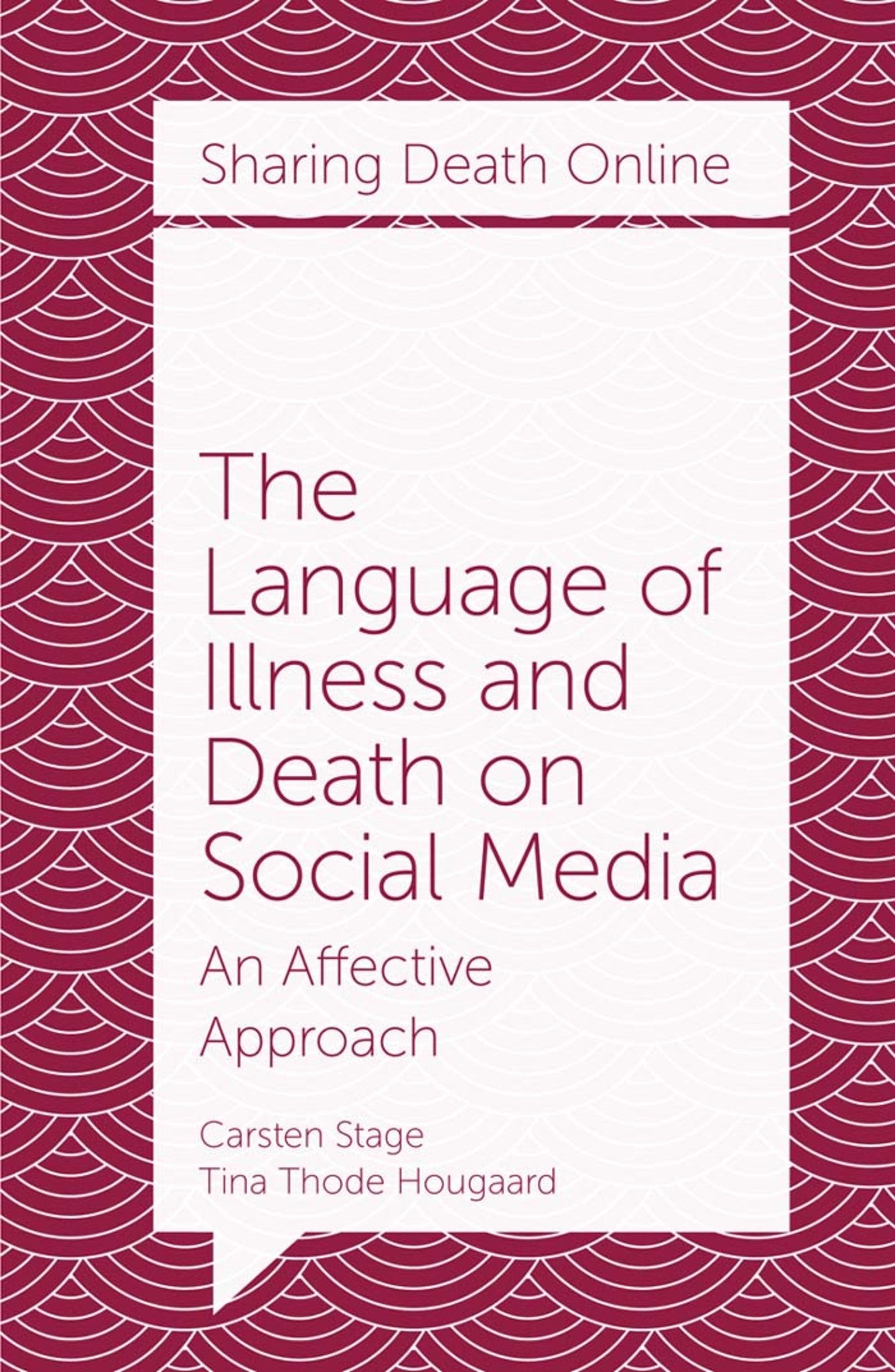
This book investigates the language created and used on social media to express and respond to personal experiences of illness, dying and mourning.
The authors begin by setting out the established and recent research on social and existential media, affect and language, before focusing on Facebook groups dealing with the illness and death of two Danish children. Through these in-depth case studies, they produce insights into different ways of engaging in affective processes related to illness and death on social media, and into both the ritualized and innovative vernacular vocabulary created through these encounters.
Developing an analytical framework for understanding the social role and logics of "affective language" (such as emojis, interjections and other forms of expressive interactive writing), The Language of Illness and Death on Social Media will be of great interest to all those striving to understand the affective importance and roles of language for sharing experiences of illness, death and commemoration in these spheres.

Price: $75.99
Pages: 152
Publisher: Emerald Publishing Limited
Imprint: Emerald Publishing Limited
Series: Sharing Death Online
Publication Date:
29 October 2018
ISBN: 9781787694828
Format: Paperback
This study of social media communication about illness and death develops a framework for understanding the role of affective language on social media and for exploring shared affective processes on social media groups. After an overview of current research on social media and language, in-depth case studies analyze language used on Facebook Groups that discuss the illness and death of two children in Denmark. The case studies report on manifestations of affective language on social media such as emojis, interjections, images, semiotic actions, and other forms of expression online.
Carsten Stage is Associate Professor in the School of Communication and Culture, Aarhus University, Denmark. Book publications include Networked Cancer: Affect, Narrative and Measurement (Palgrave/Springer, 2017), Global Media, Biopolitics, and Affect: Politicising Bodily Vulnerability (Routledge, 2015, co-author), Affective Methodologies: Developing Cultural Research Strategies for the Study of Affect (Palgrave, 2015, co-editor). He is co-editor of Conjunctions: Transdisciplinary Journal of Cultural Participation and co-director of the research programme Cultural Transformations at Aarhus University. His research deals with illness narratives, affect, social media and participation.
Tina Thode Hougaard is Associate Professor in the School of Communication and Culture, Aarhus University, Denmark. Articles on this topic include "Emojier, interjektioner og affekt – sorg og medfølelse på Facebook" in 16. Møde om Udforskningen af Dansk Sprog (2017, Aarhus Universitet), "Interjections, phonetics, and the body", Scandinavian Studies in Language (2018) and "Emojis in the Digital Writings of Young Danes" in Youth language. Current perspectives of International Research (Berlin/Boston: De Gruyter, 2018, co-author). She is co-editor of Scandinavian Studies in Language and Møde om Udforskning af Dansk Sprog. Her research deals with interaction and use of language in social media.
Chapter 1. Introduction
Chapter 2. Theoretical framework
Chapter 3. Forms of affective language
Chapter 4. Rhythms of affective language
Chapter 5. Conclusion